
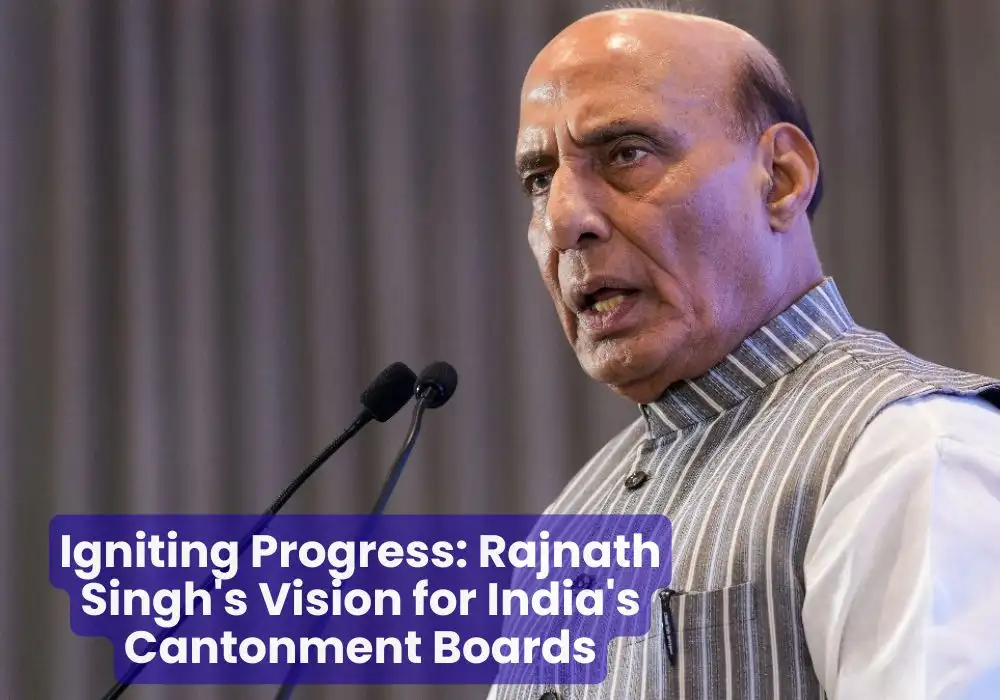
Unlocking the Future: Transforming Cantonments into Smart, Sustainable Urban Ecosystems
In a significant address at the MANTHAN 2025 national conference in New Delhi, India’s Defence Minister, Shri Rajnath Singh, laid down a powerful mandate for officers of the Indian Defence Estates Service (IDES). He urged them to spearhead a transformative initiative: reimagining and developing Cantonment Boards into smart and sustainable urban ecosystems. This directive isn’t merely about administrative efficiency; it’s a strategic move aligned with India’s accelerating global stature and the ambitious national objective of becoming a developed nation. When the collective efforts and actions of government bodies resonate with the broader national interest, achieving monumental goals like a ‘Developed India’ becomes an tangible reality.
The ‘Why’ and ‘What’: A Call for Modernization and Growth
Why is this transformation crucial? Cantonment Boards, while essential for defence services, often grapple with unique administrative and developmental challenges. Their modernization is paramount for several reasons. Firstly, it directly contributes to urban renewal and balanced regional development across the country. By upgrading these areas into smart, sustainable spaces, they can serve as models for effective urban planning, resource management, and citizen services. This aligns perfectly with India’s broader vision for smart cities and robust infrastructure development. The Minister’s call emphasizes a forward-looking approach, where these historically significant areas evolve to meet contemporary demands without compromising their strategic importance or environmental integrity. This vision encompasses leveraging technology for better governance, improving civic amenities, promoting green initiatives, and ensuring a higher quality of life for residents, both military and civilian.
Follow this last-minute study plan for aspirants to structure your final hours of study.: Igniting Progress: Rajnath Singh’s Vision for India’s Cantonment BoardsThe ‘Who’ and ‘How’: The Pivotal Role of IDES Officers
The successful realization of this vision rests heavily on the shoulders of the Indian Defence Estates Service (IDES) officers. These dedicated civil servants are the custodians and administrators of vast defence lands and cantonments across India. Their expertise in land management, urban planning, and civil administration is critical. The Minister’s address serves as a clear directive, empowering them to take decisive action, innovate, and implement policies that will drive this transformation. It requires strategic planning, efficient resource allocation, transparent governance, and a proactive approach to addressing developmental challenges. IDES officers are expected to harness modern administrative practices, engage with local communities, and collaborate with various stakeholders to bring this comprehensive urban makeover to fruition. Their actions in the coming years will directly shape the future landscape of these vital areas, demonstrating how administrative acumen can translate into tangible national progress.
Connecting the Dots: Significance for Competitive Examinations
For aspirants preparing for competitive exams like UPSC, SSC, PSC, and other government recruitment tests, this development is a critical current affairs topic that holds immense significance across multiple subjects. Understanding the context of Cantonment Boards falls under Indian Polity and Governance, while the focus on ‘smart and sustainable urban ecosystems’ relates directly to Environment, Urbanization, and Economic Development. Questions might arise concerning the administrative structure of Cantonment Boards, the role of IDES officers, government initiatives for urban development, or even the broader vision of a ‘Developed India’ by a specific year. Staying updated on such policy directives not only enriches your general knowledge but also demonstrates your awareness of crucial national objectives and administrative reforms, which are often key areas of examination. MyEntrance.in provides daily news quizzes and comprehensive current affairs analyses to help you master such important topics.
Frequently Asked Questions (FAQs)
Q1: What are Cantonment Boards, and what is their primary function?
A1: Cantonment Boards are local self-government bodies established under the Cantonments Act of 2006 (or earlier acts) for the administration of civil areas within a cantonment. Their primary function is to provide civic amenities, maintain public health, sanitation, and manage urban development for both military personnel and civilian residents living within the designated cantonment limits.
Q2: Who are IDES officers, and what is their role in India’s defence administration?
A2: IDES stands for Indian Defence Estates Service. Officers belonging to this Central Civil Service Group ‘A’ cadre are responsible for the management and administration of defence lands, including cantonments, across India. They handle land acquisition, land disposal, estate management, revenue collection, and urban planning within these strategic areas, ensuring their optimal utilization for defence purposes and sustainable development.
Q3: What was the main objective of the MANTHAN 2025 conference where this vision was discussed?
A3: MANTHAN 2025 was a national conference designed to bring together stakeholders and experts for strategic discussions on various aspects of defence land management and administration. Its main objective was to brainstorm ideas, evaluate progress, and chart future courses of action for enhancing the efficiency, transparency, and sustainability of defence estates and cantonment administration.
Q4: How does the transformation of Cantonment Boards contribute to India’s goal of becoming a developed nation?
A4: Transforming Cantonment Boards into smart and sustainable urban ecosystems contributes significantly to India’s developed nation goal by modernizing urban infrastructure, improving governance, fostering environmental sustainability, and enhancing the quality of life for a significant population. This initiative reflects a broader commitment to holistic national development, where every administrative unit contributes to overall progress and efficiency.
Q5: Why is understanding this topic important for competitive exams like UPSC and SSC?
A5: This topic is crucial for competitive exams because it covers key areas such as Indian Polity (local self-government, administrative structures), Governance (policy implementation, urban planning), Current Affairs (recent government initiatives), and General Knowledge (role of Defence Ministry, IDES). Questions can test your understanding of government policies, administrative reforms, and their impact on national development, making it a high-yield area for preparation.





