
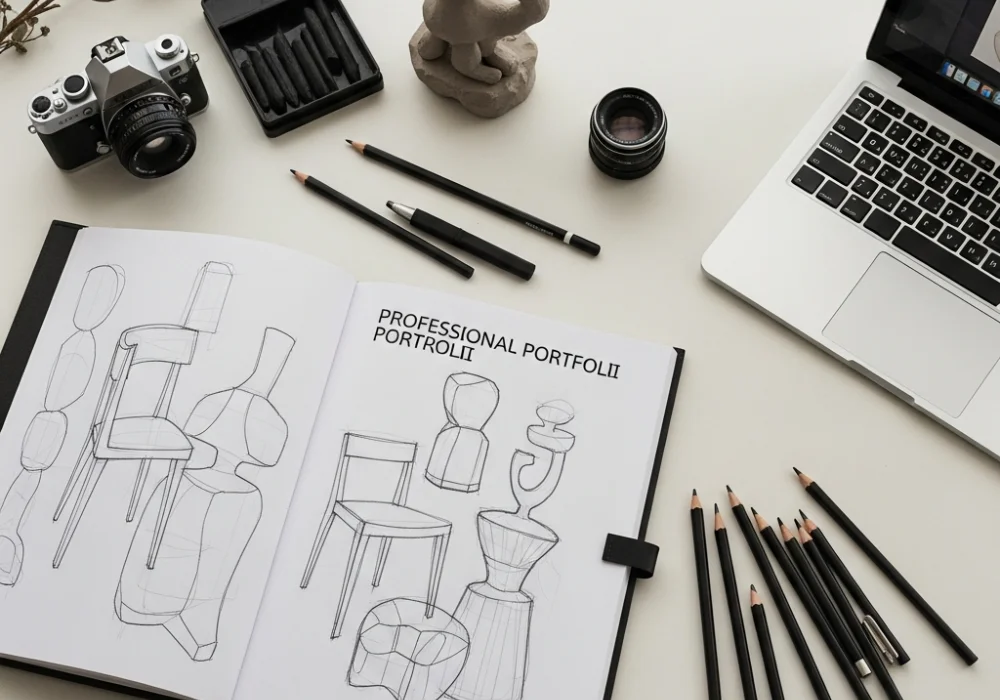
The Significance of a Design Portfolio in NID Admissions
For any B.Des aspirant, the National Institute of Design (NID) is the ultimate destination. While cracking the NID Design Aptitude Test (DAT) Prelims is the first hurdle, the real challenge lies in the NID DAT Mains, which often includes a Studio Test and a Portfolio Review. Your portfolio is not just a collection of your best drawings; it is a visual narrative of your thought process, problem-solving abilities, and creative potential. It is the only medium through which the jury can look into your mind and understand how you perceive the world around you.
What Exactly is an NID Portfolio?
Many students mistake a portfolio for a sketchbook filled with pretty pictures. In reality, an NID portfolio is a curated selection of your work that demonstrates your skills, interests, and personality. It should reflect your journey as a designer. Whether you are interested in Graphic Design, Product Design, or Animation, your portfolio needs to show the faculty that you have the foundational skills required to excel in their rigorous curriculum. Integrating feedback from mentors and practicing with the mock tests available on myentrance.in can help you understand the standard expected at this level.
Core Components of a Winning Portfolio
- Observational Skills: Sketches of everyday objects, people, and environments.
- Conceptual Thinking: How you take a simple idea and turn it into a design solution.
- Material Exploration: Your experience with different mediums like clay, wire, paper, or digital tools.
- Process Work: Show the ‘why’ behind the ‘what.’ Include your rough iterations and failed attempts.
- Social Awareness: Projects that address real-world problems or community issues.
Comparative Analysis: What Makes a Portfolio Stand Out?
To give you a clearer picture of what the NID jury expects, let us look at the differences between a standard portfolio and an exceptional one through the following table:
| Feature | Standard Portfolio | Exceptional NID Portfolio |
|---|---|---|
| Focus | Finished artworks only. | Focus on the Design Process and Thinking. |
| Mediums | Mostly pencil and charcoal. | Diverse use of materials (3D, Digital, Mixed Media). |
| Narrative | Random collection of sketches. | A cohesive story or theme throughout. |
| Originality | Copied photos or internet art. | Original observations and unique perspectives. |
| Sketching | Focus on hyper-realism. | Focus on proportion, perspective, and gesture. |
The Step-by-Step Blueprint for B.Des Aspirants
1. Selection of Work
Quality over quantity is the golden rule. Instead of stuffing your portfolio with 50 mediocre sketches, choose 15-20 high-quality pieces that show a range of skills. Include everything from quick 30-second gesture drawings to detailed long-term projects. Ensure that your work is current and reflects your latest pattern of growth.
2. Highlighting the Creative Process
The NID faculty is more interested in how you think than how well you can render a shadow. Dedicate pages to your ‘Process Work.’ This includes mind maps, rough thumbnails, and notes on how your idea evolved. This demonstrates that you have a methodical approach to design, which is a key trait sought in the latest pattern of design education.
3. Mastering Different Mediums
Don’t limit yourself to just paper and pencil. Experiment with watercolor, acrylics, digital software, and even three-dimensional models. If you have created a physical model, take high-quality photographs from multiple angles and include them in your portfolio. This shows versatility and a willingness to explore different creative avenues.
4. Storytelling and Presentation
The way you present your work is as important as the work itself. Keep your layout clean and professional. Use minimal text to explain your concepts, letting the visuals do the talking. A well-organized portfolio suggests that the student is disciplined and values their work.
Common Mistakes to Avoid
- Including Copied Work: Never include work copied from Pinterest or Instagram. Originality is the most valued trait at NID.
- Over-decorating: Let your work breathe. Don’t use distracting backgrounds or overly flashy fonts in your portfolio layout.
- Ignoring the Basics: While conceptual work is great, don’t ignore basic human anatomy and perspective drawings. They are the foundation of all design.
- Lack of Variety: Avoid having a portfolio that only shows one thing, like only anime characters or only landscape paintings.
Preparing for the Studio Test and Portfolio Review
The portfolio is often reviewed during or after the Studio Test. It is essential to be able to talk about your work confidently. Prepare to answer questions about your inspiration, the challenges you faced, and why you chose a particular medium. Regularly practicing with myentrance.in mock tests can sharpen your ability to think on your feet, which is vital for the interview phase of the NID entrance exam.
Frequently Asked Questions (FAQ)
Is a portfolio mandatory for NID B.Des?
While the requirements can vary based on the latest pattern, a portfolio is almost always required during the NID DAT Mains/Studio Test stage. It serves as the primary tool for the jury to evaluate your creative aptitude.
Can I include digital art in my NID portfolio?
Yes, digital art is highly encouraged as long as it is original. However, ensure it is balanced with traditional hand-drawn sketches to demonstrate your fundamental manual skills.
How many projects should I include?
Ideally, aim for 12 to 18 diverse projects. This could range from a series of photographs to a complete product design concept or a collection of textile patterns.
Do I need to be an expert at drawing?
You don’t need to be a fine artist, but you do need to be able to communicate your ideas clearly through sketching. NID looks for observation and communication skills rather than just artistic flair.
Start Your Journey with MyEntrance
Preparing for NID requires a blend of creative skill and strategic exam preparation. At myentrance.in, we provide specialized mock tests designed to simulate the actual exam environment. Our resources help you master the NID DAT Prelims and prepare you for the creative challenges of the Mains. By understanding the current syllabus and practicing consistently, you can turn your design dreams into reality.
🚀 Ready to Crack the NID Entrance Exam?
Get expert guidance, specialized study materials, and the latest pattern mock tests to secure your seat at NID. Our team is here to help you every step of the way!
💬 Chat with our Experts on WhatsApp (+91 9526806124)




