
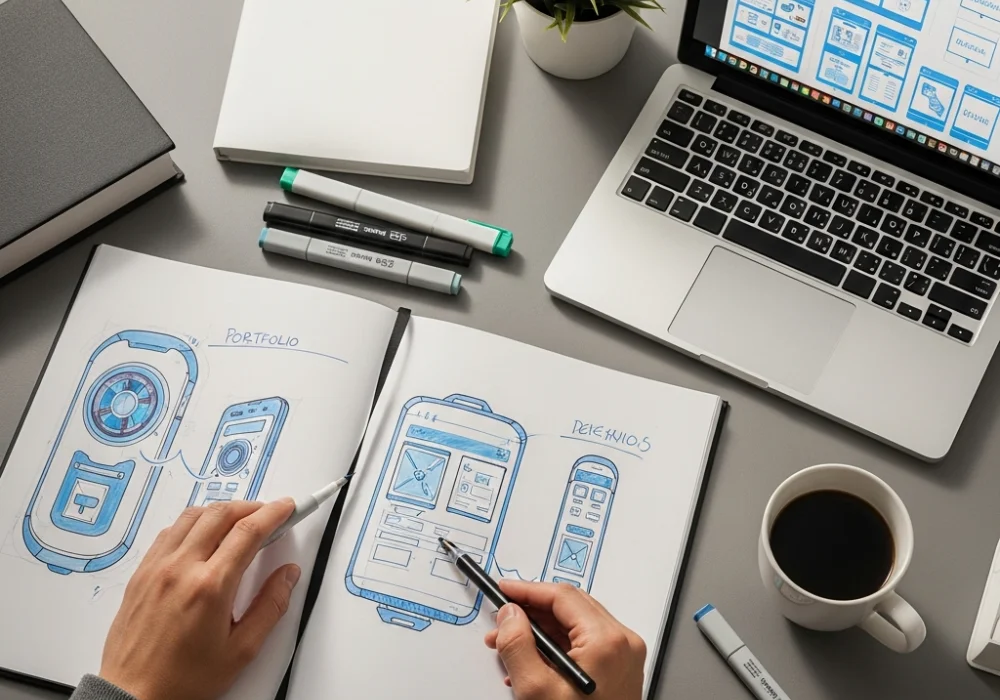
Mastering the Art of the NID M.Des Portfolio
Getting through the NID DAT Prelims is a massive achievement, but the real challenge begins now. For Master of Design (M.Des) aspirants, the portfolio is not just a collection of drawings; it is a visual narrative of your thinking process, your problem-solving abilities, and your unique design identity. National Institute of Design (NID) faculty look for originality, empathy, and technical proficiency. At myentrance.in, we understand that a winning portfolio can be the deciding factor between a seat and a rejection. This guide will walk you through every nuance of building a portfolio that commands attention during the latest pattern of NID interviews.
Table of Contents
The True Purpose of an M.Des Portfolio
Before you start compiling images, you must understand what the jury is looking for. Unlike undergraduate portfolios that often focus on basic skill sets, an M.Des portfolio must demonstrate a higher level of maturity. The NID jury wants to see how you identify problems in the real world and how your design intervention provides a viable solution.
- Cognitive Ability: How do you think? Do you look beyond the obvious?
- Social Awareness: Does your design reflect an understanding of Indian context and user needs?
- Technical Mastery: Whether it is UI/UX, Product Design, or Animation, do you have the necessary tools to execute your ideas?
💡 Pro-Tip: The ‘Why’ Behind the ‘What’
Don’t just show a finished product. Devote at least 60% of each project’s space to the research, sketches, failed iterations, and user testing. NID values the journey more than the destination.
Structuring Your Projects: Quality over Quantity
A common mistake is including every single sketch you have ever made. A winning portfolio usually consists of 4 to 6 high-quality projects. These should be diverse but focused on your chosen specialization. If you are applying for Interaction Design, your focus should be on user flows and wireframes; for Furniture Design, focus on ergonomics and material exploration.
The Ideal Project Layout:
- The Hook: A high-quality render or photo of the final product to grab attention.
- Problem Statement: Clearly define what problem you were trying to solve.
- User Research: Photos of interviews, personas, and empathy maps.
- Ideation: Rough sketches, mind maps, and early-stage brainstorming.
- Prototyping: Show low-fidelity models (cardboard, paper, or wireframes).
- Final Solution: High-fidelity results and how they solve the initial problem.
- Reflection: What did you learn? What would you change?
If you need practice on design thinking for your portfolio descriptions, exploring the mock tests on myentrance.in can help refine your theoretical understanding of these concepts.
Comparison: Digital vs. Physical Portfolios
Depending on the current syllabus and interview mode, you may need a digital PDF or a physical folder. Here is how they compare:
| Feature | Digital Portfolio (PDF/Web) | Physical Portfolio (Print) |
|---|---|---|
| Portability | High; easy to share and update. | Low; heavy to carry but impressive. |
| Interactivity | Can include videos and links. | Tactile; allows paper quality choices. |
| Control | Dependent on screen resolution. | Fixed layout; exact color control. |
| Best For | Remote interviews & first impressions. | In-person jury presentations. |
The Power of Storytelling and Process
The NID jury sees hundreds of portfolios. What makes one stand out? Authenticity. Do not copy projects from Pinterest or Behance. Instead, look into your own life and community. Did you design a tool for a local artisan? Did you create a digital app to help your grandmother track her medication? These human-centric stories are what win admissions.
Technical Specifications for the M.Des Portfolio:
- Resolution: Keep digital files under 15MB to ensure they open quickly.
- Typography: Use clean, legible fonts like Helvetica, Montserrat, or Roboto. Avoid overly decorative fonts.
- Consistency: Maintain a consistent grid layout throughout your portfolio.
- White Space: Do not clutter. Let your work breathe.
💡 Pro-Tip: The ‘Sketchbook’ Secret
Always bring your original physical sketchbooks to an in-person interview. They show your raw, unedited thought process which a polished PDF often misses. It proves your skills are genuine.
Common Portfolio Pitfalls to Avoid
Even the most talented designers can fail if their portfolio is poorly presented. Avoid these common mistakes:
- Too Much Text: Jury members have limited time. Use bullet points and bold headers instead of long paragraphs.
- Low-Quality Images: Pixelated photos suggest a lack of professionalism. Use a good camera or high-quality scan.
- Lack of Variation: If all your projects look the same, you seem like a ‘one-trick pony.’ Show versatility in medium and thought.
- Forgetting the ‘Credits’: If a project was a group effort, clearly state your specific role (e.g., “I handled the UI design and user research”).
Frequently Asked Questions (FAQs)
How many projects should I include in my NID M.Des portfolio?
Focus on 4 to 6 strong projects. It is better to have four deep, well-researched case studies than ten superficial ones.
Can I include projects not related to my specialization?
Yes! Including 1-2 projects from other fields (like photography or carpentry) shows your multidisciplinary nature, which NID highly values.
Should I include my NID DAT Prelims work?
Generally, no. The jury has already seen your Prelims score. Use the portfolio to show what else you can do over a longer period of time.
Quick Knowledge Check
Test your portfolio readiness with these quick questions!
1. What is the most important element of an M.Des portfolio?
Check Answer
The design process and problem-solving journey (the ‘Why’).
2. How many projects are recommended for a balanced portfolio?
Check Answer
Between 4 to 6 comprehensive projects.
3. Should you use decorative fonts in your portfolio layout?
Check Answer
No. Clean, legible typography (Sans-serif) is preferred to maintain focus on the design work.
Need Help with NID Preparation?
Cracking the NID Studio Test and Portfolio round requires expert guidance and consistent practice. Explore our latest mock tests and design resources at myentrance.in to stay ahead of the competition!
💬 Chat with our Experts on WhatsApp (+91 9526806124)




