
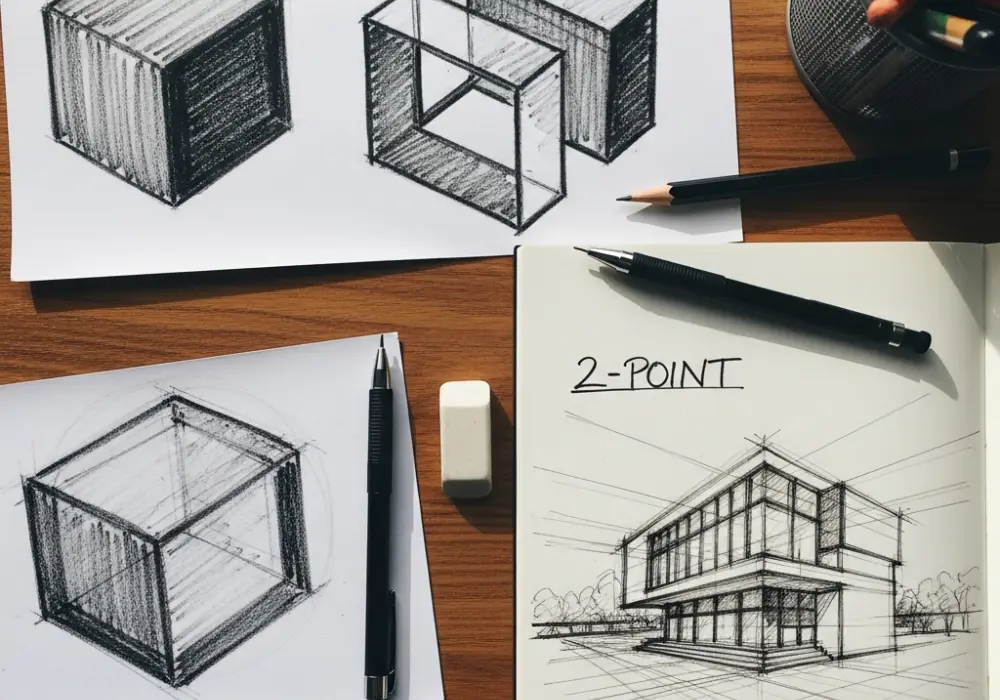
Mastering Visualization: The Key to Cracking NID DAT
The National Institute of Design (NID) Design Aptitude Test (DAT) is not just an exam; it is a test of your creative perspective, your ability to observe the mundane, and your skill in translating complex ideas into visual stories. Among all the skills required, visualization stands as the most critical pillar. Whether you are designing a futuristic product or illustrating a narrative, your capacity to see the unseen is what sets you apart. In this comprehensive guide, we will explore winning strategies to sharpen your visualization skills, ensuring you are fully prepared for the upcoming exams.
Table of Contents
- Why Visualization Matters for NID DAT
- The Core Pillars of Design Visualization
- Daily Habits to Improve Spatial Intelligence
- Advanced Sketching and Perspective Techniques
- NID DAT vs. Other Entrance Exams: A Comparison
- Leveraging Mock Tests for Exam Success
- Common Mistakes to Avoid
- Frequently Asked Questions
- Quick Knowledge Check
Why Visualization Matters for NID DAT
Visualization in design is the mental process of creating images and scenarios before they are put on paper. For NID DAT, this translates to spatial reasoning, object manipulation, and empathy-driven design. The examiners are looking for students who can visualize a 3D object from multiple angles just by looking at a 2D net. They want to see if you can imagine the weight, texture, and movement of objects in a gravity-defying environment.
Developing this skill requires a shift in how you look at the world. Instead of seeing a chair, you must see the negative space around it, the geometric primitives that form its structure, and how light interacts with its surfaces. This deep level of observation is the foundation of high-scoring entries in the NID DAT portfolio and studio tests.
💡 Pro-Tip: The ‘Invisible Box’ Technique
When drawing complex objects, first visualize them inside a transparent box. This helps you maintain perspective and proportions correctly across different viewpoints.
The Core Pillars of Design Visualization
To master visualization, you must focus on four key areas that frequently appear in the latest pattern of the NID DAT exam:
- Perspective Drawing: Understanding 1-point, 2-point, and 3-point perspective is non-negotiable. It allows you to create depth and realism in your sketches.
- Proportion and Scale: How big is a human figure compared to a car? Misjudging scale is a common reason for losing marks.
- Light and Shadow: Proper shading communicates form and volume. You must be able to identify where the light source is and how it creates highlights and core shadows.
- Material Rendering: Visualizing how wood, metal, or glass looks under different lighting conditions helps in product design questions.
At myentrance.in, our mock tests specifically target these pillars to ensure you develop a well-rounded skill set. Practicing these daily can drastically improve your speed and accuracy during the actual exam.
Daily Habits to Improve Spatial Intelligence
Improving visualization isn’t an overnight task; it is a lifestyle. Here are some actionable exercises you can perform every day:
- Blind Contour Drawing: Draw an object without looking at your paper. This forces your brain to focus on the lines and shapes of the object rather than what you think it looks like.
- Mental Rotation: Pick up a household item like a kettle. Close your eyes and try to rotate it 180 degrees in your mind. Imagine looking at it from the top and bottom.
- Deconstruction Exercise: Take a complex machine, like a bicycle, and mentally break it down into simple spheres, cylinders, and cubes.
- Observation Journals: Spend 10 minutes a day at a bus stop or cafe sketching people. Focus on their gestures and dynamic poses.
These exercises help build the neural pathways required for quick visual thinking. Consistent practice on myentrance.in platforms using our current syllabus-aligned worksheets will provide the structure you need for these habits.
NID DAT vs. Other Entrance Exams: A Comparison
It is important to understand how NID DAT differs from exams like NIFT or UCEED to tailor your visualization preparation accordingly. NID focuses heavily on ideation and conceptual clarity.
| Feature | NID DAT | NIFT GAT/CAT | UCEED |
|---|---|---|---|
| Primary Focus | Conceptual Thinking & Design Sensibility | Aesthetic Appeal & Fashion Flair | Analytical & Spatial Reasoning |
| Visualization Type | Abstract and Narrative | Product and Fashion Illustration | Geometric and Logical |
| Sketching Style | Rough but clear ideation | Finished and detailed | Digital-friendly precision |
How Mock Tests Enhance Visualization
Preparation is incomplete without regular assessment. Mock tests available on myentrance.in simulate the high-pressure environment of the design entrance exam. They help you in several ways:
- Time Management: Visualizing a complex scene takes time. Mock tests help you balance the time between thinking and actual drawing.
- Exposure to Variety: You might be good at drawing objects but struggle with human figures. Our mock tests cover the full spectrum of potential questions.
- Self-Correction: Analyzing your performance against model answers helps you identify where your visualization failed—was it the perspective? The scale? Or the narrative?
By using the latest pattern mock tests, you gain the confidence to handle any curveball question that NID might throw your way. Remember, the goal is to think like a designer, not just a sketch artist.
Common Mistakes to Avoid in NID DAT Visualization
Many talented artists fail NID DAT because they ignore the fundamental requirements of a design exam. Avoid these pitfalls:
- Over-detailing: Designers value clarity over decoration. Do not spend 30 minutes on a texture if the perspective is wrong.
- Ignoring the Brief: If the question asks for a design from a child’s perspective, do not draw from an adult’s eye level.
- Static Compositions: Visualization should imply movement and life. Use dynamic lines and varied weights to make your sketches breathe.
- Fear of Whitespace: Don’t feel the need to fill every inch of the paper. Use white space strategically to guide the examiner’s eye to the focal point.
Frequently Asked Questions (FAQs)
How can I improve my 3D visualization speed?
The best way is to sketch using basic geometric forms. Instead of drawing a car, draw three blocks for the body and four cylinders for the wheels. Once the basic structure is fast, details will follow naturally.
Does NID DAT require professional art training?
No, NID looks for creativity and problem-solving. While basic sketching skills are necessary to express your ideas, they value the originality of the concept more than technical perfection.
Which materials are best for the NID DAT Prelims?
Usually, a set of quality graphite pencils (HB, 2B, 4B, 6B), a good eraser, and occasionally colored pencils or dry pastels are sufficient. Focus on mastering these simple tools first.
Quick Knowledge Check
Test your understanding of design visualization with these quick questions!
1. What is the main purpose of 3-point perspective?
It is used to represent height or depth from a high or low camera angle, creating an ‘extreme’ view (bird’s eye or worm’s eye view).
2. What does ‘Negative Space’ refer to in a drawing?
Negative space is the area around and between the subjects of an image. Visualizing it helps in achieving better proportions and balance.
3. Why is storyboarding important in NID questions?
Storyboarding helps demonstrate how a user interacts with a product or how a situation unfolds over time, showing your process-oriented thinking.
Need personalized guidance for NID DAT?
Our experts at MyEntrance are here to help you crack the design entrance exams with ease. Get access to premium mock tests, previous year insights, and visualization workshops.
💬 Chat with our Experts on WhatsApp (+91 9526806124)




