
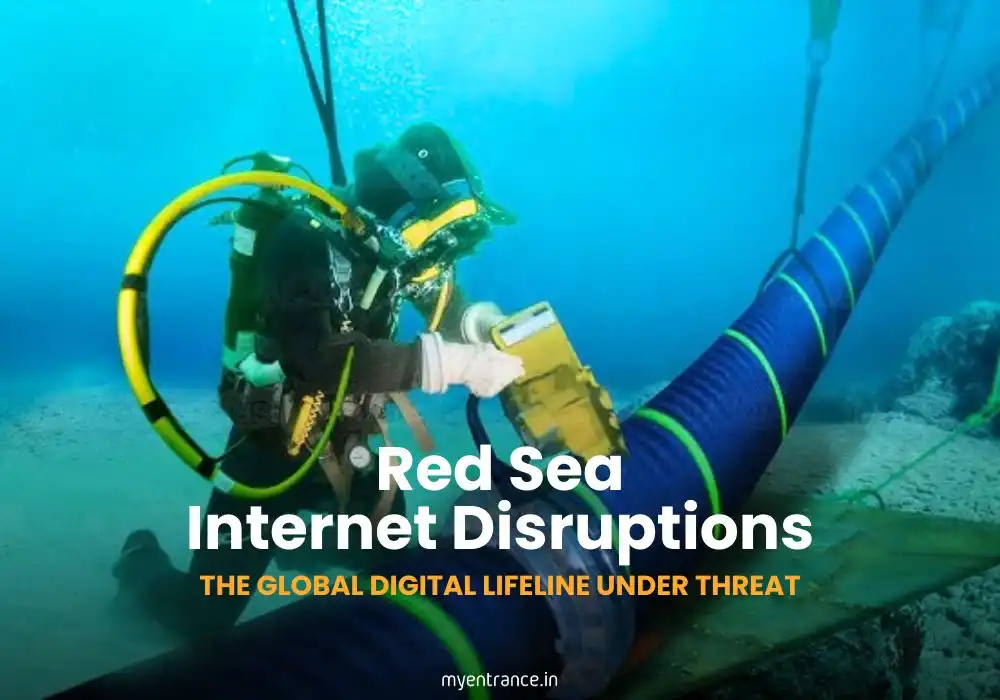
The Global Digital Lifeline Under Threat
Imagine a world where your daily internet connection, from checking news to engaging in online learning on myentrance.in, relies on invisible highways stretching thousands of kilometers across ocean beds. These are undersea internet cables, the true backbone of our global digital society. They carry over 99% of all international data, linking continents and enabling everything from video calls to massive data transfers. When these vital links face disruption, the ripple effects are felt globally, often in ways we don’t immediately notice. Recently, a series of incidents in the Red Sea region has brought this crucial infrastructure into the spotlight, significantly impacting India’s digital connections with Europe and sparking important questions about global connectivity.
The Red Sea’s Strategic Bottleneck – Why Here?
The Red Sea isn’t just a historic maritime route; it’s a critical chokepoint for digital traffic. Geographically, it forms a narrow passage between Africa and Asia, connecting the Mediterranean Sea via the Suez Canal to the Indian Ocean. This makes it an indispensable pathway for numerous submarine cables that ferry data between Europe, the Middle East, Asia, and Africa. Because of its strategic location, any disruption here has far-reaching consequences. The concentration of so many essential cables in this relatively confined area makes it highly vulnerable to various threats, from natural seismic activity to accidental damage by ship anchors, and regrettably, potential intentional acts linked to regional instability.
Understanding the Recent Cable Cuts and Their Impact
In recent times, multiple undersea cable systems traversing the Red Sea have experienced severe damage. While the precise causes are often under investigation, these ‘cuts’ have significantly hampered the seamless flow of internet traffic. When a cable is damaged or cut, data needs to be rerouted, often taking longer, less direct paths. This rerouting leads to noticeable slowdowns in internet speeds, increased latency (a delay in data transmission), and can even cause temporary service outages for users and businesses. For a country like India, which has significant digital ties with Europe for trade, communication, and educational exchange, these disruptions translate into slower online transactions, delayed data processing, and impaired access to European-hosted content and services. This directly affects everything from banking operations to accessing international research papers or even participating in global online examinations. Get the gist of the news with these important daily news summaries for exams
India’s Connectivity Challenges and Broader Implications
The recent incidents highlight India’s dependence on robust global internet infrastructure and the vulnerabilities inherent in it. While India boasts multiple cable landing points and diverse routes, the Red Sea corridor remains paramount for its direct connectivity with Europe. The challenges posed are not merely about temporary inconvenience; they underscore broader issues of digital resilience, national security, and economic stability. Governments and telecommunications companies are constantly working on strategies like building diverse cable routes and enhancing existing infrastructure to mitigate such risks. However, these events serve as a stark reminder of how interconnected our world truly is, and how geopolitical events or even localized incidents can have a profound impact on our digital lives, economy, and access to vital information.
Why This Matters for Your Competitive Exams: A Learning Opportunity
For aspirants preparing for demanding examinations like UPSC, SSC, PSC, NID, NIFT, and other government service tests, understanding events like the Red Sea cable cuts goes far beyond mere headlines. This topic is a prime example of how current affairs seamlessly intersect with various static general knowledge subjects, making it a high-yield area for comprehensive preparation.
Current Affairs: This is a direct topic for your daily news quizzes and monthly current events summaries.
Geography: It demands a crucial understanding of the Red Sea’s strategic location, choke points, and global maritime routes.
International Relations/Geopolitics (UPSC): Analyze how regional conflicts or maritime security issues directly impact global infrastructure and the economy.
Economy/Infrastructure (UPSC/SSC): Understand the vital role of telecommunications infrastructure, the digital economy, and India’s global trade dependencies.
Science & Technology: Delve into the fascinating technology behind undersea cables and efficient data transmission.
Problem-Solving/Analytical Skills: Analyzing the ‘why, what, where, when, and how’ of such global events is excellent practice for essay writing and analytical questions often found in Mains examinations. Many consider us the best online portal for exam preparation due to our quality content.
By delving into such topics, you not only stay updated but also build a comprehensive, interdisciplinary understanding of the world, which is invaluable for holistic exam preparation. myentrance.in is committed to providing you with detailed insights into such critical events, linking them directly to your syllabus. Stay curious, stay informed, and let these global happenings enrich your learning journey and propel you towards exam success.





