
For aspirants preparing for competitive exams like UPSC, SSC, and PSC, staying updated on environmental current affairs is paramount. Recently, a significant decision by Tanzania regarding Lake Natron has brought the delicate balance between economic development and ecological preservation into sharp focus. This case isn’t just a news item; it’s a vital lesson in biodiversity, geography, and sustainable governance, directly relevant to your examination preparation. Challenge yourself with our daily news quiz for upsc and ssc to test your awareness.
Tanzania’s Landmark Environmental Stance
In a move that garnered international appreciation, the Tanzanian government has decisively halted plans for extensive soda ash mining operations near Lake Natron. This pivotal decision underscores a commitment to long-term ecological health, prioritizing the unique natural heritage of the region over immediate industrial gains. It exemplifies a nation stepping up to protect one of the world’s most vulnerable bird species, showcasing a powerful lesson in environmental policy for future administrators. Understanding such governmental actions is crucial for questions on environmental governance and sustainable development in your examinations.
Where Nature Weaves its Magic: Unveiling Lake Natron
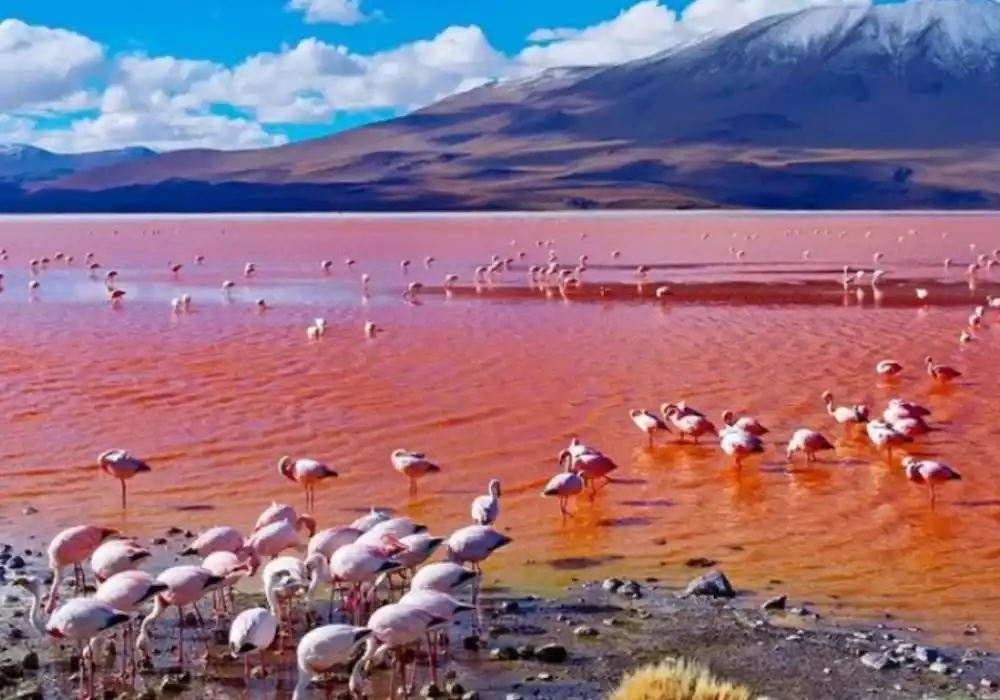
Nestled in the Great Rift Valley of East Africa, specifically in northern Tanzania, Lake Natron is no ordinary body of water. This hypersaline, alkaline lake presents a harsh yet incredibly unique environment, making it one of the most chemically extreme aquatic habitats on Earth. Its waters, saturated with salts and minerals, create a vibrant, otherworldly landscape, but more importantly, they provide the perfect conditions for a particular type of algae to thrive – the primary food source for millions of Lesser Flamingos. Its distinctive characteristics and geographical location make it a recurring topic in geography and environmental science sections of various competitive exams, particularly for static general knowledge questions.
The Guardians of the Algae: Lesser Flamingos in Focus
The Lesser Flamingo (Phoeniconaias minor) is a captivating bird species, smaller in stature than its “Greater” counterpart, famed for its brilliant pink plumage. These flamingos are specialized filter feeders, sifting through the lake’s briny waters to consume the abundant cyanobacteria (blue-green algae) that flourish here. Lake Natron isn’t just a feeding ground; it is globally recognized as the single most critical breeding site for Lesser Flamingos, hosting an astonishing three-quarters of the entire world’s population. Their conservation status, classified as “Near Threatened” by the IUCN (International Union for Conservation of Nature), highlights their vulnerability to habitat degradation, pollution, and human disturbance, making their plight a crucial subject for environmental awareness and current affairs analysis.
The Threat and the Rescue: Why Mining was a Concern
The proposed soda ash mining involved extracting sodium carbonate, a valuable industrial chemical, directly from Lake Natron. While economically attractive, such an operation would have had catastrophic consequences. The process would not only disturb the fragile ecosystem and potentially alter the lake’s delicate chemical balance, but also introduce pollution and significant human activity, directly threatening the flamingos’ nesting sites and their vital food supply. Tanzania’s decision effectively averted this ecological disaster, safeguarding the future of these iconic birds and reinforcing the principle that environmental protection is an integral part of sustainable development. This case serves as an excellent example for essays and case studies in UPSC Mains examinations, particularly in environmental ethics and resource management.
Beyond the News: Preparing for Your Exams
Understanding the Lake Natron situation goes beyond memorizing facts. It’s about grasping the interconnectedness of geography, ecology, economy, and policy. For your exams, consider how this topic touches upon current affairs, environmental protection acts, international conservation efforts, the concept of biodiversity hotspots, and the challenges of sustainable development. Such real-world examples are often integrated into questions testing your analytical and critical thinking skills across various subjects, from General Studies to specific optional papers. Keep an eye on similar environmental developments as they frequently become part of daily news quizzes and static general knowledge sections.
Frequently Asked Questions:
1. What is the current conservation status of the Lesser Flamingo?
The Lesser Flamingo is currently classified as “Near Threatened” by the IUCN (International Union for Conservation of Nature) due to ongoing threats to its habitat and population, making its survival a global concern.
2. Why is Lake Natron considered so vital for Lesser Flamingos?
Lake Natron in Tanzania is globally significant because it serves as the primary and most crucial breeding ground for an estimated three-quarters of the entire world’s Lesser Flamingo population. Its unique hypersaline and alkaline conditions uniquely support the specific algae these birds feed on.
3. What is soda ash mining, and how would it have impacted Lake Natron’s ecosystem?
Soda ash mining involves extracting sodium carbonate, a valuable chemical, directly from the lake’s waters. This operation would have caused significant environmental disturbance, potentially altering the lake’s delicate chemical composition, polluting its waters, and disrupting the breeding and feeding grounds essential for the Lesser Flamingos.
4. In which geographical region is Lake Natron located?
Lake Natron is located in the northern part of Tanzania, specifically within the East African Rift Valley, making it a prominent geographical feature in Africa known for its unique geological and ecological characteristics.
5. How is the Lake Natron environmental decision relevant for competitive exams like UPSC or SSC?
This case is highly relevant as it integrates current affairs (Tanzania’s decision), environmental science (conservation, biodiversity, ecosystem balance), geography (Lake Natron’s location, unique features), and public administration (sustainable development, policy-making, government priorities). It can appear in various forms, from multiple-choice questions on conservation status to essay topics on environmental ethics or economic development challenges, making it a valuable subject for comprehensive preparation.





