
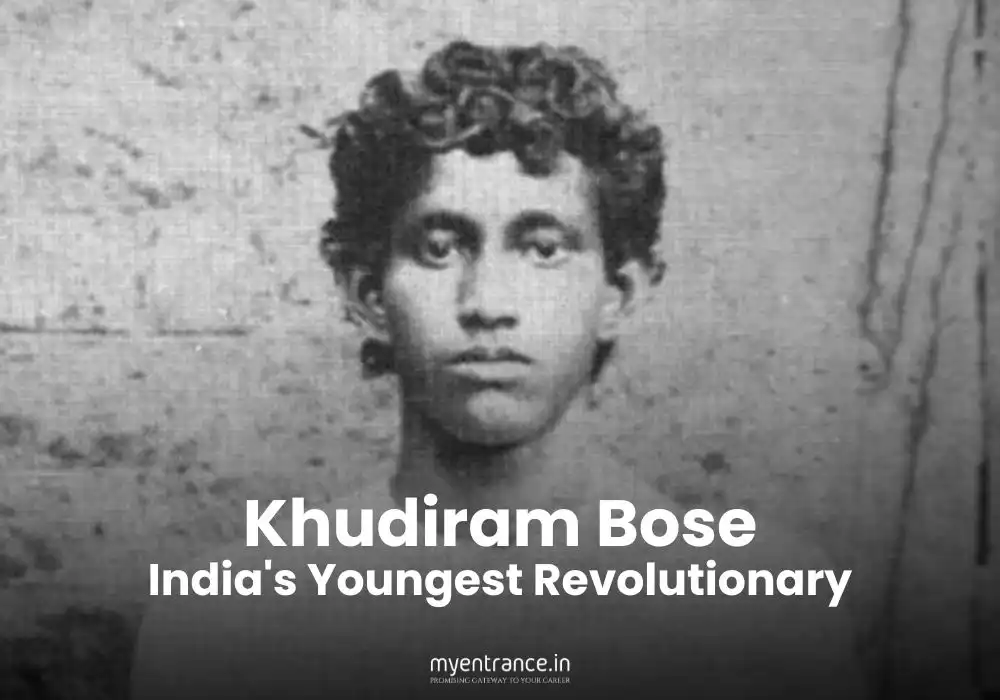
Union Home Minister Amit Shah recently paid tribute to the esteemed freedom fighter Khudiram Bose on his birth anniversary, highlighting him as a profound symbol of valor, courage, and sacrifice. Mr. Shah’s remarks on social media underscored Bose’s pivotal role in inspiring the nation’s youth towards armed revolution. More than just a name in history books, Khudiram Bose embodies the fiery spirit of a generation that dared to challenge colonial rule, leaving an indelible mark on India’s fight for independence. For students preparing for competitive exams, understanding the depth of his sacrifice and the context of his actions is crucial to grasping the essence of India’s revolutionary struggle.
The Dawn of a Revolutionary: Early Life and Influences
Born on December 3, 1889, in Mohabani village, Medinipur district, Bengal Presidency (present-day West Bengal), Khudiram Bose’s early life was marked by hardship and a growing awareness of the oppressive British Raj. He lost his parents at a tender age, fostering a self-reliant and determined spirit. The political climate of early 20th-century Bengal was charged with nationalist fervor, largely fueled by the controversial Partition of Bengal in 1905. This administrative decision by Lord Curzon sparked widespread protests and intensified the demand for swaraj (self-rule).
Young Khudiram was deeply influenced by revolutionary leaders like Sri Aurobindo and Barindra Kumar Ghosh, who advocated for radical methods to achieve independence. He quickly joined the revolutionary secret societies, such as the Anushilan Samiti and the Jugantar Party, which sought to overthrow British rule through armed struggle rather than constitutional means. These organizations trained young recruits in physical fitness, moral discipline, and revolutionary tactics, preparing them for daring acts of defiance.
The Spark of Defiance: The Muzaffarpur Conspiracy
The year 1908 saw Khudiram Bose, barely 18 years old, embarking on a mission that would forever etch his name in the annals of Indian history. The target was Douglas Kingsford, the Chief Magistrate of Calcutta, who had earned notoriety for his harsh sentences against nationalist activists, including public flogging. When Kingsford was transferred to Muzaffarpur as District Judge, revolutionary leaders, including Barindra Kumar Ghosh, decided to assassinate him as a warning to the British authorities.
Khudiram Bose, along with his associate Prafulla Chaki, was entrusted with this dangerous task. On April 30, 1908, the two revolutionaries waited outside the European Club in Muzaffarpur, where Kingsford was expected to leave. Mistaking a carriage belonging to barrister Pringle Kennedy for Kingsford’s, they hurled bombs at it. Tragically, the occupants, Mrs. and Miss Kennedy, lost their lives, while Kingsford remained unharmed. This unintended outcome sent shockwaves throughout British India and intensified the crackdown on revolutionaries.
The Ultimate Sacrifice: Arrest, Trial, and Martyrdom
Following the bombing, Khudiram Bose and Prafulla Chaki attempted to escape. Chaki, cornered by police, chose to take his own life rather than be captured, embodying the revolutionary pledge of never surrendering. Khudiram Bose, however, was apprehended at Waini railway station, exhausted and hungry, just hours after the incident. His arrest became a public spectacle, drawing immense attention and sympathy from the Indian populace.
The subsequent trial, known as the Muzaffarpur Conspiracy Case, captivated the nation. Despite his young age, Khudiram Bose displayed immense courage and composure throughout the proceedings. He made no attempt to deny his involvement, instead accepting his fate with an unwavering spirit. On August 11, 1908, at the age of 18 years, 8 months, and 11 days, Khudiram Bose was hanged in Muzaffarpur Jail. He walked to the gallows with a smile, a symbol of his fearless dedication to the cause of Indian independence. His execution sent a wave of sorrow and anger across the country, turning him into an instant martyr and a folk hero.
An Enduring Legacy: Inspiring Generations to Come
Khudiram Bose’s sacrifice resonated deeply with the youth of India, proving that even the youngest could challenge the might of the British Empire. His act of defiance, though controversial in its immediate outcome, ignited a fiercer flame of nationalism and armed resistance. His name became a rallying cry, his songs were sung by revolutionaries, and his courage inspired countless others to join the struggle. He symbolized the unwavering commitment to freedom, even at the cost of one’s life.
His legacy extends beyond the revolutionary movement, serving as a powerful reminder of selflessness and patriotism. For students preparing for exams like UPSC and SSC, understanding figures like Khudiram Bose is not just about memorizing dates and events, but about comprehending the complex tapestry of motivations, ideologies, and sacrifices that shaped modern India. He remains an eternal inspiration, representing the indomitable spirit of a nation yearning for self-determination and the readiness of its youth to lay down their lives for the cherished ideal of freedom.
Frequently Asked Questions (FAQs)
1. Who was Khudiram Bose and why is he significant in Indian history?
Khudiram Bose was one of the youngest Indian revolutionaries who played a significant role in the armed struggle for India’s independence from British rule. He is primarily remembered for his involvement in the 1908 Muzaffarpur Conspiracy Case and his subsequent martyrdom at the tender age of 18, which made him a national hero and inspired countless others to join the freedom movement.
2. What was the Muzaffarpur Conspiracy Case, and what was Khudiram Bose’s role in it?
The Muzaffarpur Conspiracy Case refers to the 1908 attempt by revolutionaries Khudiram Bose and Prafulla Chaki to assassinate District Magistrate Douglas Kingsford, who was known for his harsh sentences against Indian nationalists. While the target was missed and two innocent British women were killed, the event brought significant attention to the revolutionary movement and highlighted the extreme measures taken by freedom fighters. Khudiram Bose was one of the two main perpetrators of the bomb attack.
3. How old was Khudiram Bose when he was executed, and what was the impact of his execution?
Khudiram Bose was executed on August 11, 1908, when he was just 18 years, 8 months, and 11 days old. His youthful sacrifice had a profound impact, turning him into an instant martyr and a symbol of fearless patriotism. His execution ignited widespread public anger, intensified nationalist sentiments, and inspired many young Indians to join the revolutionary struggle against British rule, contributing to the broader armed revolution.
4. Which revolutionary organizations was Khudiram Bose associated with?
Khudiram Bose was primarily associated with prominent revolutionary secret societies in Bengal, specifically the Anushilan Samiti and the Jugantar Party. These organizations advocated for radical methods, including armed struggle and political assassinations, to achieve India’s independence from British colonial rule.
5. How does Khudiram Bose’s legacy continue to inspire the youth of the nation today?
Khudiram Bose’s legacy continues to inspire the youth by embodying unparalleled courage, selflessness, and an unwavering commitment to national ideals. His readiness to sacrifice his life at such a young age for the cause of freedom serves as a powerful reminder of patriotism and dedication. He represents the spirit of defiance against injustice and the potential for young individuals to bring about significant historical change, urging today’s youth to contribute meaningfully to their nation’s progress and uphold its values.





