
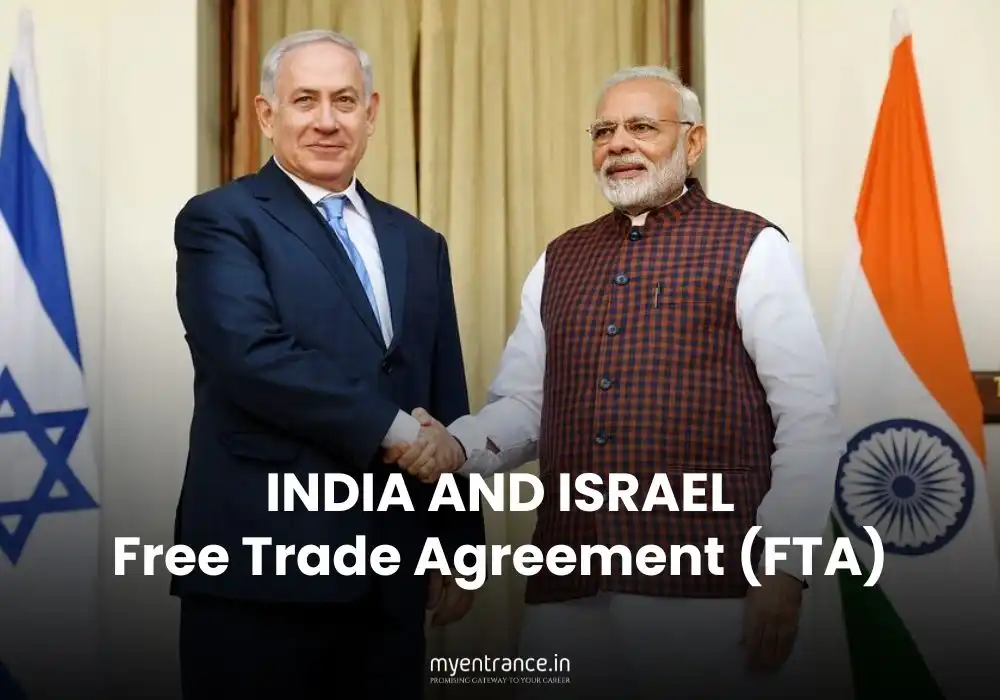
The landscape of global trade is constantly evolving, and nations are strategically forging alliances to secure mutual economic prosperity. In a significant development, Union Commerce and Industry Minister Piyush Goyal announced that India and Israel are exploring a unique two-phase approach to implement their proposed Free Trade Agreement (FTA). This strategic decision aims to expedite the flow of benefits to the business communities in both countries, ensuring a quicker realization of the agreement’s potential. Understanding this phased implementation is crucial for competitive exam aspirants, as it highlights key aspects of economic diplomacy, trade negotiations, and international relations.
Understanding the Framework of a Free Trade Agreement (FTA)
A Free Trade Agreement (FTA) is a pact between two or more countries to reduce barriers to imports and exports among them. Under an FTA, participating countries typically reduce or eliminate tariffs, quotas, and other non-tariff barriers on most goods and services traded between them. The primary objective is to foster stronger economic ties, promote trade, and enhance investment flows by making goods and services cheaper and more accessible. For countries like India and Israel, an FTA goes beyond mere economics, often serving as a cornerstone for deeper strategic partnerships and cultural exchange. It fundamentally reshapes market dynamics, encouraging specialization, increasing competition, and ultimately benefiting consumers through a wider variety of goods at competitive prices.
Why India and Israel Seek Deeper Economic Integration
India and Israel share a multifaceted relationship that has significantly deepened over the past few decades, extending from defence and security to agriculture, water management, and high-tech innovation. Bilateral trade between the two nations has shown consistent growth, yet there remains immense untapped potential. Israel, a technology powerhouse, offers cutting-edge solutions in areas like cybersecurity, agri-tech, and defence, while India presents a vast consumer market, a strong manufacturing base, and a growing pool of skilled human resources, particularly in IT and pharmaceuticals. An FTA would leverage these complementary strengths, facilitating greater market access for Indian goods and services in Israel, and similarly, enabling Israeli technology and products to penetrate the Indian market more easily. The underlying “why” for this agreement is rooted in a shared vision for economic growth, technological advancement, and strengthening geopolitical alliances in a rapidly changing global order.
The Strategic Imperative: Phased Implementation of the FTA
The announcement of a two-phase implementation for the India-Israel FTA is a pragmatic and strategically astute move. This approach means that instead of waiting for a single, comprehensive agreement to be finalized, negotiators aim to introduce a first phase covering certain agreed-upon goods and services relatively quickly. The “why” behind this method is multifaceted. Firstly, it ensures early benefits for the trade community. By “kickstarting” the agreement with less complex or sensitive sectors, both nations can immediately unlock trade opportunities and demonstrate tangible progress, building momentum and confidence among businesses and investors. This initial phase would likely focus on areas where consensus is easier to achieve and where immediate gains are most apparent, such as certain manufactured goods, agricultural products, or services.
Secondly, a phased approach provides flexibility to address more complex or sensitive issues in a subsequent phase. Negotiating an extensive FTA can be a lengthy process, often encountering hurdles related to market access for sensitive agricultural products, specific industrial tariffs, regulatory harmonization, or intellectual property rights. By breaking the agreement into phases, negotiators can tackle these intricate details without delaying the entire agreement. The “how” would likely involve identifying sectors with high potential for immediate benefit and relatively fewer trade barriers for the first phase, while reserving sectors requiring extensive deliberation and negotiation for the second. This iterative approach allows for adjustments, learnings, and deeper understanding of each other’s economic sensitivities as the relationship progresses, ensuring the final agreement is robust and mutually beneficial.
Anticipated Benefits and Broader Implications
The successful implementation of the India-Israel FTA, even in phases, is poised to yield significant benefits for both economies. For India, it promises enhanced market access for its textile, pharmaceutical, agricultural, and IT services sectors in Israel, potentially leading to increased exports and job creation. It also opens avenues for greater technology transfer, particularly in areas like defence, water management, and agricultural innovation, where Israel is a global leader. Indian industries could benefit from Israeli expertise to enhance productivity and quality, fostering innovation within India.
Conversely, Israel stands to gain access to India’s vast and rapidly growing consumer market, offering opportunities for its high-tech, defence, and specialized agricultural product industries. Increased bilateral investment flows are also a critical expectation, with Indian companies investing in Israeli startups and Israeli firms setting up manufacturing or R&D units in India. Beyond economic gains, this FTA strengthens the strategic partnership between India and Israel, enhancing their geopolitical standing and diversifying their trade relationships. It signals a mutual commitment to fostering economic resilience and cooperation in an increasingly interconnected and sometimes volatile global environment. This comprehensive approach, designed to accelerate benefits while managing complexities, underscores the growing maturity and strategic foresight in India’s economic diplomacy.
Frequently Asked Questions (FAQs)
Q1: What is the primary objective behind the India-Israel Free Trade Agreement (FTA)?
A1: The primary objective of the India-Israel FTA is to significantly boost bilateral trade and investment by reducing or eliminating tariffs and non-tariff barriers on goods and services. It aims to leverage the complementary strengths of both economies, fostering economic growth, promoting technological cooperation, and strengthening their overall strategic partnership.
Q2: Why are India and Israel considering a two-phased implementation for their proposed FTA?
A2: The two-phased implementation is a strategic decision to ensure early benefits for the trade communities of both countries. The first phase would cover less complex sectors to “kickstart” trade and build momentum, while allowing more time to negotiate intricate and sensitive issues in subsequent phases, thereby ensuring a comprehensive yet timely agreement.
Q3: Which sectors are expected to benefit most from the India-Israel FTA?
A3: India’s sectors like textiles, pharmaceuticals, agriculture, and IT services are expected to gain greater market access in Israel. Conversely, Israel’s high-tech industries, defence manufacturing, water management solutions, and specialized agricultural products anticipate increased opportunities in India’s vast market.
Q4: How does this FTA contribute to India’s broader foreign policy and economic goals?
A4: The India-Israel FTA aligns with India’s “Act West” policy and its strategy of diversifying trade partners and strengthening strategic alliances. It enhances India’s economic resilience, fosters technological self-reliance through collaboration, and solidifies its diplomatic footprint in the Middle East, contributing to regional stability and economic integration.
Q5: What challenges might arise during the negotiation and implementation of the India-Israel FTA?
A5: Potential challenges include resolving differences over tariff reductions for sensitive products (like certain agricultural goods), harmonizing regulatory standards, addressing intellectual property rights concerns, and ensuring fair market access for all businesses. The phased approach is designed to mitigate some of these complexities by breaking them into manageable parts.





