
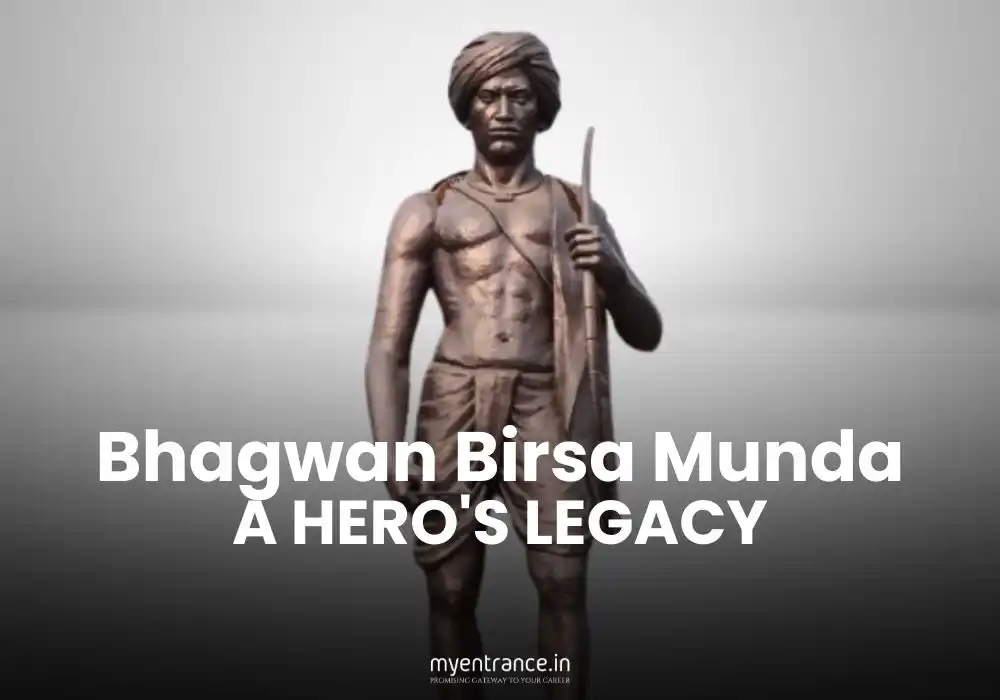
Unveiling Bhagwan Birsa Munda: A Hero’s Legacy and Your Definitive Exam Success Guide
Every year, as the nation observes Janjatiya Gaurav Divas, the air fills with a profound sense of remembrance and reverence for the indomitable spirit of India’s tribal communities. This day is not merely a ceremonial observance but a powerful invocation of a history often marginalized, a tribute to the countless heroes who shaped the nation’s struggle for freedom and identity. Towering among these figures is Bhagwan Birsa Munda—a name that resonates not as a distant historical relic, but as a living emblem of resistance, faith, and empowerment. Recent commemorations, led by the nation’s highest dignitaries on significant anniversaries, have further cemented his pivotal role in our collective consciousness. For aspirants preparing for the crucible of competitive examinations—be it UPSC, SSC, PSC, NID, NIFT, or others—understanding Birsa Munda transcends the simple act of memorizing dates and events. It is about internalizing a critical, dynamic chapter of India’s past that sits at the intersection of history, current affairs, and social justice, forming a frequent and vital component of the modern examination syllabus.
Who Was Bhagwan Birsa Munda? The Prophet of a People
Born on November 15, 1875, in the village of Ulihatu in the Chotanagpur Plateau (present-day Jharkhand), Birsa Munda’s life was set against a backdrop of profound upheaval. His childhood was not one of privilege but of firsthand witness to the systemic exploitation of his people, the Munda tribe. The twin forces of British colonial administration and the exploitative practices of the Dikus (outsider moneylenders and landlords) had plunged his community into a state of deep distress. The traditional Khuntkatti land system, a communal form of ownership, was being systematically dismantled, replaced by oppressive land revenue policies and forced labor (beth begari).
Birsa’s early exposure to Christian missionary schools gave him insight into the world of the colonizers, but he ultimately rejected its assimilative pressures. Instead, he channeled this knowledge to forge a powerful socio-religious movement. He emerged not just as a leader, but as a prophet—a charismatic figure believed to possess divine powers to heal and invoke divine justice. His followers began to call him Dharti Abba—Father of the Earth—a title that encapsulated their belief in him as their protector and the rightful custodian of their ancestral lands. His vision was one of holistic regeneration: a call to abandon foreign customs, revert to traditional practices, and unite under a single, empowered identity to reclaim what was rightfully theirs.
The Ulgulan: The Great Tumult and Its Revolutionary Ideals
The movement Birsa Munda spearheaded, famously known as the Ulgulan (The Great Tumult), was far more than a sporadic revolt; it was a well-organized, ideologically driven assertion of indigenous rights. From 1899-1900, the Chotanagpur region witnessed a fierce uprising that directly challenged the foundations of colonial authority. The objectives of the Ulgulan were clear and profound:
Political: The establishment of Munda Raj—a self-governing territory free from British and Diku interference.
Economic: The abolition of the exploitative land revenue system and the hated beth begari, and the restoration of the community’s rights over Jal, Jangal, Zameen (Water, Forest, Land).
Socio-Cultural: A spiritual revival that urged the Mundas to reject missionary influence and return to their ancestral religious and cultural roots.
Birsa masterfully used symbolism and faith to mobilize thousands. He declared a divine order to fight against oppression, and his followers attacked police stations, churches, and symbols of colonial power. While the British eventually suppressed the uprising with overwhelming force, capturing and tragically killing Birsa Munda in prison at the young age of 25, the Ulgulan was far from a failure. Its tremors were felt deep within the colonial administration, forcing it to acknowledge the grave injustices of its land policies.
Why Birsa Munda Matters Today: The Enduring Legacy and Janjatiya Gaurav Divas
The legacy of Bhagwan Birsa Munda is not confined to the history books; it is a living force that continues to shape modern India’s legal and social landscape.
Legal and Administrative Impact: The most direct outcome of the Ulgulan was the passage of the Chotanagpur Tenancy Act (CNT) of 1908. This landmark legislation, though a colonial compromise, was a significant victory. It recognized the tribal community’s land rights and placed restrictions on the transfer of tribal land to non-tribals, a protective measure whose spirit continues to influence land reform debates in independent India.
Symbol of Tribal Empowerment: Birsa Munda became the archetype of tribal resistance. His life inspired generations of activists and movements fighting for tribal rights, cultural preservation, and environmental justice, particularly in the regions of central and eastern India. He stands as a permanent symbol of the fight against displacement and cultural erosion.
Janjatiya Gaurav Divas: In a fitting tribute to his unparalleled contributions and to honor the sacrifices of all tribal freedom fighters, the Government of India declared his birth anniversary, November 15, as Janjatiya Gaurav Divas (Tribal Pride Day). This annual observance is a crucial step in decolonizing Indian history, ensuring that the narrative of India’s freedom struggle is inclusive and acknowledges the pivotal role of its Adivasi communities. It is a day to celebrate the rich, diverse heritage and the invaluable contributions of tribal communities to the nation’s cultural fabric.
Mastering Birsa Munda for Your Competitive Examinations: A Strategic Approach
A thorough grasp of Birsa Munda’s life and legacy is a high-yield asset for any serious aspirant. Here’s a structured breakdown of how to approach this topic for various competitive exams:
1. For History (GS Paper I for UPSC, State PSCs, and SSC):
Focus on the Ulgulan as a Tribal Movement: Understand its causes, nature, and consequences. Compare and contrast it with other contemporary tribal movements like the Santhal Rebellion, Kol Rebellion, or the Rampa Revolts. What were the common threads of land and identity?
Analyze its Significance: Go beyond facts. Be prepared to discuss why the Ulgulan was distinct—its blend of religious revivalism with political objectives, and its success in extracting administrative concessions.
Link to Broader Nationalism: While tribal movements had their specific grievances, understand how they contributed to the wider anti-colonial sentiment and challenged the British Raj’s economic exploitation.
2. For Static General Knowledge:
Core Facts: Memorize key data points: Birth (Nov 15, 1875, Ulihatu), Title (Dharti Abba), Movement (Ulgulan, 1899-1900), Death (June 9, 1900, in Ranchi Jail).
Key Legislation: The Chotanagpur Tenancy Act, 1908—its year and primary significance.
Geographical Context: The region of his activities—Chotanagpur Plateau, present-day Jharkhand.
3. For Current Affairs & Essay Writing:
Janjatiya Gaurav Divas: Be aware of its inception, purpose, and the themes of recent celebrations. Note any new government schemes or initiatives for tribal welfare launched on this day.
Contemporary Relevance: Use Birsa Munda’s legacy to enrich essays on topics like “Tribal Empowerment in India,” “Challenges of Development and Displacement,” “Preservation of Indigenous Culture,” or “The Unsung Heroes of India’s Freedom Struggle.”
Mains Answer Writing: For UPSC Mains, you can use his example to substantiate arguments about social mobility, peasant and tribal struggles, and the evolution of administrative policies in India.
Integrating into Your Preparation:
Platforms like myentrance.in, with their interactive tests and daily news quizzes, are invaluable for consolidating this knowledge. They contextualize static facts within current events, helping you anticipate and answer application-based questions confidently. Mastering Birsa Munda equips you not just with marks, but with a deeper, more nuanced understanding of the forces that have shaped modern India.
Frequently Asked Questions (FAQs)
1. Who was Bhagwan Birsa Munda?
Bhagwan Birsa Munda was a revered tribal freedom fighter, religious leader, and folk hero from the Munda tribe in the late 19th century. He led the significant Ulgulan rebellion against British colonial rule and exploitative landlords to protect his community’s land, culture, and right to self-determination, earning him the title Dharti Abba (Father of the Earth).
2. What was the ‘Ulgulan’ movement?
The ‘Ulgulan’ (The Great Tumult) was a sustained rebellion led by Birsa Munda from 1899 to 1900. It was a direct response to the destruction of the traditional tribal land system, forced labor, and cultural subjugation. The movement aimed to establish Munda Raj and reclaim tribal rights over water, forest, and land through armed resistance and spiritual revival.
3. Why is Janjatiya Gaurav Divas celebrated?
Janjatiya Gaurav Divas (Tribal Pride Day) is celebrated annually on November 15th, the birth anniversary of Bhagwan Birsa Munda. It was declared by the Government of India to honor his legacy and to recognize the immense sacrifices, rich cultural heritage, and pivotal role of all tribal communities and freedom fighters in India’s history.
4. What is Birsa Munda’s lasting significance for modern India?
Birsa Munda’s legacy is multi-faceted. He is an enduring symbol of tribal resistance, environmental stewardship, and the assertion of indigenous identity. His struggle led to protective land laws like the Chotanagpur Tenancy Act, and he continues to inspire contemporary movements for social justice, tribal rights, and the preservation of India’s diverse cultural heritage.
5. How can understanding Birsa Munda help in competitive exams?
Knowledge of Birsa Munda is highly relevant for exams. It features in History sections on tribal movements, in Static GK for key facts and figures, and in Current Affairs related to Janjatiya Gaurav Divas and tribal welfare policies. A comprehensive understanding provides a critical perspective on India’s freedom struggle and socio-administrative history, enabling aspirants to tackle both factual and analytical questions with confidence.





