
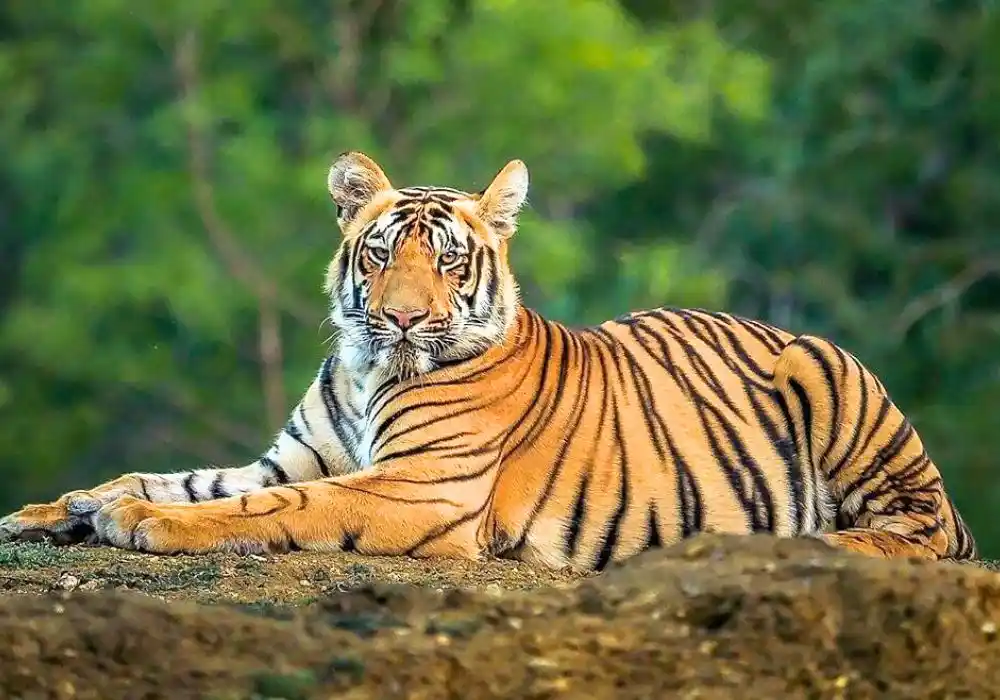
India’s commitment to wildlife conservation constantly evolves, introducing innovative strategies to protect its invaluable biodiversity. One such critical initiative gaining prominence, particularly for competitive exam aspirants, is the Tigers Outside Tiger Reserves (TOTR) Project. Launched as part of a broader conservation push during Wildlife Week 2025, this project signifies a crucial shift in our approach to big cat protection. For those preparing for UPSC, SSC, PSC, or any government exam, understanding this initiative isn’t just about current affairs; it’s about grasping the intricate balance of ecology, policy, and community involvement that defines India’s environmental future.
What Exactly is the Tigers Outside Tiger Reserves (TOTR) Project?
At its core, the Tigers Outside Tiger Reserves (TOTR) Project acknowledges a significant reality: not all tigers live within the designated boundaries of India’s established tiger reserves. As tiger populations grow and their habitats become saturated, many magnificent big cats naturally disperse into areas outside these protected zones, including agricultural lands, human-dominated landscapes, and non-notified forest patches. The TOTR project is a strategic initiative designed to monitor, protect, and manage these tiger populations that reside beyond the conventional reserve boundaries. It’s about extending the conservation umbrella to where the tigers actually are, not just where we expect them to be. This project was one of five key conservation projects unveiled by the Union Environment Minister during the significant Wildlife Week 2025, alongside four national-level wildlife monitoring programmes, marking a comprehensive boost to India’s wildlife protection efforts.
Why is the TOTR Project So Crucial? Understanding the ‘Why’
The need for a project like TOTR stems from several critical factors that are highly relevant for your Environment & Ecology section:
Firstly, expanding tiger populations: India has witnessed commendable success in tiger conservation, leading to an increase in tiger numbers. While celebratory, this success also brings challenges, as existing reserves may not be able to accommodate all individuals, leading to dispersal.
Secondly, habitat fragmentation and connectivity: Tigers require large, contiguous habitats. Human development often fragments these natural corridors, forcing tigers to move through non-protected areas. The TOTR project aims to understand and secure these crucial dispersal routes.
Thirdly, mitigating human-wildlife conflict: Tigers outside reserves are more prone to encountering human settlements, leading to increased instances of conflict, which can be detrimental to both humans and tigers. Effective management in these areas is vital for coexistence.
Finally, ecological balance and genetic diversity: Protecting tigers outside reserves contributes to overall landscape-level conservation, maintaining ecological balance in broader ecosystems, and ensuring genetic exchange among different tiger populations, which is crucial for their long-term survival.
When and Where: The Launch and Scope
The Tigers Outside Tiger Reserves Project was officially launched during the nationwide celebration of Wildlife Week 2025. This annual event serves as a platform to highlight India’s conservation achievements and introduce new initiatives. The launch by the Union Environment Minister during this significant week underscores the government’s high priority for this project. While specific initial regions for implementation will be determined based on scientific data regarding tiger presence outside reserves, the project conceptually targets all regions where such populations exist, moving beyond the traditional geographical confines of existing tiger reserves. Its scope is national, aiming for a coordinated approach across different states.
How Will the TOTR Project Work? The Operational Blueprint
The implementation of the TOTR project involves a multi-pronged strategy, drawing upon expertise in various fields:
Monitoring and Surveillance: This is a cornerstone, employing advanced techniques like camera trapping, DNA analysis of scat samples, and satellite telemetry to track tiger movements and population densities outside reserves. This data is crucial for informed decision-making.
Community Engagement and Awareness: A major component will be working closely with local communities living near tiger habitats. This includes awareness campaigns, involving them in conservation efforts, and addressing their concerns regarding human-wildlife conflict through various mitigation measures.
Habitat Improvement in Non-Reserve Areas: Identifying and improving habitat quality in non-protected forest patches, corridors, and even agricultural landscapes where tigers are known to move or reside. This could involve promoting native vegetation, ensuring water sources, and reducing disturbances.
Policy and Legal Frameworks: Strengthening existing legal provisions and developing new ones to provide protection to tigers and their habitats outside notified reserves. This might also involve innovative land-use planning around critical corridors.
Inter-departmental Coordination: Effective implementation requires seamless coordination between forest departments, local administration, agricultural departments, and wildlife research institutions to ensure a holistic approach.
For aspiring civil servants and competitive exam takers, grasping the objectives and operational aspects of the TOTR Project is essential for tackling questions related to current affairs, environmental policy, sustainable development, and conservation challenges that frequently appear in examinations like UPSC, SSC, and various State PSCs. This initiative reflects a forward-thinking approach to conservation, acknowledging the dynamic nature of wildlife and their habitats, and moving towards a more inclusive and adaptive protection strategy for India’s national animal.
Frequently Asked Questions (FAQs)
1. What is the main goal of the Tigers Outside Tiger Reserves (TOTR) Project?
The primary goal of the TOTR Project is to effectively monitor, protect, and manage tiger populations that naturally reside or disperse into areas outside India’s designated tiger reserves, thereby mitigating human-wildlife conflict, securing crucial wildlife corridors, and ensuring the overall long-term survival and genetic health of India’s tiger population across a broader landscape.
2. Why is it necessary to protect tigers outside formal reserves when we already have dedicated tiger reserves?
As India’s tiger population has grown significantly, many tigers are now dispersing beyond the capacity and boundaries of existing reserves into new territories. Protecting these “outside” tigers is crucial because it ensures the genetic diversity of the entire population, maintains ecological balance in non-protected areas, and addresses the rising incidents of human-wildlife conflict that occur when tigers encounter human settlements in these new territories.
3. When was the TOTR Project officially launched, and by whom?
The Tigers Outside Tiger Reserves Project was officially launched by the Union Environment Minister during Wildlife Week 2025. This launch was part of a broader package of five key conservation projects and four national-level wildlife monitoring programmes aimed at enhancing India’s wildlife protection framework.
4. How will the TOTR Project address the issue of human-wildlife conflict?
The TOTR Project aims to address human-wildlife conflict through several strategies, including proactive monitoring of tiger movements to provide early warnings to local communities, engaging with residents through awareness programs, involving them in conservation efforts, and implementing mitigation measures such as habitat improvement in non-reserve areas and exploring compensation mechanisms to build tolerance and foster coexistence.
5. What is the significance of the TOTR Project for competitive exam aspirants (e.g., UPSC, SSC)?
For competitive exam aspirants, the TOTR Project is highly significant as it falls under crucial topics like Current Affairs, Environment & Ecology, and Government Schemes and Policies. Questions related to wildlife conservation strategies, human-wildlife conflict, biodiversity protection, and sustainable development are common in exams like UPSC, SSC, and various State PSCs. Understanding this project demonstrates a grasp of contemporary environmental challenges and India’s proactive policy responses.





