
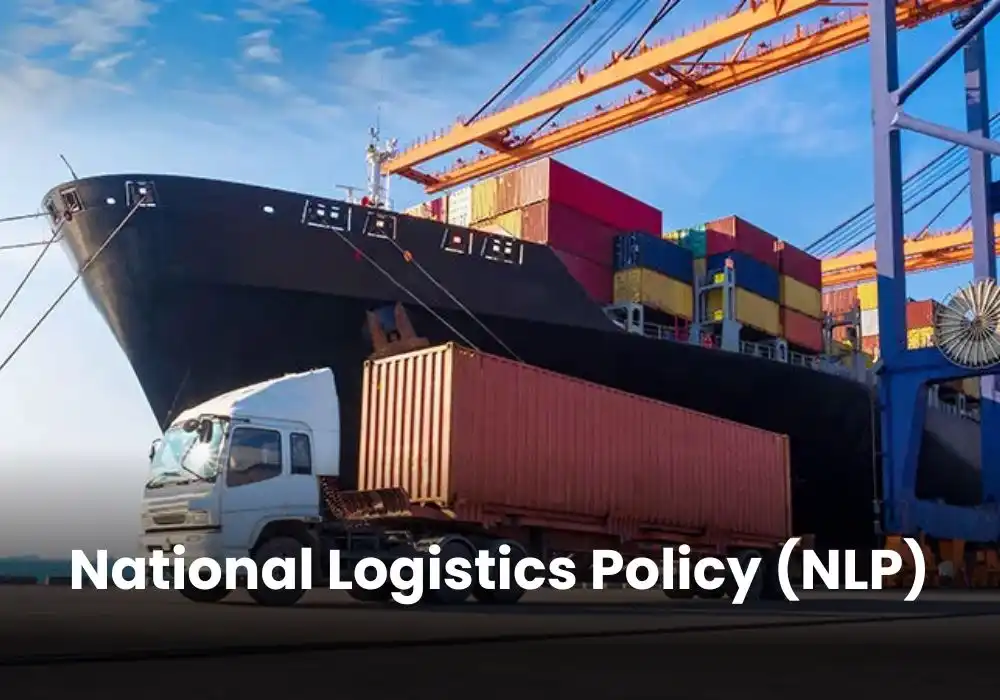
As India rapidly scales new economic heights, understanding the foundational policies driving this growth becomes crucial, especially for aspirants eyeing a career in public service. Among these, the National Logistics Policy (NLP) stands out as a transformative initiative. Launched by Prime Minister Narendra Modi, this policy is quickly approaching its third anniversary in September 2025, marking a significant milestone in reshaping India’s logistical landscape. For anyone preparing for challenging examinations like UPSC, SSC, PSC, NID, NIFT, or other government recruitment tests, grasping the nuances of the NLP isn’t just about current affairs; it’s about comprehending India’s strategic vision for economic efficiency and global competitiveness.
What is the National Logistics Policy (NLP)?
At its core, the National Logistics Policy is a comprehensive framework designed to create a technologically integrated, cost-efficient, resilient, sustainable, and trusted logistics ecosystem in India. It’s not merely a set of guidelines but a strategic blueprint for streamlining the movement of goods across the nation. Imagine a vast, complex network of roads, railways, ports, and warehouses; the NLP aims to bring seamless coordination and efficiency to every part of this network. The policy’s overarching vision is to reduce logistics costs significantly, improve India’s ranking in global logistics indices, and create jobs, thereby boosting economic growth and making Indian products more competitive globally.
Why Was the National Logistics Policy Launched?
Before the NLP, India’s logistics sector faced several challenges. High logistics costs, estimated to be around 13-14% of the Gross Domestic Product (GDP), significantly impacted the competitiveness of Indian goods. The sector was largely fragmented, lacked adequate infrastructure, suffered from inefficient processes, and often operated with limited digital integration. These inefficiencies led to delays, increased costs, and ultimately hindered economic growth. The NLP was conceived to directly address these pain points, aiming to bring down logistics costs to a single-digit percentage of GDP, comparable to developed economies. This strategic move was essential to enhance India’s manufacturing prowess, boost exports, and integrate better into global supply chains.
When and How Did NLP Come Into Being?
The National Logistics Policy was officially launched by the Prime Minister on September 17, 2022. While its formal launch was recent, the groundwork involved extensive consultations and planning, reflecting a national commitment to modernizing the logistics sector. The policy operates on several key pillars, fundamentally transforming how logistics function in India. Firstly, it focuses heavily on digitalization, leveraging technology to create a unified digital ecosystem. Initiatives like the Unified Logistics Interface Platform (ULIP) and the Ease of Logistics Services (E-LogS) portal are central to this, providing a single window for all logistics-related services and data exchange. This digital backbone ensures transparency and efficiency.
Secondly, the NLP emphasizes infrastructure development and multi-modal connectivity. It works in conjunction with the PM Gati Shakti National Master Plan, which aims to integrate infrastructure planning and implementation across various ministries. This includes enhancing road, rail, air, and waterway networks, developing multi-modal logistics parks, and improving warehousing facilities. Thirdly, the policy focuses on skill development and capacity building within the logistics workforce, recognizing that a skilled human resource is vital for effective implementation. Lastly, it aims for a rationalized regulatory framework, simplifying rules and procedures to create a more business-friendly environment for logistics players.
Where Does NLP’s Impact Resonate?
The impact of the National Logistics Policy is broad and far-reaching, touching almost every sector of the Indian economy. From agriculture, where efficient supply chains can reduce post-harvest losses, to manufacturing, where timely delivery of raw materials and finished products is critical, the NLP brings a wave of efficiency. Consumers benefit from reduced prices due to lower transportation costs, and businesses gain from improved reliability and speed. States are actively engaged in developing their own logistics plans, contributing to a truly national transformation. Ultimately, a more efficient logistics sector boosts India’s overall economic output, attracts foreign investment, and strengthens its position as a global manufacturing and trading hub. For competitive exam aspirants, understanding these implications is key, as the NLP frequently features in current affairs, economy, and governance sections.
Frequently Asked Questions (FAQs)
1. What is the primary objective of the National Logistics Policy (NLP)?
The primary objective of the NLP is to reduce India’s logistics costs to be comparable to global benchmarks, improve the country’s ranking in the Logistics Performance Index, promote economic growth, and make Indian goods more competitive in domestic and international markets.
2. Which government body is primarily responsible for the implementation and monitoring of the NLP?
The Department for Promotion of Industry and Internal Trade (DPIIT) under the Ministry of Commerce and Industry (MoC&I) is the nodal body responsible for the overall implementation, monitoring, and development of the National Logistics Policy.
3. What are some key technological initiatives introduced under the NLP to enhance logistics efficiency?
Key technological initiatives include the Unified Logistics Interface Platform (ULIP), which integrates various digital services for logistics, and the Ease of Logistics Services (E-LogS) portal, providing a single window for industry-related grievances and solutions.
4. How does the National Logistics Policy integrate with other major government initiatives?
The NLP works in close synergy with the PM Gati Shakti National Master Plan, which focuses on integrated infrastructure development, ensuring that logistics infrastructure projects are planned and executed efficiently with multi-modal connectivity in mind.
5. Why is understanding the National Logistics Policy important for competitive exam aspirants?
The National Logistics Policy is crucial for exam aspirants because it is a significant current affairs topic related to India’s economic development, infrastructure, governance, and trade. Questions related to its objectives, initiatives, impact, and associated government bodies frequently appear in general awareness, economy, and public policy sections of competitive examinations.





