
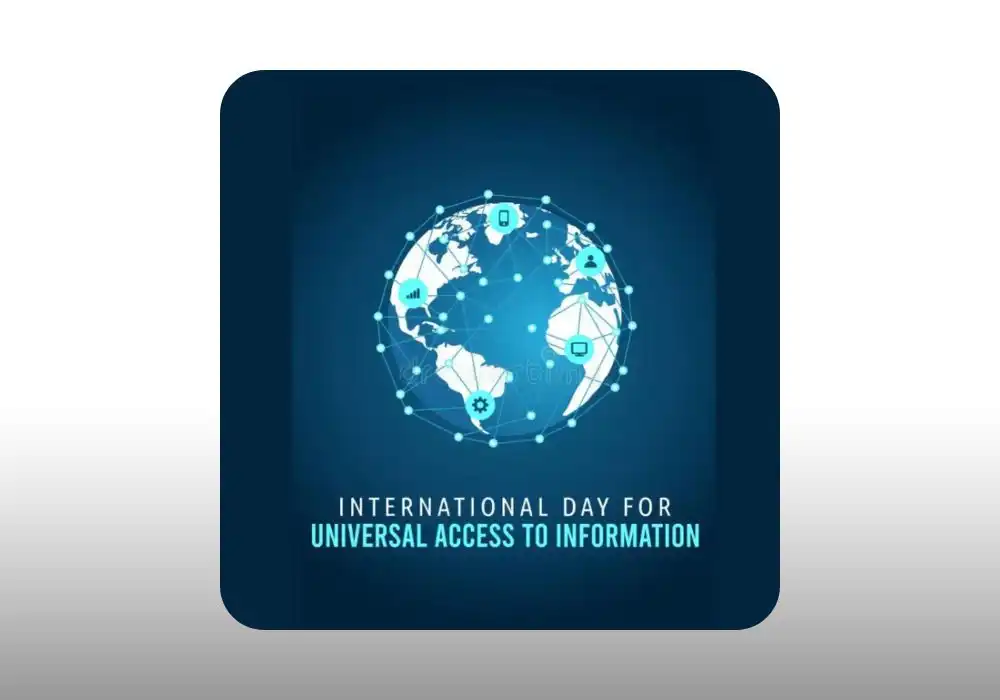
The Unseen Foundation of Democracy and Your Exam Preparation
In an increasingly interconnected world, the ability to access reliable information is not just a convenience; it is a fundamental pillar of democratic governance and an indispensable tool for every ambitious competitive exam aspirant. As we look towards the International Day for Universal Access to Information (IDUAI) 2025, it’s a moment to deeply understand why this global observance holds immense significance, not only for transparent societies but also for your journey towards cracking prestigious examinations like UPSC, SSC, PSC, NID, NIFT, and other government roles. This day reminds us that informed citizens build stronger nations, and informed aspirants build successful careers. Our daily current affairs compilation for SSC is a key to success.
What is the International Day for Universal Access to Information (IDUAI)?
Celebrated annually on September 28th, the International Day for Universal Access to Information serves as a global platform to advocate for the universal right to seek, receive, and impart information. It is much more than just a calendar date; it champions the principle that individuals should have the ability to access data and records held by public bodies. Proclaimed by the United Nations General Assembly in 2019, following its initial recognition by UNESCO in 2015, IDUAI highlights how access to information empowers citizens, fosters transparency, and promotes accountability in governance worldwide. For competitive exams, understanding this concept is crucial as it underpins many topics related to public administration, rights, and governance.
Why is Access to Information Crucial? The Pillars of Good Governance
The importance of universal access to information cannot be overstated, both for societal progress and for a comprehensive understanding of subjects relevant to your exams. Primarily, it acts as a powerful tool for transparency and accountability. When citizens can access government data, they can hold public officials and institutions responsible for their actions, thereby reducing corruption and promoting ethical governance. This directly ties into the Ethics and Governance papers of exams like UPSC.
Secondly, access to information empowers citizens. It enables individuals to make informed decisions about their lives, their communities, and their participation in democratic processes. Whether it’s knowing about public services, government policies, or environmental data, an informed populace is an engaged populace. Thirdly, it is a vital instrument in combating corruption by shedding light on financial dealings and administrative processes, a theme often explored in current affairs and general awareness sections. Lastly, it plays a significant role in sustainable development, as informed policy-making and public participation are essential for addressing complex global challenges. For aspirants, grasping these underlying principles provides a deeper insight into the functioning of the state and society, often forming the core of analytical questions in essay and mains examinations.
A Brief History: When and How Did IDUAI Emerge?
The journey towards formally recognizing universal access to information is a testament to a growing global consensus. While the concept of a “Right to Know” had been advocated for decades by various civil society organizations, the specific idea for an international day gained momentum over time. Originally observed by many advocacy groups as the “International Right to Know Day” since 2002, UNESCO formally endorsed the idea in 2015, recognizing its critical role in achieving the Sustainable Development Goals. This paved the way for the United Nations General Assembly to officially proclaim September 28th as the International Day for Universal Access to Information in 2019, solidifying its global status and encouraging member states to adopt and implement robust right-to-information legislation. Understanding this historical progression helps in answering questions about international organizations and their mandates.
Where Does the Right to Information Stand Globally and in India?
Globally, the right to information is increasingly recognized as a fundamental human right, often drawing parallels with Article 19 of the Universal Declaration of Human Rights which speaks of the right to seek, receive, and impart information and ideas through any media regardless of frontiers. Many countries have enacted specific legislation to operationalize this right.
In India, the Right to Information (RTI) Act, 2005, stands as a landmark legislation. It is a powerful instrument that has transformed governance by enabling citizens to demand information from public authorities. This act is not merely a legal provision; it is a mechanism that reinforces the spirit of democracy, holding government bodies accountable at all levels – from central ministries to local panchayats. For your competitive exams, particularly for UPSC and SSC, a thorough understanding of the RTI Act, its provisions, limitations, and impact is absolutely essential. Questions on its significance, challenges in implementation, and landmark judgments are frequent occurrences in both preliminary and main examinations, making it a critical static general knowledge topic that intersects with current affairs.
How Does MyEntrance.in Help You Master This Critical Topic?
At myentrance.in, we understand that mastering subjects like governance, polity, and current affairs is crucial for your success. We offer a comprehensive suite of resources designed to help you prepare effectively for exams that test your understanding of topics like the International Day for Universal Access to Information and India’s RTI Act. Our interactive examinations and answers provide in-depth practice, while our current affairs sections keep you updated on the latest developments related to transparency and accountability. You can also explore our daily news quizzes to test your grasp of recent events and delve into our static general knowledge materials for a solid foundation on the principles of the Right to Information. Furthermore, our examination tips provide strategic guidance on how to approach questions on such vital subjects, ensuring you’re fully prepared to excel.
Your Role in an Informed Future
As aspirants for roles in public service, you are not just studying for an exam; you are preparing to become custodians of public trust and agents of change. Understanding the International Day for Universal Access to Information is more than scoring marks; it is about imbibing the values of transparency, accountability, and informed decision-making that will define your career. Embrace the power of information, not just to clear your exams, but to contribute to a more open, just, and equitable society.
Frequently Asked Questions (FAQs)
Q1: What is the main purpose of the International Day for Universal Access to Information?
A1: The primary purpose of the International Day for Universal Access to Information is to raise global awareness about the importance of the right to seek, receive, and impart information. It advocates for transparent governance, fosters accountability, and empowers citizens to participate effectively in democratic processes.
Q2: When is the International Day for Universal Access to Information observed each year?
A2: This significant international day is celebrated annually on September 28th, bringing attention to the global movement for information access and transparency.
Q3: How is the Right to Information (RTI) relevant for competitive exams in India?
A3: The Right to Information (RTI) Act, 2005, is highly relevant for competitive exams in India, especially for UPSC, SSC, and other government service examinations. It is a recurring topic in Polity, Governance, Ethics, and Current Affairs sections, with questions often testing its provisions, impact, challenges, and related judicial interpretations.
Q4: Which international body officially recognized the International Day for Universal Access to Information?
A4: The United Nations General Assembly officially proclaimed September 28th as the International Day for Universal Access to Information (IDUAI) in 2019, following its initial endorsement by UNESCO in 2015.
Q5: What is the difference between freedom of expression and universal access to information?
A5: While complementary, freedom of expression is typically defined as the right to *speak*, *write*, and *impart* information and ideas without interference. Universal access to information, on the other hand, is the right to *seek* and *receive* information, particularly that held by public bodies. One focuses on output, the other on input, both vital for an open society.





