
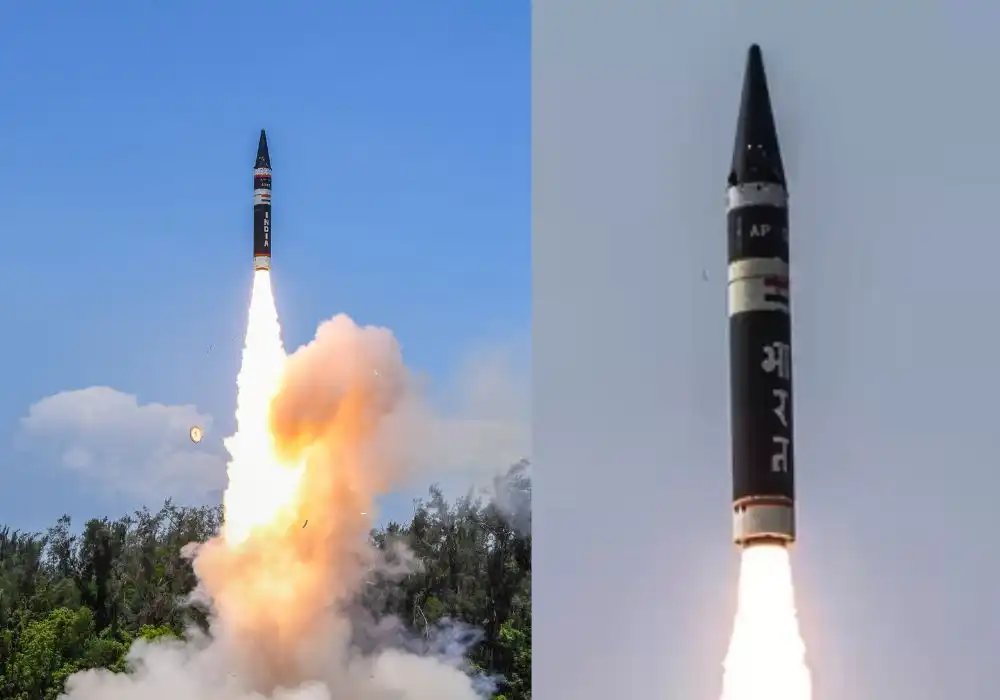
Decoding India’s Strategic Edge: The Agni-Prime Missile Test Explained
Welcome to MyEntrance.in, your trusted guide through the dynamic world of competitive exams. Today, we unravel a critical development in India’s defense capabilities: the recent successful test of the Agni-Prime missile. This event, a joint effort by the Defence Research and Development Organisation (DRDO) and the Strategic Forces Command (SFC), isn’t just news; it’s a testament to India’s growing strategic independence and technological prowess, offering invaluable insights for your current affairs and general knowledge preparation. Prepare for current affairs sections by taking our daily current affairs quiz for UPSC and SSC.
What is Agni-Prime? India’s Next-Gen Strategic Missile
The Agni-Prime, often referred to as Agni-P, represents a new generation of India’s formidable Agni series of ballistic missiles. Unlike its predecessors, Agni-Prime is a two-stage canisterized solid-propellant ballistic missile, designed to be lighter, more agile, and highly accurate. Its operational range typically falls between 1,000 to 2,000 kilometers. The “canisterized” feature is particularly significant; it means the missile can be stored and launched from a sealed container, offering enhanced operational flexibility, quicker deployment, and easier transport via road or rail-mobile launchers. This design significantly reduces response time and enhances survivability, making it a critical component of India’s credible minimum deterrence policy. The Agni-Prime is capable of carrying a nuclear warhead, reinforcing India’s strategic defense posture against potential adversaries.
The Architects of India’s Defense: DRDO and SFC
This successful test is a remarkable collaborative achievement between two pivotal entities: the Defence Research and Development Organisation (DRDO) and the Strategic Forces Command (SFC). The DRDO stands as India’s premier agency for military research and development. Its scientists and engineers are at the forefront of designing, developing, and testing advanced defense technologies, from missiles and aircraft to radar systems and electronic warfare. The Agni-Prime missile is a product of DRDO’s tireless innovation, reflecting the nation’s commitment to self-reliance in defense.
Complementing DRDO’s developmental role is the Strategic Forces Command (SFC). The SFC is the tri-service command responsible for the management and administration of India’s tactical and strategic nuclear weapons stockpile. It operates and maintains the country’s nuclear assets, ensuring their readiness and operational deployment. The SFC’s involvement in the test signifies the missile’s successful transition from development to operational validation, ensuring it meets the stringent requirements for its critical role in India’s strategic deterrent. This collaboration ensures that cutting-edge technology developed by DRDO is effectively integrated into India’s defense framework by SFC.
Where and How the Test Unfolded
The recent developmental flight test of the Agni-Prime missile took place from A.P.J. Abdul Kalam Island, off the coast of Odisha. This island, formerly known as Wheeler Island, serves as India’s primary missile testing range and is equipped with advanced launch facilities. The test utilized a mobile launcher system, demonstrating the missile’s capability for flexible deployment from various platforms. During the test, the missile followed its pre-designated trajectory with high accuracy, meeting all mission objectives. Various telemetry and radar stations positioned along the eastern coast meticulously tracked its performance, collecting crucial data that confirmed the missile’s advanced navigation and guidance systems, as well as its robust propulsion. This comprehensive evaluation ensures the missile’s reliability and precision in real-world scenarios, affirming India’s indigenous technological capabilities. Ensure consistent marks by studying from our complete static GK preparation material.
Why This Matters for Your Exams
For aspirants preparing for UPSC, SSC, PSC, NID, NIFT, and other government examinations, understanding the Agni-Prime missile test is multi-faceted and essential.
* Current Affairs: This event is a significant contemporary development in national security and defense, making it a hot topic for current affairs sections. Be prepared for questions on the missile’s features, the organizations involved, and its strategic implications for India.
* Static General Knowledge: It links directly to static GK topics such as India’s missile program, defense organizations (DRDO, SFC), types of missiles (ballistic, cruise, nuclear-capable), and geographical locations of defense facilities (A.P.J. Abdul Kalam Island). This provides a foundational understanding of India’s defense infrastructure.
* National Security and International Relations: The test underscores India’s commitment to maintaining a credible minimum deterrence, which is a crucial aspect of its national security doctrine and foreign policy. Understanding this context helps in analytical questions about India’s geopolitical standing.
* Science & Technology: It highlights indigenous technological advancements in aerospace and defense, demonstrating India’s ‘Atmanirbhar Bharat’ (self-reliant India) initiative in critical sectors. Questions might focus on the technological innovations behind the missile.
The successful Agni-Prime test is more than just a military exercise; it’s a statement of India’s unwavering resolve to secure its borders and interests through advanced, indigenously developed defense technology. Stay updated with such developments on MyEntrance.in for comprehensive exam preparation.
Frequently Asked Questions (FAQs)
1. What is the Agni-Prime missile?
The Agni-Prime (Agni-P) is a new generation, two-stage canisterized solid-propellant ballistic missile with a range of 1,000 to 2,000 kilometers. It is lighter, more agile, and designed for enhanced operational flexibility and accuracy compared to older Agni series missiles, capable of carrying a nuclear warhead.
2. Who conducted the recent Agni-Prime missile test?
The developmental flight test was jointly conducted by the Defence Research and Development Organisation (DRDO), responsible for its design and development, and the Strategic Forces Command (SFC), which manages and operates India’s strategic arsenal, ensuring operational validation.
3. What does “canisterized” mean for a missile like Agni-Prime?
“Canisterized” means the missile is stored and launched from a sealed container. This feature allows for easy transport via road or rail-mobile launchers, reduces deployment time, enhances survivability against detection, and simplifies maintenance, making it highly flexible in deployment.
4. What is the strategic significance of the Agni-Prime missile for India?
Agni-Prime significantly strengthens India’s credible minimum deterrence by enhancing its second-strike capability. Being nuclear-capable, highly maneuverable, and quick to deploy, it reinforces the nation’s strategic defense posture and contributes to national security by acting as a powerful deterrent.
5. Why is understanding the Agni-Prime test important for competitive exam aspirants?
This event is vital for current affairs sections, covering national security, defense technology, and government organizations. It also relates to static General Knowledge topics like India’s missile program, defense institutions, and technological advancements, providing crucial content for various exam types like UPSC, SSC, and PSC.





