
Unlocking the Soul of India: Why the Preamble is Your Key to the Constitution
Every student aspiring for competitive exams like UPSC, SSC, PSC, or others that test knowledge of Indian Polity understands the monumental importance of the Indian Constitution. However, before delving into its intricate articles and schedules, it is crucial to grasp the essence that permeates the entire document – the Preamble. This introductory statement is not merely a decorative passage; it is the philosophical heartbeat of our nation, a concise declaration of the aspirations and ideals upon which India was built. For any serious candidate, understanding the Preamble is akin to knowing the destination before embarking on a long journey, providing clarity and direction to the study of the entire constitutional framework.
What Exactly is the Preamble to the Indian Constitution?
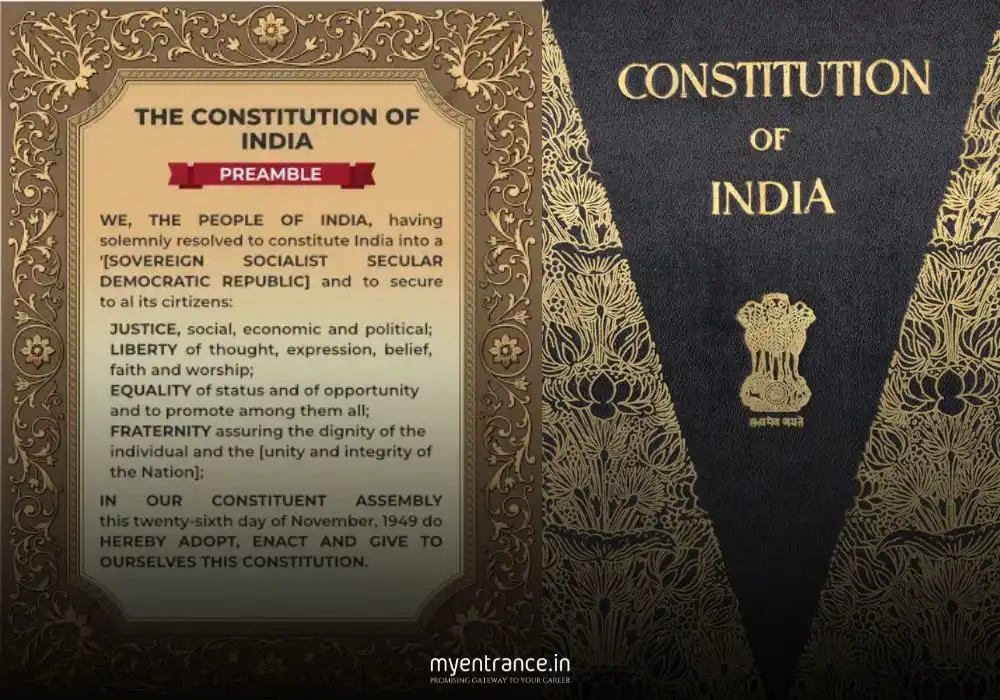
The Preamble is the introductory statement to the Constitution of India, setting out the guiding purpose, principles, and philosophy of the document. It serves as a brief introductory statement of the Constitution that highlights its fundamental values and goals. Drawing its inspiration from the ‘Objective Resolution’ moved by Jawaharlal Nehru in the Constituent Assembly on December 13, 1946, the Preamble essentially encapsulates the vision of the founding fathers for independent India. It declares India to be a Sovereign, Socialist, Secular, Democratic Republic, committed to securing Justice, Liberty, Equality, and Fraternity for all its citizens. While not directly enforceable by courts, it plays a vital role in interpreting the spirit of the Constitution, particularly in cases where the language of the articles is ambiguous.
Why is the Preamble So Profoundly Important for Competitive Exams?
The profound importance of the Preamble stems from its ability to provide a comprehensive summary of the Constitution’s core objectives and philosophical underpinnings in a few powerful lines. It acts as a prism through which the entire Constitution can be viewed and understood, revealing the aims and aspirations of the people of India. For competitive exams, questions frequently revolve around the key terms embedded within the Preamble, their historical context, their implications for governance, and landmark Supreme Court judgments that have interpreted its significance. Understanding the Preamble allows candidates to not only answer direct questions but also to comprehend the broader intent behind various constitutional provisions, thereby fostering a deeper and more analytical understanding of Indian Polity. It highlights the foundational values such as social, economic, and political justice, the different types of liberties, equality of status and opportunity, and the overarching goal of promoting fraternity and the unity and integrity of the nation.
When Was the Preamble Adopted and Subsequently Modified?
The Preamble, in its original form, was adopted by the Constituent Assembly on November 26, 1949, and it came into effect along with the rest of the Constitution on January 26, 1950, a date we now celebrate as Republic Day. However, the Preamble has not remained entirely unchanged. It was amended only once, in 1976, during the Emergency by the 42nd Constitutional Amendment Act. This significant amendment introduced three new words into the Preamble: ‘Socialist,’ ‘Secular,’ and ‘Integrity.’ These additions were made to explicitly state the socialist and secular nature of the Indian state and to emphasize the unity and integrity of the nation, reinforcing the existing constitutional ethos. The amendment itself reflects a particular political and ideological phase in India’s history, making it a frequent topic of inquiry in various examinations.
Where Do the Preamble’s Principles Manifest in the Constitution?
The ideals and objectives enshrined in the Preamble are not mere rhetoric; they find concrete expression and implementation throughout the various parts of the Indian Constitution. The concept of ‘Justice’ – social, economic, and political – is meticulously elaborated in the Directive Principles of State Policy (Part IV) and indirectly supported by Fundamental Rights (Part III), which aim to eliminate discrimination and promote equality. ‘Liberty’ of thought, expression, belief, faith, and worship is directly guaranteed through various Fundamental Rights, particularly Articles 19 and 25-28. ‘Equality’ of status and opportunity is a cornerstone of Fundamental Rights, prohibiting discrimination on grounds of religion, race, caste, sex, or place of birth (Articles 14-18). Furthermore, the commitment to ‘Fraternity,’ assuring the dignity of the individual and the unity and integrity of the nation, is reflected in the single citizenship concept, the fundamental duties, and various provisions for national integration. Thus, the Preamble serves as an interpretive key, linking the philosophical goals to the actionable provisions within the constitutional text itself.
How to Decipher the Key Terms of the Preamble for Exam Success?
Mastering the Preamble for competitive exams involves a thorough understanding of each of its critical terms and phrases. To understand ‘Sovereign,’ one must grasp India’s independent authority, free from external control. ‘Socialist’ implies a commitment to achieving social and economic equality, though through democratic means rather than state control of all means of production. ‘Secular’ means that the state has no official religion and treats all religions equally, maintaining a principled distance from religious affairs. ‘Democratic’ signifies that the government is elected by the people and accountable to them. ‘Republic’ means that the head of the state (the President) is elected and not a hereditary monarch. Beyond these, terms like ‘Justice’ are categorized into social, economic, and political, each carrying distinct implications for state policy. ‘Liberty’ encompasses specific freedoms essential for individual development, while ‘Equality’ guarantees equal status and opportunities for all citizens. Finally, ‘Fraternity’ underscores the spirit of common brotherhood and national unity. Each of these terms requires an in-depth study of its historical evolution, constitutional interpretation, and practical application to navigate exam questions effectively.
Frequently Asked Questions (FAQs)
1. Can the Preamble to the Indian Constitution be amended?
Yes, the Supreme Court in the landmark Kesavananda Bharati case (1973) held that the Preamble is a part of the Constitution and can be amended, provided that the amendment does not alter its “basic structure.” This ruling established a crucial principle in Indian constitutional law, allowing for necessary changes while preserving the fundamental character of the document.
2. Is the Preamble an enforceable part of the Indian Constitution?
No, the Preamble is not directly enforceable in any court of law, meaning it cannot be used by citizens to claim specific rights or by the state to impose specific obligations. However, it serves as a crucial guide for interpreting the Constitution, especially when there is ambiguity in its articles, reflecting the intentions and philosophy of the Constitution’s framers.
3. Which words were added to the Preamble by the 42nd Constitutional Amendment Act?
The 42nd Constitutional Amendment Act of 1976, often referred to as the ‘Mini-Constitution,’ added three significant words to the Preamble: ‘Socialist,’ ‘Secular,’ and ‘Integrity.’ These additions explicitly stated the nature of the Indian state and the nation’s commitment to unity.
4. What was the ‘Objective Resolution’ and who moved it, concerning the Preamble?
The ‘Objective Resolution’ was a historic resolution moved by Jawaharlal Nehru in the Constituent Assembly on December 13, 1946. It laid down the fundamental principles and vision for the Indian Constitution, outlining the aspirations for an independent sovereign republic and guaranteeing justice, equality, and freedom to all its people. The Preamble is largely based on the ideals expressed in this resolution.
5. Does the Preamble outline the form of government in India?
Yes, the Preamble clearly states that India is a “Sovereign, Socialist, Secular, Democratic Republic.” These terms collectively define the nature of the Indian state and implicitly outline its form of government, emphasizing popular sovereignty, a commitment to socio-economic justice, religious neutrality, rule by the people, and an elected head of state, respectively.





