
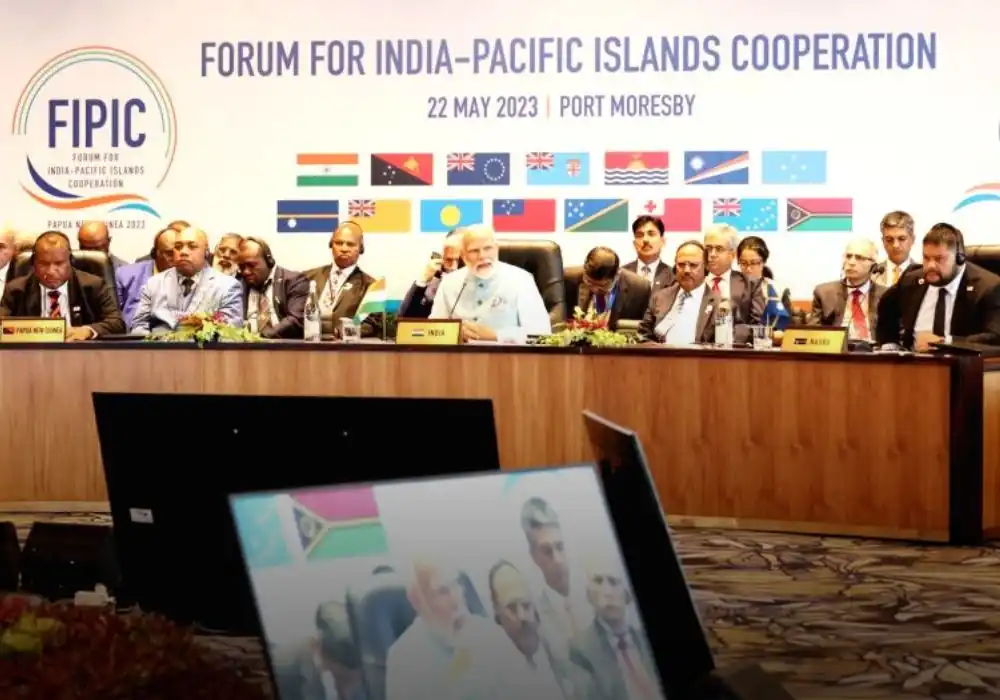
The Pacific’s Pulse: Decoding India’s FIPIC Strategy for Competitive Exams
For aspirants targeting prestigious examinations like UPSC, SSC, PSC, or even specialized ones like NID and NIFT, understanding global alliances and India’s foreign policy initiatives is paramount. One such vital platform connecting India with the vibrant Pacific Island nations is the Forum for India-Pacific Islands Cooperation, widely known as FIPIC. This unique multilateral engagement represents a cornerstone of India’s outreach, designed to foster deeper connections and collaborative growth across a geographically vital region.
The Genesis and Purpose: Why FIPIC Matters
Initiated to solidify diplomatic and economic bonds, FIPIC serves as India’s dedicated framework for interacting with fourteen distinct Pacific Island countries. The driving force behind its establishment was a mutual recognition of shared challenges and opportunities. For India, it’s about extending its ‘Act East’ policy further into the Indo-Pacific, promoting regional stability, and strengthening its voice on global platforms, particularly as these nations collectively represent a significant voting bloc in international forums. For the Pacific Island nations, FIPIC offers a crucial partnership to address pressing development needs, enhance climate resilience, and facilitate economic diversification beyond traditional sectors. This collaboration is not merely symbolic; it’s a commitment to shared prosperity and mutual support in the face of complex global dynamics.
Key Pillars of Cooperation: What FIPIC Focuses On
FIPIC’s agenda is comprehensive, focusing on several critical areas of engagement. Firstly, trade and economic ties are actively pursued, aiming to create mutually beneficial opportunities for commerce, investment, and market access, thereby stimulating growth for both India and the island economies. Secondly, the sharing of technology and innovation is a core component, enabling vital knowledge transfer and fostering advancements in sectors ranging from renewable energy to information technology and digital governance. Thirdly, climate change initiatives form a major pillar, recognizing the acute vulnerability of Pacific Island nations to rising sea levels, extreme weather events, and ocean acidification. India collaborates on sustainable solutions, disaster resilience mechanisms, and the deployment of renewable energy projects to mitigate environmental impacts. Lastly, extensive capacity-building programs are central to FIPIC, providing crucial training, educational scholarships, and skill development to empower local communities and strengthen institutional capabilities in these island states. This holistic approach ensures development that is both inclusive and sustainable, tailored to the specific needs of each nation.
Impact and Significance: How FIPIC Benefits All
The tangible impact of FIPIC is evident in various projects ranging from infrastructure development, such as roads and ports, to enhancing healthcare facilities and improving educational access. It promotes a sense of solidarity and mutual respect, fostering a collaborative environment where smaller island states have a strong voice on regional and global issues. For India, this engagement significantly enhances its geopolitical influence, strengthens its position as a responsible global actor committed to South-South cooperation, and opens new avenues for economic and strategic partnership in a vital maritime domain. For the Pacific Islands, it brings much-needed financial assistance, technical expertise, and a powerful advocate on international forums, helping them navigate complex global issues and achieve their sustainable development aspirations. This forum truly exemplifies cooperative multilateralism in action, creating a template for constructive global engagement.
FIPIC in the Context of Global Challenges
In an era marked by increasing geopolitical competition, environmental degradation, and global challenges like health crises and economic volatility, platforms like FIPIC become even more significant. It underscores India’s commitment to a free, open, and inclusive Indo-Pacific region, guided by principles of transparency and respect for international law. By working together through FIPIC, India and the Pacific Island nations are collectively building resilience against external shocks, promoting sustainable development, and contributing to a more stable and prosperous global order. This robust partnership is a testament to the power of diplomacy and shared vision in addressing contemporary issues, making it an essential topic for anyone preparing for competitive examinations.
Frequently Asked Questions (FAQs)
Q1: What does FIPIC stand for and what is its primary objective?
A1: FIPIC stands for the Forum for India-Pacific Islands Cooperation. Its primary objective is to strengthen India’s diplomatic, economic, and developmental ties with 14 Pacific Island countries through focused cooperation in areas like trade, technology, climate action, and capacity building.
Q2: When was FIPIC initiated, and where have its major summits taken place?
A2: FIPIC was initiated in 2014, with its first summit held in Suva, Fiji. Subsequent summits have provided platforms for leaders to discuss progress and future cooperation, further solidifying the partnership.
Q3: Which specific countries are part of the FIPIC group alongside India?
A3: Alongside India, the 14 Pacific Island countries that are part of FIPIC include the Cook Islands, Federated States of Micronesia, Fiji, Kiribati, Nauru, Niue, Palau, Papua New Guinea, Republic of Marshall Islands, Samoa, Solomon Islands, Tonga, Tuvalu, and Vanuatu.
Q4: How does FIPIC address the critical issue of climate change for Pacific Island nations?
A4: FIPIC significantly addresses climate change by fostering collaboration on sustainable development projects, promoting renewable energy solutions, sharing expertise in disaster preparedness and resilience, and advocating for the concerns of vulnerable island states on international climate forums.
Q5: Why is FIPIC considered important for India’s foreign policy and its standing in the Indo-Pacific region?
A5: FIPIC is crucial for India’s foreign policy as it actively extends its ‘Act East’ policy into the wider Indo-Pacific, enhancing its strategic presence, fostering economic partnerships, and strengthening its role as a responsible and reliable development partner for a geographically significant bloc of nations.





