
In an era where global safety and public health are paramount concerns, understanding critical medical interventions becomes indispensable, especially for those preparing for competitive examinations like UPSC, SSC, PSC, NID, NIFT, and other government sector roles. One such crucial medicine that frequently surfaces in discussions around nuclear safety and emergency preparedness is the Prussian Blue Capsule. Far from being just a pigment, this compound holds a vital role in protecting human lives from the invisible threat of radioactive contamination.
The Unseen Threat: Why Radiation Exposure Demands Immediate Action
Radiation exposure, particularly to certain radioactive isotopes like Cesium-137, poses a severe and often life-threatening challenge. When these isotopes enter the body, they can cause internal contamination, continuously emitting radiation that damages cells and tissues, leading to serious health complications including acute radiation sickness, long-term cancers, and even death. Unlike external contamination, which can be washed off, internal contamination requires specific medical countermeasures to prevent the body from absorbing and retaining these harmful substances. This is precisely where Prussian Blue Capsules emerge as a frontline defense, offering a strategic intervention to mitigate the internal damage caused by specific radioactive elements. The urgency of action stems from the isotopes’ ability to integrate into the body’s biological processes, mimicking essential nutrients, making their removal complex without targeted treatments.
Understanding Prussian Blue Capsules: A Medical Antidote
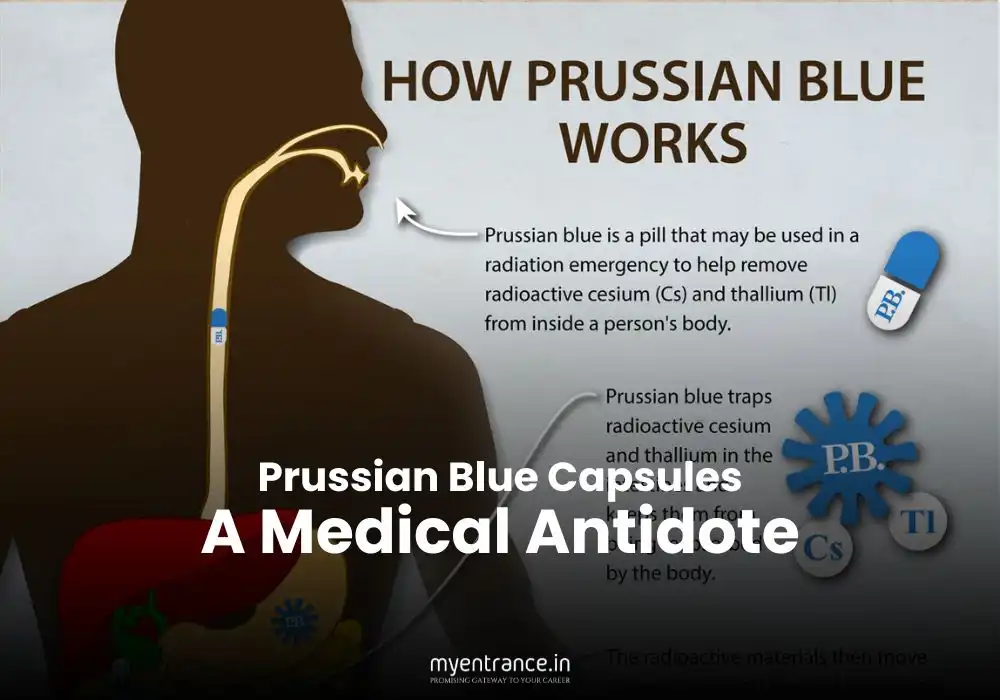
So, what exactly are Prussian Blue Capsules, and how do they function as a medical antidote? Scientifically known as ferric hexacyanoferrate, medical-grade Prussian Blue is not the same as the industrial pigment, though they share a common chemical basis. When formulated for medical use, these capsules are designed for oral administration. Their primary function revolves around a process called “ion exchange” or “chelating.” Upon ingestion, the Prussian Blue compound travels through the digestive system. Here, it acts like a sponge, specifically binding to certain radioactive isotopes such as Cesium-137 and Thallium. It forms a stable compound with these radioactive ions, preventing their reabsorption from the gut into the bloodstream and body tissues. Instead of being absorbed, the radioactive-Prussian Blue complex is safely excreted from the body through feces. This significantly reduces the biological half-life of the radioactive material within the body, minimizing the total radiation dose absorbed by vital organs and thereby decreasing the risk of severe health consequences.
The Menace of Cesium-137 and Its Mitigation
Cesium-137 is a particularly dangerous radioactive isotope because it is a common byproduct of nuclear fission and is often found in nuclear waste. It poses a significant threat because, chemically, it behaves similarly to potassium, an essential element for human biology. This mimicry allows Cesium-137 to be readily absorbed by the body’s cells and distributed throughout tissues, including muscles, organs, and bones, where it can continue to irradiate the body internally for extended periods due to its relatively long half-life. The ability of Prussian Blue to selectively bind to Cesium-137 and accelerate its excretion is therefore a critical mechanism for mitigating the devastating effects of such internal contamination. Effective treatment drastically improves the prognosis for individuals exposed to this hazardous radioactive material.
India’s Proactive Stance: A Global Act of Humanitarian Aid
In a commendable display of international cooperation and disaster preparedness, India notably gifted a substantial quantity of Prussian Blue Capsules to Indonesia in 2025. This proactive gesture underscores India’s growing commitment to global humanitarian aid and its role as a responsible stakeholder in nuclear safety and emergency response. The decision to provide these critical medicines was made to support Indonesia’s nuclear contamination response capabilities, ensuring that the nation is better equipped to handle potential incidents involving radioactive materials. Such bilateral cooperation is vital in today’s interconnected world, strengthening collective resilience against unforeseen disasters and demonstrating a shared commitment to public health and safety on an international scale. This act serves as a significant example of how countries can pool resources and expertise to enhance global readiness for complex emergencies, reflecting positively on India’s diplomatic and scientific capabilities.
Broadening the Horizon: Implications for National Preparedness
The case of Prussian Blue Capsules and India’s aid to Indonesia highlights broader implications for national and international disaster preparedness frameworks. For aspirants of government exams, this scenario touches upon several key areas: current affairs related to international relations and humanitarian aid, science and technology concerning nuclear safety and medical countermeasures, and static general knowledge pertaining to emergency management and public health. Understanding the “why, what, where, when, and how” of such vital medicines and international actions is crucial. It emphasizes the importance of maintaining national stockpiles of emergency medical supplies, fostering international collaboration, and continuously updating protocols for managing nuclear or radiological incidents. This multifaceted understanding is essential not only for academic success but also for future leaders and administrators who will be instrumental in shaping effective disaster response strategies.
Frequently Asked Questions
1. What types of radiation exposure can Prussian Blue Capsules treat?
Prussian Blue Capsules are specifically effective in treating internal contamination caused by certain radioactive isotopes, primarily Cesium-137 and Thallium. They do not treat external radiation exposure, nor are they effective against all types of internal radioactive contamination, such as those caused by Iodine-131 or Uranium. Their mechanism targets specific chemical properties of Cesium and Thallium ions.
2. How exactly does a Prussian Blue Capsule prevent radiation damage within the body?
When ingested, the Prussian Blue compound travels through the gastrointestinal tract. There, it acts as an ion exchanger, binding strongly and irreversibly to radioactive Cesium and Thallium ions. This binding forms a stable, insoluble complex that cannot be absorbed into the bloodstream. Instead, these bound radioactive materials are safely eliminated from the body through the feces, significantly reducing the amount of radiation dose absorbed by internal organs and minimizing the potential for cellular damage.
3. Is the medical-grade Prussian Blue the same substance used as a pigment in paints?
While the chemical basis is similar (ferric hexacyanoferrate), medical-grade Prussian Blue is specifically manufactured to meet pharmaceutical standards. It is highly purified and tested for safety and efficacy for human consumption. Industrial pigment grade Prussian Blue is not suitable for medical use due to potential impurities and different manufacturing processes. The medical form is precisely formulated to be safe when taken orally.
4. Why did India specifically choose to gift Prussian Blue Capsules to Indonesia in 2025?
India’s decision to gift these capsules to Indonesia in 2025 was a strategic act of humanitarian aid and international cooperation. It aimed to bolster Indonesia’s national preparedness for potential nuclear contamination incidents. By providing this critical medicine, India contributed to strengthening global safety nets and demonstrating its commitment to assisting fellow nations in building their capacity to respond effectively to public health emergencies, particularly those involving radioactive threats.
5. Are there any side effects associated with taking Prussian Blue Capsules?
While generally considered safe for medical use, some individuals may experience mild side effects from Prussian Blue Capsules. These can include constipation, stomach upset, or discoloration of stool (blue feces) due to the nature of the compound. Serious side effects are rare, but it is crucial that the medication is administered under strict medical supervision, especially in emergency scenarios, to monitor for any adverse reactions and ensure appropriate dosage.





