
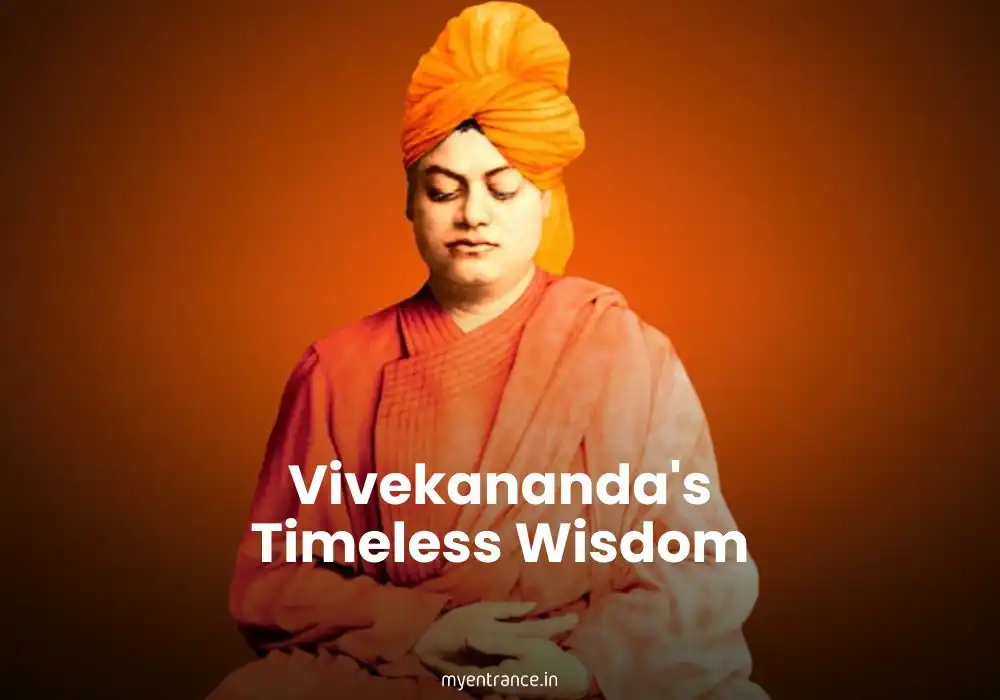
A Timeless Message Revisited: Understanding Its Relevance
Prime Minister Narendra Modi recently highlighted Swami Vivekananda’s profound address at the World Parliament of Religions in Chicago, delivered 132 years ago. This significant gesture, shared across social media, serves as a powerful reminder of a pivotal moment in history that championed universal harmony and brotherhood. For aspirants preparing for competitive examinations such as UPSC, SSC, PSC, NID, NIFT, and other government sector roles, this event is not merely a piece of current affairs; it’s a rich source of static general knowledge, historical insight, and ethical philosophy crucial for success. Understanding the ‘why,’ ‘what,’ ‘where,’ ‘when,’ and ‘how’ of this iconic speech provides a holistic perspective essential for both general awareness and nuanced essay writing. Ensure you have the most up-to-date gk news for your exam from a trusted source.
The Echo of 1893: Swami Vivekananda at the World Parliament of Religions
What was it? Swami Vivekananda’s address on September 11, 1893, was a landmark speech delivered at the World Parliament of Religions. This unprecedented gathering brought together spiritual leaders from across the globe, aiming to foster understanding and cooperation among various faiths. Vivekananda, representing India and the ancient philosophy of Vedanta, captivated the audience with his powerful message.
Where did it happen? The historic event took place in Chicago, United States. This international platform provided Vivekananda with an unparalleled opportunity to introduce the profound spiritual traditions of India to the Western world.
When did it occur? The primary address that resonated globally was given on September 11, 1893. His subsequent speeches during the Parliament further solidified his reputation as a spiritual orator and a bridge between East and West. The recent emphasis by PM Modi marks the 132nd anniversary of this seminal moment.
How did it impact the world? Vivekananda’s opening lines, “Sisters and Brothers of America,” instantly broke through the formal rigidity of the convention, establishing an immediate connection with the audience. He passionately advocated for religious tolerance, acceptance, and the inherent unity of all religions, famously stating, “I am proud to belong to a nation which has sheltered the persecuted and the refugees of all religions and all nations of the earth.” His speech was a powerful counter to sectarianism and fanaticism, promoting a vision of universal humanism rooted in the Vedantic principle of oneness. It presented India not just as a land of ancient traditions but as a beacon of spiritual wisdom and inclusivity.
Why This Speech Continues to Resonate Today (and for Exams)
The enduring relevance of Swami Vivekananda’s Chicago Address makes it a perpetual topic of interest for competitive exams.
For Current Affairs: PM Modi’s recent social media post directly makes this historical event a subject for daily news quizzes and current affairs sections. Aspirants should be aware of such commemorations and the context behind them.
For Static General Knowledge (GK) and History: The speech is a cornerstone event in modern Indian history, specifically relating to the Indian Renaissance, the rise of nationalist consciousness, and India’s cultural impact on the world stage. Questions on significant historical speeches, figures, and their contributions are common in SSC, PSC, and even UPSC preliminary exams.
For Ethics, Essay Writing, and Mains Examination (UPSC): Vivekananda’s emphasis on universal brotherhood, religious pluralism, tolerance, and the concept of ‘Vasudhaiva Kutumbakam’ (the world is one family) are directly relevant to ethics papers, essay topics, and general studies papers that cover societal values, international relations, and cultural heritage. His philosophy provides rich material for arguments on secularism, human values, and global peace.
For NID/NIFT and other exams: Understanding India’s cultural and spiritual heritage, as articulated by figures like Vivekananda, can inform design perspectives, cultural studies, and general awareness sections, emphasizing India’s unique contribution to global thought. This is the home for mock tests and current affairs for serious aspirants.
PM Modi’s Emphasis: A Call for Harmony
The Prime Minister’s decision to share Vivekananda’s address underscores its timeless message, describing it as a “watershed moment” that continues to inspire. This emphasis highlights the government’s recognition of these core values of harmony and universal brotherhood in contemporary society. It’s a reminder that the principles articulated over a century ago remain vital for fostering a cohesive and progressive nation, which often forms the ideological backdrop for questions on governance and societal development in various examinations.
Preparing for Success: How Vivekananda’s Teachings Aid Your Exam Journey
To excel in your examinations, understanding Swami Vivekananda’s Chicago Address goes beyond rote memorization of dates. It involves grasping the essence of his message and its long-term implications. Regularly engage with news analyses, historical accounts, and philosophical discussions surrounding this topic. Practice answering questions that delve into the impact of his speech on Indian society, its relevance in modern global politics, and its philosophical underpinnings. By doing so, you not only prepare for potential questions across various subjects but also develop a deeper understanding of India’s intellectual and spiritual heritage, which is invaluable for any well-rounded aspirant.
Frequently Asked Questions (FAQs)
Q1: What was the primary message Swami Vivekananda conveyed in his 1893 Chicago Address?
A1: Swami Vivekananda’s core message was a powerful call for universal religious tolerance, acceptance, and the inherent unity of all faiths. He advocated for a world free from sectarianism and fanaticism, promoting the idea of universal brotherhood and the Vedantic principle of ‘oneness’ among all beings.
Q2: Why is the 1893 Chicago Address considered such a significant event in Indian history and globally?
A2: It’s significant because it marked India’s powerful spiritual and philosophical introduction to the Western world through an eloquent voice. It challenged prevailing stereotypes, showcased India as a land of profound spiritual wisdom, and laid the groundwork for a global understanding of Eastern philosophies like Vedanta. For India, it was a moment of immense national pride and a catalyst for cultural awakening.
Q3: How is Swami Vivekananda’s Chicago speech relevant for competitive exams like UPSC and SSC?
A3: The speech is highly relevant for several exam sections: current affairs (due to its recent commemoration), static GK (as a key historical event), Indian history (for the modern period and socio-religious reforms), ethics and philosophy (for concepts of tolerance, humanism, and universal values in UPSC Mains), and essay writing. Questions can range from factual details to analytical discussions of its impact.
Q4: Where did the World Parliament of Religions take place, and when exactly was Vivekananda’s iconic speech delivered?
A4: The World Parliament of Religions took place in Chicago, United States. Swami Vivekananda delivered his iconic, often-quoted opening speech on September 11, 1893. He made several other addresses throughout the Parliament’s duration.
Q5: What is Vedanta, and how does it connect to Vivekananda’s philosophy presented in Chicago?
A5: Vedanta is one of the six orthodox schools of Hindu philosophy, primarily based on the Upanishads, which are philosophical treatises forming part of the Vedas. It emphasizes the ultimate reality of Brahman (the Absolute Truth) and the oneness of the individual soul (Atman) with Brahman. Vivekananda’s philosophy, as presented in Chicago, was deeply rooted in Vedantic principles, especially the idea that all religions are different paths leading to the same ultimate truth, thus advocating for universal acceptance and spiritual harmony.
Excerpt
Explore the profound impact of Swami Vivekananda’s historic 1893 Chicago Address, recently highlighted by PM Modi. Understand its significance for competitive exams, static GK, current affairs, and how it champions universal harmony, providing crucial insights for UPSC, SSC, and other government exam aspirants.





