
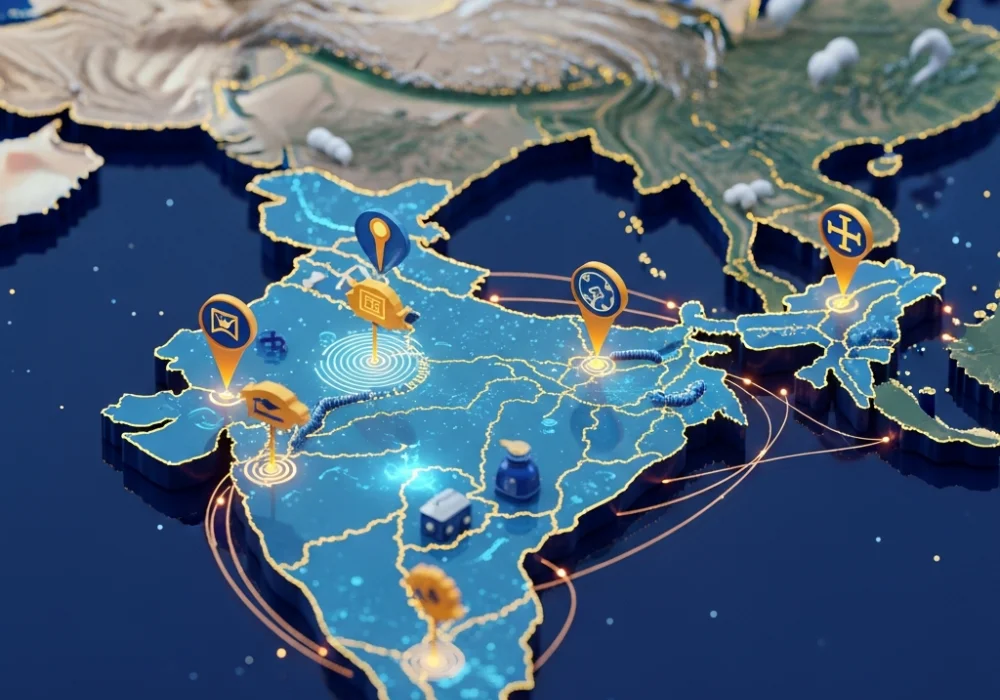
Decoding India’s Neighborhood First Policy: The Indian Ocean Chessboard
For any UPSC aspirant, the International Relations segment is dominated by India’s immediate neighborhood. The ‘Neighborhood First’ policy is not just a diplomatic stance; it is a survival strategy in a rapidly changing geopolitical landscape. As China expands its footprint through the ‘String of Pearls’ and the ‘Belt and Road Initiative’, India’s response in the Indian Ocean Region (IOR) has become a recurring theme in the Civil Services Examination. This guide decodes the complexities of this topic using a hacker’s mindset to help you score the maximum marks in your Mains and Prelims.
💡 Pro-Tip: Why this topic is a Goldmine
Analysis of Previous Year Questions reveals that 70% of International Relations questions focus on India’s bilateral ties with neighbors and maritime security. Mastering the ‘China Factor’ is the key to unlocking these marks.
Question 1: The Strategic Encirclement Challenge
“Evaluate the implications of China’s growing presence in the Indian Ocean on India’s strategic interests. How does the ‘Neighborhood First’ policy address these challenges?”
The Traditional Method
Most students will write a generic answer mentioning the ‘String of Pearls’ and listing ports like Hambantota (Sri Lanka) and Gwadar (Pakistan). They will conclude by saying India needs more ships. This is a 3/10 answer.
The 30-Second Ninja Shortcut: The “PIE” Framework
To differentiate your answer, use the PIE Framework:
- P – Political Sovereignty: China’s presence creates a ‘dual-use’ infrastructure threat.
- I – Informational Domain: Maritime Domain Awareness (MDA) and underwater surveillance.
- E – Economic Leverage: Debt-trap diplomacy eroding India’s traditional sphere of influence.
💡 Click to Reveal: Concept Deep Dive
India’s ‘Necklace of Diamonds’ strategy is the direct counter to China’s String of Pearls. It involves strategic access to ports like Changi (Singapore), Sabang (Indonesia), Duqm (Oman), and Assumption Island (Seychelles). Always mention these four specific locations for a competitive edge.
Question 2: Debt Trap Diplomacy and Economic Stability
“Economic instability in the neighborhood is a threat to India’s security. Discuss with reference to recent developments in Sri Lanka and the Maldives.”
The Traditional Method
Writing a chronological history of the economic crises in these countries without linking them to the broader Indian Ocean strategy.
The 30-Second Ninja Shortcut: The “First Responder” Logic
Highlight India’s role as the Net Security Provider and Net Economic Stabilizer. Use the ‘3-S Strategy’: Stability, Solidarity, and Sovereignty. Explain that India provides ‘Unconditional Credit’ vs China’s ‘Resource-Collateralized Loans’. This distinction shows a deep understanding of diplomatic nuances.
Question 3: Security and Growth for All (SAGAR)
“The SAGAR initiative is the cornerstone of India’s maritime diplomacy. Elaborate on its role in counteracting extra-regional powers in the IOR.”
The Traditional Method
Focusing only on the full form of SAGAR and generalities about blue economy.
The 30-Second Ninja Shortcut: The “Security Umbrella” Visualization
Visualize SAGAR as a three-layered umbrella:
- Layer 1 (Internal): Strengthening Indian Coast Guard and Navy.
- Layer 2 (Neighborly): Joint patrolling and hydrographic surveys with Maldives, Mauritius, and Seychelles.
- Layer 3 (Global): Collaborative mechanisms like the Colombo Security Conclave.
💡 Hidden Fact for Prelims
India’s Information Fusion Centre – Indian Ocean Region (IFC-IOR) located in Gurugram is the nerve center for maritime security. Mentioning this facility in your Mains answer proves you are updated with real-world institutional frameworks.
Question 4: Institutional Shift – BIMSTEC over SAARC
“Critically analyze the shift in India’s focus from SAARC to BIMSTEC in the context of the Neighborhood First policy.”
The Traditional Method
Blaming Pakistan for the failure of SAARC and praising the cultural similarities of BIMSTEC nations.
The 30-Second Ninja Shortcut: The “Connectivity Quotient”
Analyze the shift through the lens of Maritime Connectivity. SAARC is ‘Land-Locked’ (impeded by Western borders), while BIMSTEC is ‘Sea-Linked’ (Bay of Bengal). Use the keywords: Strategic Autonomy, Blue Economy, and Sub-regional Cooperation. Mention the BBIN (Bangladesh, Bhutan, India, Nepal) motor vehicle agreement as a functional success.
Question 5: Digital and Space Diplomacy
“How is India utilizing its technological prowess as a soft power tool in its Neighborhood First policy?”
The Traditional Method
Mentioning general IT help and student scholarships.
The 30-Second Ninja Shortcut: The “Tech-Diplomacy Stack”
Focus on two specific pillars:
- South Asia Satellite: A gift to neighbors (excluding Pakistan) for telecommunication and disaster management.
- UPI & Digital Public Infrastructure (DPI): The expansion of RuPay and UPI in Nepal, Bhutan, Mauritius, and Sri Lanka to reduce dependency on Western/Chinese financial systems.
Cheat Sheet: Neighborhood First Revision Formulas
| Concept | Key Keyword / Formula | UPSC Value Addition |
|---|---|---|
| Security | Net Security Provider | HADR (Humanitarian Assistance & Disaster Relief) |
| China Factor | Debt Trap vs Development | Malacca Dilemma for China |
| Connectivity | Port-Led Development | Kaladan Multimodal Project |
| Maritime Awareness | MDA (Maritime Domain Awareness) | Coastal Radar Chains |
- The 5S Vision: Samman (Respect), Samvad (Dialogue), Sahyog (Cooperation), Shanti (Peace), and Samriddhi (Prosperity).
- The Gujral Doctrine: The foundation of non-reciprocity in helping neighbors.
- Project Mausam: Reconnecting cultural and economic ties across the Indian Ocean.
Need Personalized Guidance for International Relations?
Our experts are here to help you decode the most complex Previous Year Questions and master the art of answer writing.
💬 Chat with our Experts on WhatsApp (+91 9526806124)




