
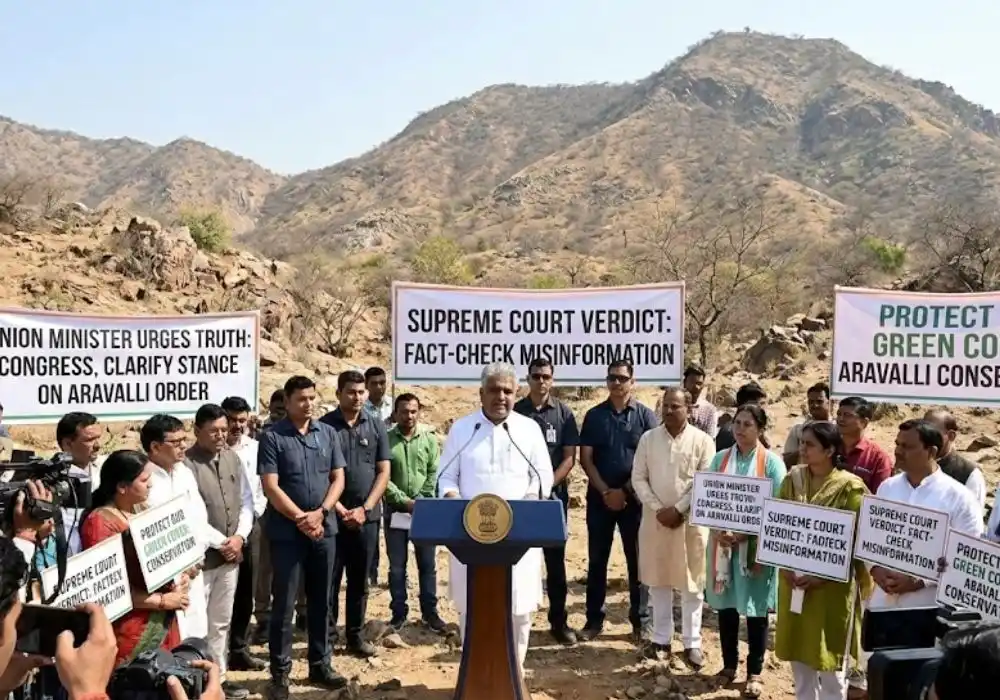
The pristine Aravalli range, an ancient geological wonder, frequently finds itself at the intersection of environmental conservation, judicial intervention, and political discourse in India. Recently, Union Minister for Environment, Forest and Climate Change, Bhupender Yadav, highlighted a concerning trend: the alleged dissemination of misinformation by certain political parties, particularly the Congress, regarding a Supreme Court verdict concerning these vital hills. Understanding this complex issue is crucial for competitive exam aspirants, as it touches upon environmental policy, judicial activism, governance, and the role of information in public life.
The Ancient Aravalli Range: A Critical Ecosystem and Lifeline
What are the Aravalli Hills?
The Aravalli Range, meaning “line of peaks,” is one of the oldest fold mountain ranges in the world, predating the Himalayas. Stretching approximately 692 kilometers, these ancient mountains are a geological marvel, formed during the Precambrian era. Their weathered peaks and broken terrain tell a story spanning billions of years, making them a unique natural heritage.
Where are the Aravallis located?
The range traverses four Indian states: beginning in Gujarat, passing through Rajasthan and Haryana, and finally culminating near Delhi. Their geographical spread makes them a shared ecological responsibility across multiple state administrations, often leading to complexities in their unified protection and management.
Why are the Aravallis important?
The ecological significance of the Aravallis cannot be overstated. They act as a crucial green lung and water recharge zone for the arid and semi-arid regions they traverse, particularly benefiting Delhi and Haryana. The range plays a vital role in preventing the eastward expansion of the Thar Desert, moderating climate, and providing critical habitat for a diverse range of flora and fauna, including many endangered species. Furthermore, they are a significant source of groundwater, sustaining agriculture and human settlements, and contribute to the overall biodiversity of the region. Their preservation is paramount for ecological balance, water security, and maintaining the environmental health of a large swathe of North India.
The Supreme Court’s Watchdog Role in Environmental Protection
How does the Supreme Court intervene in environmental matters?
The Supreme Court of India has historically played a proactive and pivotal role in environmental protection through its power of judicial review and by entertaining Public Interest Litigations (PILs). Recognizing the ‘right to a healthy environment’ as an integral part of the fundamental ‘right to life’ under Article 21 of the Constitution, the apex court has frequently issued directives to governments and authorities to safeguard India’s natural resources.
Why is the Supreme Court involved with the Aravallis?
Given the immense ecological importance of the Aravallis and the persistent threats they face from illegal mining, encroachment, and unplanned urbanization, the Supreme Court has repeatedly intervened to ensure their protection. Over the years, numerous petitions have sought the court’s intervention to halt destructive activities. The Court’s pronouncements have often aimed at clarifying the definition of ‘forest land’ in the context of the Aravallis, regardless of whether they are officially notified as such, thereby extending a broader protective umbrella. These judgments have sought to curtail mining, restrict construction, and ensure reforestation efforts, establishing legal precedents for environmental governance.
The Recent Verdict and its Context:
While the specific details of the recent Supreme Court verdict referenced by Minister Bhupender Yadav were not fully elaborated in the initial report, it can be understood as another instance where the Court reiterated the importance of protecting the Aravalli ecosystem. Such verdicts typically reinforce existing environmental laws, interpret ambiguous regulations, or provide guidelines for specific conservation efforts. The Court’s consistent stance has been to prioritize the long-term ecological well-being of the Aravallis over short-term economic gains, setting a high standard for environmental compliance.
Allegations of Misinformation and the Political Dimension
What is the Minister’s claim regarding misinformation?
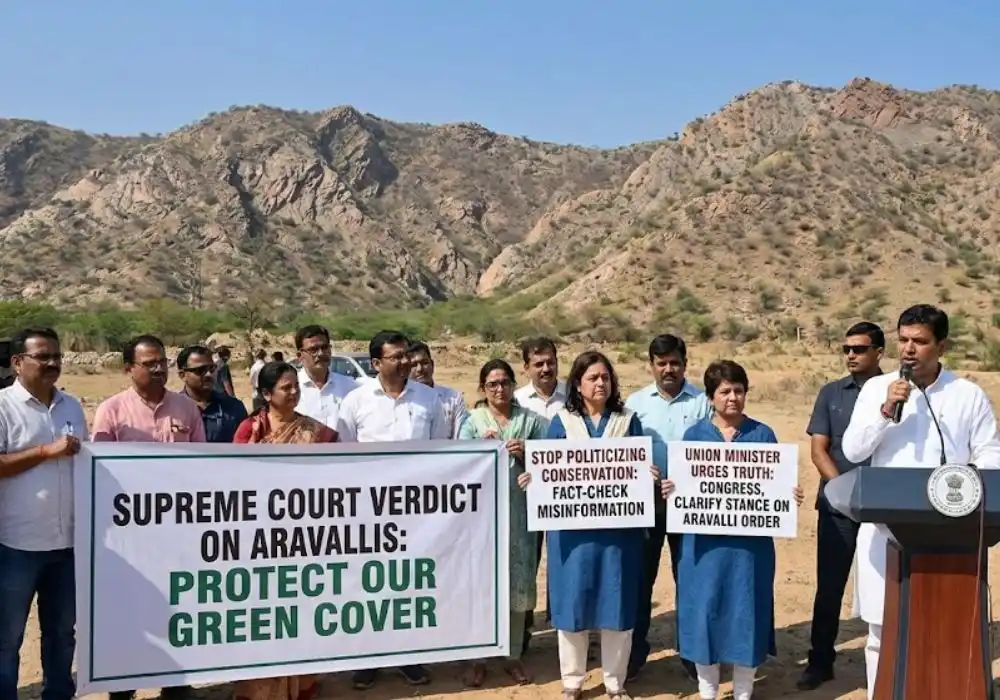
Union Minister Bhupender Yadav specifically accused certain political parties, particularly the Congress, of deliberately misinterpreting the Supreme Court’s verdict on the Aravalli hills. He stated that these parties were intentionally twisting the judicial pronouncements and using them as a “political tool” to further their own interests. The essence of his accusation lies in the idea that the political narrative being propagated does not accurately reflect the letter and spirit of the Supreme Court’s judgment.
Why is this happening?
Environmental issues, especially those involving vast tracts of land and natural resources like the Aravallis, often become highly politicized. Different political parties may perceive the implications of environmental regulations differently, particularly if they impact development projects, industrial interests, or the livelihoods of certain sections of the populace. The minister’s statement suggests that the alleged misinformation might be aimed at creating public discontent, discrediting the government’s environmental policies, or garnering political mileage by appealing to specific voter bases that might be affected by conservation efforts. This dynamic underscores the challenge of balancing environmental imperatives with socio-economic and political considerations.
How does misinformation affect environmental policy and public trust?
The spread of misinformation, particularly on critical issues like environmental protection and judicial verdicts, can have profound consequences. It can confuse the public, erode trust in governmental institutions and the judiciary, and derail sincere conservation efforts. When facts are distorted, rational debate is hampered, making it difficult to formulate and implement effective environmental policies based on scientific evidence and legal principles. Furthermore, it can create unnecessary political friction, diverting attention and resources from the actual challenges of environmental management.
Implications for Environmental Governance and Sustainable Development
The ongoing discourse around the Aravallis, the Supreme Court’s role, and the allegations of misinformation, highlights several critical aspects of environmental governance in India. It underscores the perpetual challenge of balancing the imperative of environmental conservation with the demands of economic development and infrastructure growth.
Effective environmental governance requires clear communication, transparency, and a shared understanding of legal frameworks and ecological realities. The judiciary acts as a crucial check and balance, upholding environmental laws and constitutional principles. However, when political narratives overshadow factual accuracy regarding judicial pronouncements, it complicates the implementation of these protections. This situation calls for all stakeholders – governments, political parties, civil society, and the media – to engage in responsible discourse, ensuring that environmental issues are discussed with accuracy and a genuine commitment to sustainability, rather than being reduced to mere political footballs. Ultimately, the health of the Aravallis, and by extension the well-being of millions, depends on collaborative and informed action, grounded in legal adherence and ecological wisdom.
Frequently Asked Questions (FAQ)
1. What are the Aravalli Hills and why are they considered ecologically significant?
The Aravalli Hills are one of the world’s oldest fold mountain ranges, stretching across Gujarat, Rajasthan, Haryana, and Delhi. They are ecologically significant because they act as a vital green barrier preventing the spread of the Thar Desert, serve as a critical groundwater recharge zone, support rich biodiversity, and play a crucial role in the climate and water security of Northern India. Their ancient geology also makes them a unique natural heritage.
2. What has been the Supreme Court’s general approach towards protecting the Aravallis?
The Supreme Court of India has consistently adopted a proactive and protective stance towards the Aravalli Hills. Through numerous judgments and directives, often in response to Public Interest Litigations, the Court has sought to curb illegal mining, prevent encroachment, restrict construction, and clarify the definition of ‘forest land’ to ensure broader protection for the range. Its approach emphasizes the long-term ecological value of the Aravallis, prioritizing conservation over activities that degrade the environment.
3. Why did Union Minister Bhupender Yadav accuse political parties of spreading misinformation regarding the Supreme Court’s verdict on Aravallis?
Minister Bhupender Yadav alleged that certain political parties, particularly the Congress, were intentionally misinterpreting and distorting the Supreme Court’s verdict concerning the Aravalli hills. He stated that this misinformation was being used as a “political tool” to serve their own interests, rather than accurately representing the judicial pronouncement. His accusation points to a concern that political narratives were creating confusion and potentially undermining the actual intent of the Court’s environmental protection efforts.
4. How does the Aravalli issue relate to India’s broader environmental governance challenges?
The Aravalli issue exemplifies India’s complex environmental governance challenges, which involve balancing economic development with ecological conservation. It highlights the crucial roles of the judiciary in upholding environmental laws, the government in implementing policies, and political parties in shaping public discourse. The controversy underscores the need for effective inter-state coordination, strict enforcement against illegal activities, and transparent communication to ensure sustainable management of critical natural resources amidst developmental pressures.
5. What are the potential consequences of spreading misinformation in environmental matters?
Spreading misinformation on environmental matters, especially concerning judicial verdicts, can have several negative consequences. It can confuse the public, erode trust in governmental and judicial institutions, and hinder genuine conservation efforts. Distorted facts make rational debate difficult, impede the formulation of effective policies, and can lead to unnecessary political friction, diverting focus and resources from addressing the real ecological challenges.





