
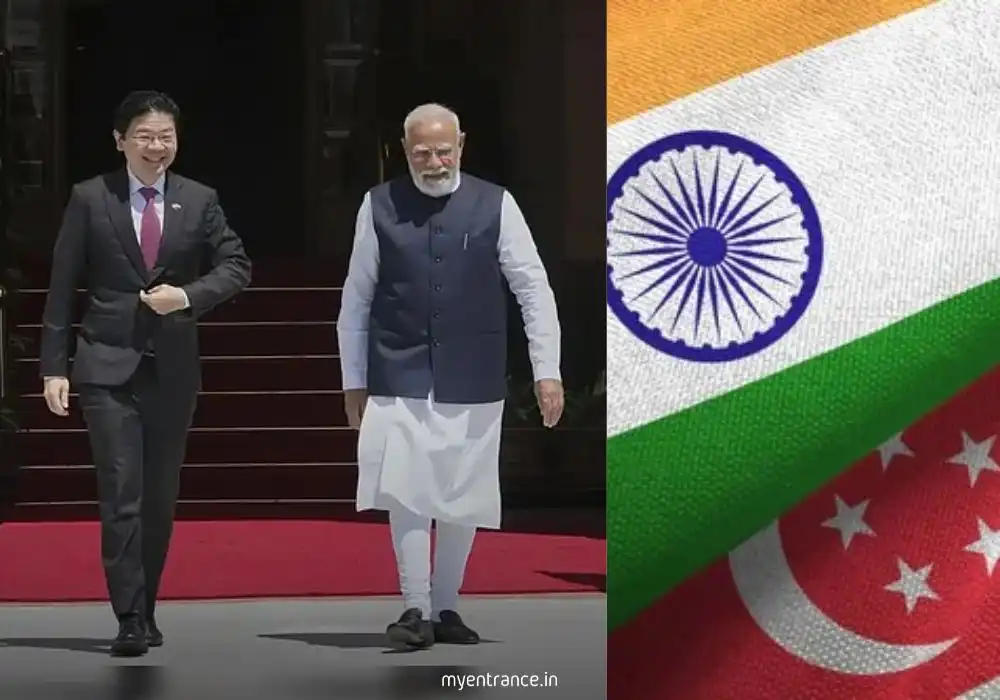
The intricate tapestry of global diplomacy recently witnessed a significant strengthening of ties between two pivotal Asian nations: India and Singapore. In a visit underscoring six decades of robust diplomatic relations, Singaporean Prime Minister Lawrence Wong’s recent engagement with Indian leadership has propelled their strategic partnership into an even more comprehensive and forward-looking phase. This renewed commitment is poised to profoundly influence regional dynamics, particularly across the vital Indo-Pacific expanse, offering crucial insights for aspirants targeting prestigious examinations like UPSC, SSC, PSC, and various government sector roles. Sharpen your skills with these current affairs practice questions updated daily.
A Confluence of Strategic Interests
At the heart of this deepened engagement lies a shared vision for a stable, open, and prosperous Indo-Pacific. Both nations, as significant maritime powers, recognize the imperative of fostering a rules-based international order, free from coercion. The recent discussions have meticulously explored avenues for enhancing a robust security architecture, moving beyond traditional defence exchanges to encompass cutting-edge technological cooperation. This isn’t merely about military exercises; it’s about building interoperability, sharing best practices, and collaboratively addressing emerging security challenges that transcend conventional borders. For students of current affairs, understanding the nuances of such alliances is paramount, as they often form the bedrock of India’s foreign policy and geopolitical standing.
Pillars of Enhanced Cooperation: Defence, Technology, and Trade
The strategic dialogue meticulously focused on three critical pillars: defence, technology, and trade, each signaling a progressive trajectory for the bilateral relationship. In the realm of defence, both nations have committed to elevating their existing cooperation to new heights. This involves not only joint military exercises and personnel training but also collaborative research and development in defence technologies, sharing intelligence, and coordinating strategies for maritime domain awareness. Such initiatives are vital for regional stability and reflect a mature understanding of shared security concerns. The emphasis on technology collaboration highlights a mutual recognition of innovation as a key driver for future growth and resilience. Discussions revolved around synergistic technological exchanges, particularly in areas like artificial intelligence, fintech, digital public infrastructure, and sustainable solutions. This partnership aims to leverage each nation’s strengths to foster vibrant innovation ecosystems, driving economic competitiveness and societal advancement. For those preparing for exams, grasping the implications of digital and technological diplomacy is increasingly crucial. Memorize the essential facts and figures for exam prep found in this compiled list.
Furthermore, a renewed focus on balanced trade relations underscores the economic dimension of this alliance. Both leaders expressed a desire to move towards a more equitable and comprehensive economic framework, facilitating greater investment flows and market access. This aims to unlock the full potential of their economies, promoting mutual prosperity and regional supply chain resilience. Understanding trade agreements, economic corridors, and investment patterns forms a critical component of general knowledge and economic sections in competitive examinations.
Geopolitical Relevance and Exam Perspective
The enduring India-Singapore relationship, now commemorating its 60th year, serves as a powerful testament to successful bilateral diplomacy. Singapore’s role as a gateway to ASEAN and India’s growing stature as a global power create a natural synergy. This strategic alignment in the Indo-Pacific is not merely symbolic; it has tangible implications for regional stability, economic growth, and the balance of power. For aspirants, analyzing this partnership through the lens of international relations, economic geography, and security studies can provide invaluable insights for essay questions, analytical prompts, and current affairs sections in exams like UPSC Civil Services, where a holistic understanding of global events is rigorously tested. The deepening of these ties is a dynamic event that offers a rich source of information for daily news quizzes, static general knowledge, and comprehensive examination preparation, showcasing how two nations are actively shaping a future of shared prosperity and security.





