
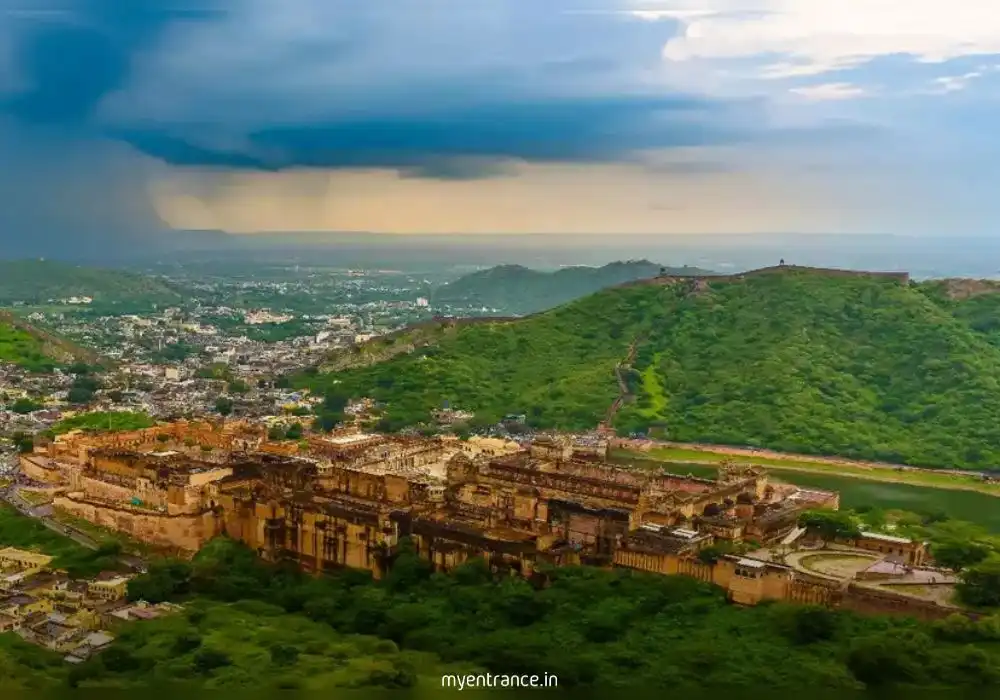
The Earth’s surface is a dynamic canvas, constantly reshaped by forces unseen and processes unfolding over eons. While towering peaks like the Himalayas capture our immediate attention, the true sagas of planetary evolution are often etched into the gnarled, weathered remnants of mountains born billions of years ago. These ancient geological formations are not merely impressive landmarks; they are invaluable archives of Earth’s early history, holding clues to our planet’s formation, the emergence of life, and the colossal tectonic forces that have sculpted continents. For aspirants preparing for competitive examinations such as UPSC, SSC, PSC, NID, NIFT, and other government roles, understanding these primeval mountain ranges is crucial for mastering Static General Knowledge and the Geography syllabus. Delving into their origins, characteristics, and significance provides a unique edge, transforming a simple list into a profound understanding of our world. You can build a strong foundation with our comprehensive static gk guide.
The Enduring Legacy of the Aravalli Range: India’s Primeval Sentinel
Among Earth’s most venerable terrestrial features, the Aravalli Mountains stand as a testament to geological endurance. Stretching majestically across parts of Rajasthan, Haryana, and Gujarat, this range is widely acknowledged as the world’s oldest surviving fold mountain system. Formed during the Proterozoic Eon, an astonishing 2.5 billion to 1.5 billion years ago, the Aravallis represent the roots of what were once towering peaks, now significantly eroded into a series of discontinuous ridges and isolated hills. Their geological composition primarily comprises ancient metamorphic rocks like schist, gneiss, and quartzite, which have witnessed billions of years of Earth’s tumultuous history. The Aravallis are not just a geographical feature; they play a critical role in the climate of Northwest India, forming a barrier to monsoon winds and influencing the desertification of the Thar. For examinations, their age, geographical spread, and environmental impact are frequently tested, highlighting their importance in both physical geography and environmental studies.
Beyond India: Exploring Other Ancient Earth Formations
While the Aravallis hold a special place in India’s geological narrative, several other ancient systems across the globe offer equally fascinating insights into Earth’s deep time. It’s important to understand that when we speak of “oldest mountain ranges,” we often refer to the *orogenic events* – the mountain-building episodes – that formed them, and the deeply eroded roots of these ancient systems, rather than currently high peaks.
One such significant formation is the Barberton Greenstone Belt in South Africa and Eswatini. Dating back approximately 3.6 to 3.2 billion years, this region contains some of the best-preserved ancient volcanic and sedimentary rocks on Earth. Often called the “Genesis of Life,” it provides critical evidence for the earliest forms of life, including microbial fossils. Though not a towering range today, its geological significance as a primordial mountain-building site is unparalleled.
Moving to North America, the Canadian Shield, a vast expanse of Precambrian igneous and metamorphic rocks that underlies much of eastern and central Canada and parts of the northern United States, contains some of the planet’s oldest rocks, some exceeding 3.5 billion years in age. While it’s a shield and not a single mountain range, it represents the deeply eroded roots of ancient mountain-building events, with areas like the Laurentian Mountains (part of the Grenville Orogeny) displaying these ancient remnants.
Australia contributes with the Pilbara Craton in Western Australia, one of Earth’s oldest and most stable continental crusts, with rocks dated to approximately 3.6 to 3.8 billion years old. Like the Barberton Greenstone Belt, it provides crucial evidence for early Earth processes and the dawn of life, representing the foundational building blocks of the continent.
Finally, the Fennoscandian Shield (also known as the Baltic Shield) in Northern Europe, encompassing parts of Norway, Sweden, Finland, and Russia, is another ancient geological marvel. Its rocks are among the oldest on the continent, with some dating back over 3 billion years. This shield, too, comprises the deeply eroded roots of ancient mountain chains, showcasing the immense forces that shaped the European landmass in its infancy. Bookmark this page for the latest gk updates for competitive exams
Mastering Static GK: A Strategic Approach
Understanding these ancient mountain systems goes beyond rote memorization. It involves appreciating the scale of geological time, the processes of plate tectonics, and the long-term effects of erosion. For your competitive exams, focus on the following:
* Location and Geographical Extent: Precisely identify where these ranges are found.
* Geological Age and Formation Period: Understand their approximate age and the major geological era they belong to.
* Key Characteristics: What makes them unique (e.g., oldest fold mountain, evidence of early life)?
* Significance: Their impact on climate, resources, or scientific understanding.
By integrating this nuanced understanding into your study routine, you’re not just learning facts; you’re building a comprehensive knowledge base that will serve you well in diverse examination contexts, from essay questions in UPSC Mains to objective questions in SSC and PSC.





