
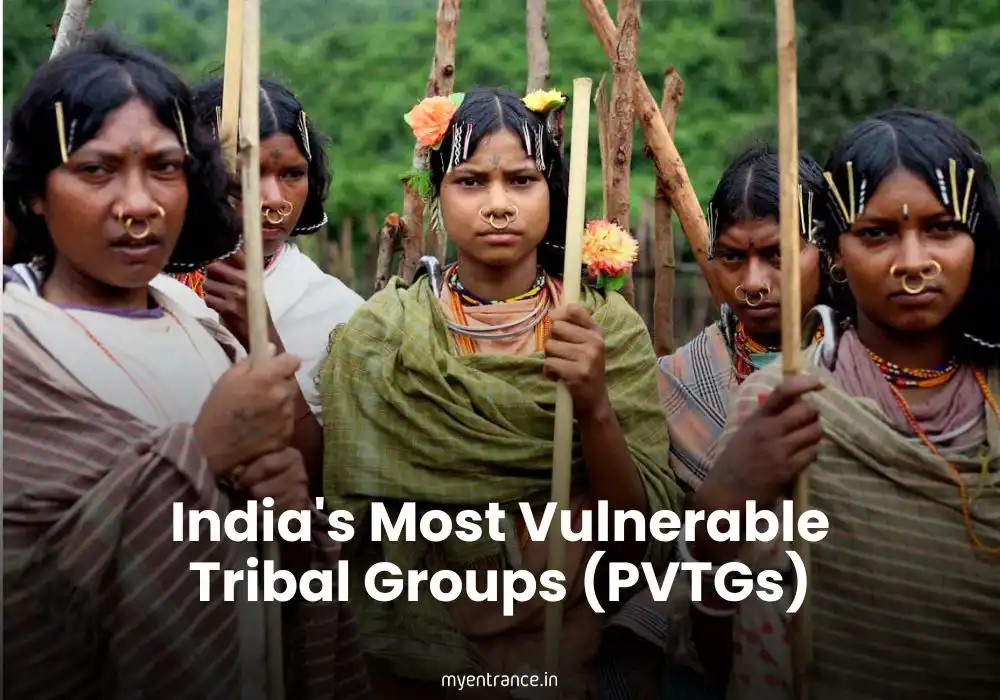
Why the Shift? Understanding India’s Most Vulnerable Tribal Groups (PVTGs)
India’s vibrant tapestry is woven with countless communities, each contributing to its rich heritage. Among these are certain tribal groups that face unique challenges, residing in remote areas and often preserving traditional ways of life. These are officially recognized as Particularly Vulnerable Tribal Groups (PVTGs). Recognizing their distinct needs, the Ministry of Tribal Affairs (MoTA) has recently undertaken a crucial step by formally requesting the Registrar General of India (RGI) to conduct a separate and detailed enumeration of these communities. This proactive measure is not just an administrative decision; it’s a profound move towards ensuring inclusive development and is highly significant for anyone preparing for government examinations like UPSC, SSC, PSC, NID, NIFT, and others. Test your knowledge with our Daily News Quiz & Key Pointers designed for UPSC, SSC, and PSC aspirants.
What Defines a PVTG and Why a Separate Count?
So, what exactly makes a tribal group “particularly vulnerable”? PVTGs are characterized by a combination of indicators: a pre-agricultural level of technology, low literacy rates, a declining or stagnant population, and a subsistence-level economy. Initially identified by the Dhebar Commission in 1973 as “Primitive Tribal Groups” and later renamed in 2006, there are currently 75 such groups spread across 18 states and one Union Territory in India.
The traditional Census, while comprehensive, often struggles to capture the precise demographic and socio-economic realities of these small, scattered, and often nomadic or semi-nomadic communities. The “why” behind this separate enumeration is critical: it’s about moving beyond general statistics to obtain granular data. This detailed information is indispensable for formulating targeted welfare schemes, designing appropriate development interventions, and ensuring that government policies effectively reach those who need them most. Without accurate figures on their population, health status, educational attainment, and livelihood patterns, efforts to uplift them remain generalized and less effective. This specialized approach ensures their unique identities and vulnerabilities are not lost in broader demographic data.
Who Initiates and Who Executes? The Roles of Key Ministries
When we talk about social welfare and population data, specific government bodies come into play. The Ministry of Tribal Affairs (MoTA) serves as the nodal ministry, dedicated to the overall development and welfare of tribal communities in India. It’s their responsibility to champion the cause of these vulnerable groups. The execution, particularly concerning population data collection, falls under the purview of the Registrar General of India (RGI), which is an office under the Ministry of Home Affairs. The RGI is the primary authority responsible for conducting the Decennial Census of India and registering births and deaths.
The “how” of this process involves a collaborative effort. While MoTA advocates for the need and outlines the objectives, RGI brings its expertise in large-scale data collection. This joint initiative signifies a focused approach, combining policy intent with robust execution capabilities. State governments and local tribal welfare departments also play a crucial role in facilitating data collection on the ground, ensuring accessibility to remote habitations and building trust within these communities for accurate reporting.
How Will This Enumeration Be Different and What’s the Impact?
Unlike a standard census enumeration, a separate count for PVTGs will likely employ specialized methodologies. This might include more intensive fieldwork, community-specific approaches, engagement of local anthropologists or researchers, and potentially longer data collection periods to ensure comprehensive coverage of scattered settlements. The focus will extend beyond mere numbers to encompass vital qualitative data related to their cultural practices, traditional knowledge, health indicators, access to basic amenities, and specific challenges they face. Bookmark this page for the latest gk updates for competitive exams.
The impact of this dedicated effort will be far-reaching. For the PVTGs themselves, it promises more effective and tailor-made policies addressing issues like land alienation, lack of access to education and healthcare, and preservation of their unique cultural heritage. For policymakers, it provides an evidence-based framework for resource allocation and program design. For you, as an aspirant, understanding this initiative is vital. It forms a crucial part of current affairs, social justice, governance, and Indian society topics for exams like UPSC Civil Services, state PSCs, and even general knowledge sections of SSC and other competitive exams. Questions can arise on the role of MoTA, RGI, the characteristics of PVTGs, the historical context of their identification, and the policy implications of such enumeration efforts. Staying updated on these developments ensures you’re well-equipped to answer analytical and fact-based questions, demonstrating a comprehensive understanding of India’s inclusive development agenda.





