Translate Language
Understanding Carbon Footprint: Impact, Calculation, and Reduction Strategies
In today’s world, environmental sustainability is a pressing concern, and understanding the carbon footprint is crucial for students, policymakers, and environmentally conscious individuals. Whether you’re preparing for UPSC, SSC, PSC, NID, NIFT, or KAS exams, grasping this concept can help in both objective and descriptive papers. This article explains carbon footprint in detail, its types, global variations, and actionable reduction strategies—along with sample questions for exam practice.
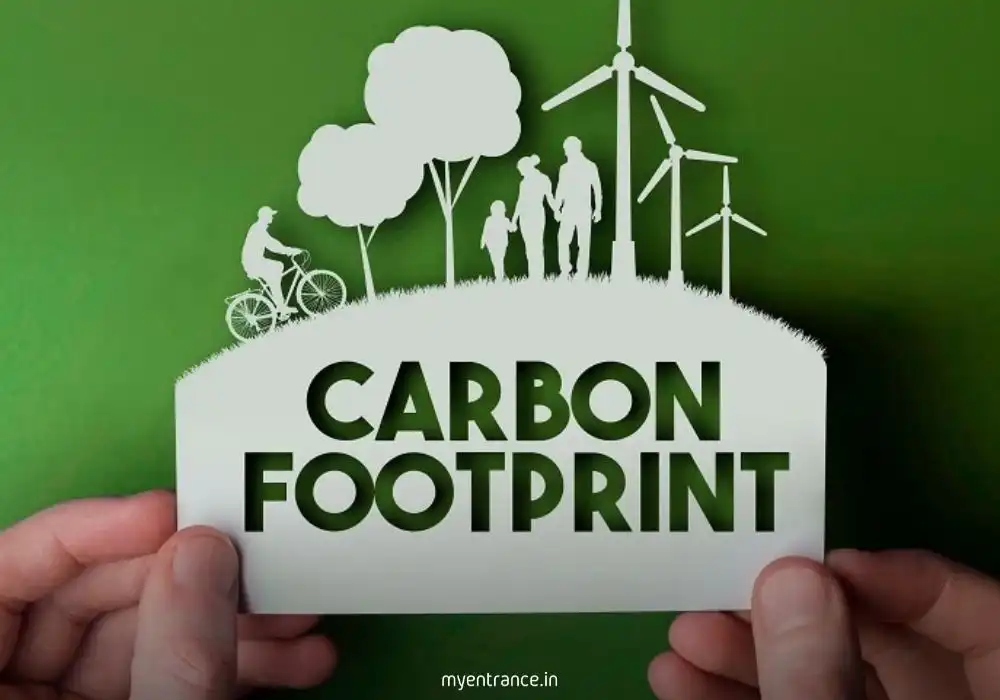
What is Carbon Footprint?
A carbon footprint measures the total greenhouse gases (GHGs), especially carbon dioxide (CO₂), released directly or indirectly by human activities. These emissions are quantified in carbon dioxide equivalents (CO₂e), which also account for other potent gases like methane (CH₄) and nitrous oxide (N₂O).
Why Does It Matter?
Greenhouse gases trap heat, leading to global warming and climate change.
The Intergovernmental Panel on Climate Change (IPCC) confirms that human activities—burning fossil fuels, deforestation, industrial processes—are the primary drivers of rising global temperatures.
Types of Carbon Footprint
Primary Carbon Footprint
Direct emissions from burning fossil fuels for energy, transportation, and heating.
Examples: Car exhaust, electricity from coal, gas-based home heating.
Secondary Carbon Footprint
Indirect emissions from the entire lifecycle of products we use.
Includes production, transportation, and disposal of goods like food, electronics, and clothing.
Measured using Life Cycle Assessment (LCA) as per Greenhouse Gas Protocol or ISO 14064.
ALSO READ: Understanding Pollution: Causes, Types, Effects & Solutions for Competitive Exams
Global Carbon Footprint: Key Facts
The global average per capita CO₂ emission is 4.7 metric tons/year (Global Carbon Atlas, 2024).
Developed nations like the U.S. have 14–16 tons per person, while many developing countries remain below 2 tons.
Major Sources of Emissions
Energy Production (coal, natural gas)
Transportation (cars, flights)
Agriculture (livestock, fertilizers)
Industries (cement, steel production)
How to Reduce Your Carbon Footprint?
Individual Actions
✔ Use energy-efficient appliances (LED bulbs, 5-star ACs).
✔ Reduce car travel—opt for public transport, cycling, or electric vehicles.
✔ Eat more plant-based foods (meat production has high emissions).
✔ Minimize waste (recycle, compost, avoid single-use plastics).
Systemic Changes Needed
Shift to renewable energy (solar, wind power).
Implement carbon pricing (taxes on emissions).
Improve public transport infrastructure.
Enforce stricter environmental laws.
ALSO READ: How is India Fighting Air Pollution in 130 Cities? NCAP Explained!
Carbon Footprint in Policy & Business
Many organizations now track emissions via:
Carbon Disclosure Project (CDP)
Science Based Targets initiative (SBTi)
UN Carbon Neutrality Framework
The ultimate goal? Net-zero emissions—balancing emissions with removals (like carbon capture or afforestation).
Conclusion
The carbon footprint is more than just a number—it’s a critical tool for assessing our environmental impact. With IPCC, NASA, and UNEP stressing urgent action, reducing emissions at individual, corporate, and governmental levels is essential for a sustainable future.
Questions for Competitive Exams
Q1. What is a carbon footprint?
Ans: The total greenhouse gases (mainly CO₂) emitted directly or indirectly by human activities, measured in CO₂ equivalents.
Q2. Which organization confirms human activities as the main cause of global warming?
Ans: The Intergovernmental Panel on Climate Change (IPCC).
Q3. What are the two types of carbon footprints?
Ans: Primary (direct emissions from fuel burning) and Secondary (indirect emissions from product lifecycles).
Q4. Which country has one of the highest per capita carbon footprints?
Ans: The United States (~14–16 tons per person).
Q5. Name one method to reduce your carbon footprint.
Ans: Switching to public transport or plant-based diets lowers emissions significantly.
Get 3 Months Free Access for SSC, PSC, NIFT & NID
Boost your exam prep!
Use offer code WELCOME28 to get 3 months free subscription. Start preparing today!
Read More Topics