
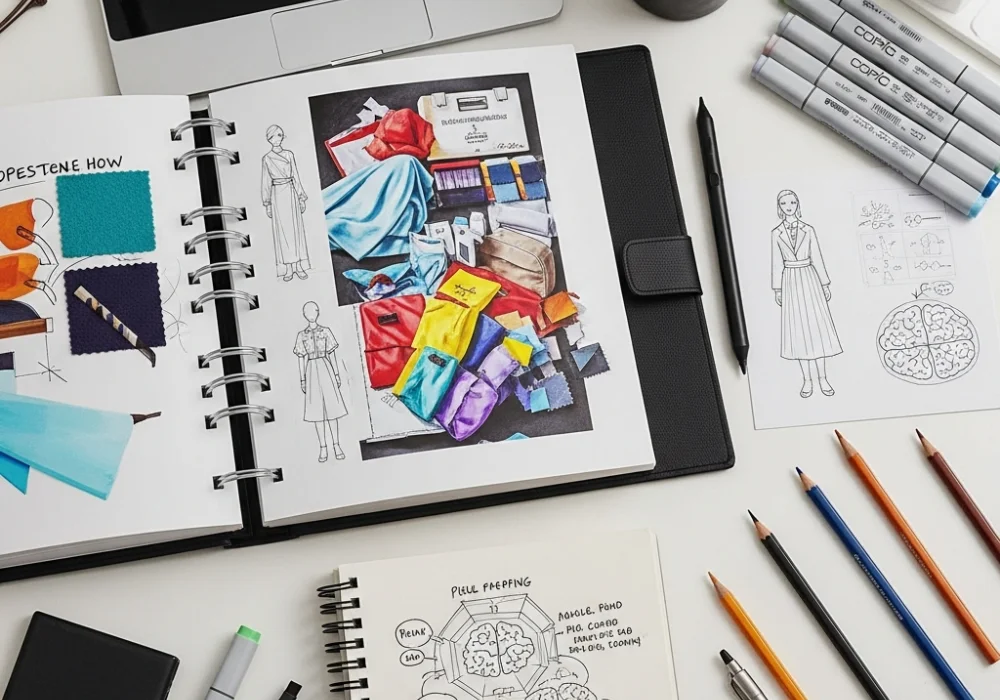
The Importance of a Stellar Portfolio for NID and NIFT
For aspiring designers aiming to secure a seat in India’s premier institutes like the National Institute of Design (NID) and the National Institute of Fashion Technology (NIFT), the portfolio is more than just a collection of drawings. It is a visual narrative of your creative soul, your problem-solving abilities, and your technical proficiency. While the initial entrance exams like the CAT (Creative Ability Test) and GAT (General Ability Test) assess your baseline skills, the portfolio and subsequent studio tests/interviews are where the real selection happens. At myentrance.in, we provide comprehensive mock tests to help you clear the first hurdle, but today, we focus on the second: building a portfolio that leaves the examiners in awe.
What do NIFT and NID Examiners Look For?
Before diving into the tips, it is crucial to understand the mindset of the jury. They aren’t just looking for someone who can draw a realistic apple; they are looking for thinkers, innovators, and individuals with a unique perspective. They want to see your process, your originality, and your potential for growth within the latest pattern of design education.
| Criteria | NID Focus | NIFT Focus |
|---|---|---|
| Primary Goal | Innovative problem solving and conceptual depth. | Aesthetic sense, trend awareness, and technical detail. |
| Mediums | Emphasis on diverse materials and experimentation. | Focus on fashion, textile, and accessory-oriented skills. |
| Narrative | Focus on ‘Why’ and ‘How’ behind a design. | Focus on ‘Visual Appeal’ and ‘Market Relevance’. |
Top 10 Tips for Your Design Portfolio
1. Focus on the Process, Not Just the Result
Examiners are often more interested in your ‘rough work’ than your final finished piece. Include your initial sketches, mind maps, and failed attempts. This shows your journey of reaching a solution. It proves that you have a logical design thinking process. Never hide your mistakes; explain how you learned from them.
2. Showcase a Diversity of Mediums
Don’t limit yourself to just pencil sketches. A well-rounded portfolio should include various mediums such as charcoal, watercolors, digital art, photography, 3D models, or even textile work. This versatility demonstrates your ability to adapt to different design environments, which is a core requirement in the current syllabus.
3. Tell a Story Through Your Work
Each project in your portfolio should have a theme or a story. Whether it is a social issue you care about or a personal experience, a narrative makes your work memorable. When an examiner looks at your work, they should feel a connection to your vision. Using storytelling techniques helps you stand out among thousands of applicants.
4. Maintain High Technical Quality
While creativity is king, technical skills are the foundation. Ensure your work displays a strong understanding of perspective, light and shadow, human anatomy, and color theory. Even a simple sketch should be executed with precision. If you are struggling with these basics, practicing with the drawing modules and mock tests on myentrance.in can significantly improve your accuracy.
5. Originality Over Imitation
Avoid copying designs from the internet or popular artists. Examiners have seen thousands of portfolios and can easily spot unoriginal work. Your portfolio should reflect your unique personality and cultural background. Originality is the highest-valued currency in NID and NIFT interviews.
6. Curate Your Best Work
Quality always beats quantity. It is better to have 10 exceptional pieces than 30 mediocre ones. Select works that highlight your different strengths. If you have two pieces that are very similar, choose the better one. A cluttered portfolio suggests a lack of decision-making skills.
7. Annotate Your Work
Provide brief, meaningful descriptions for your projects. Explain the concept, the tools used, and what you intended to achieve. These annotations act as a guide for the examiner when you aren’t there to explain it in person. Keep the text concise and professional.
8. Demonstrate Social and Environmental Awareness
Modern design is increasingly focused on sustainability and social impact. Including a project that addresses environmental issues or helps a specific community can earn you extra points. It shows that you are a conscious designer who understands the impact of their work on the world.
9. Presentation and Layout
How you present your work is as important as the work itself. Whether it is a physical folder or a digital PDF, the layout should be clean, professional, and easy to navigate. Use consistent fonts and margins. A chaotic layout can distract from the quality of your art.
10. Be Ready to Discuss Every Piece
In a live interview or studio test, the jury might point at any random page and ask you a question. You must be able to justify every stroke and every choice you made. Confidence in your own work is the final step to impressing the jury.
How myentrance.in Can Help You Succeed
Building a portfolio is a long-term process, but you also need to master the entrance exams to get there. At myentrance.in, we offer specialized mock tests for NID and NIFT that mirror the latest pattern of questions. Our resources help you sharpen your observation skills, creative thinking, and time management, ensuring you are fully prepared for the upcoming exams. By practicing with our expert-curated material, you build the confidence needed to excel in both the written tests and the portfolio rounds.
Frequently Asked Questions (FAQ)
Do I need to be an expert at drawing to get into NID?
While you don’t need to be a professional artist, you do need a solid grasp of basic drawing principles like perspective and proportion. NID values your ability to communicate ideas visually more than your ability to create ‘pretty’ pictures.
Is a digital portfolio better than a physical one?
It depends on the current guidelines provided by the institute for the specific year of admission. Generally, having a digital backup of a physical portfolio is wise. Digital portfolios are essential for NID, while NIFT may require physical samples during the situation test.
How many projects should I include?
Ideally, 10 to 15 well-developed projects are sufficient. This allows you to show diversity without overwhelming the examiners. Each project should showcase a different skill or thought process.
Can I include school projects in my design portfolio?
Yes, as long as they are relevant and showcase your creativity or technical skills. However, try to supplement them with personal projects that show your initiative and passion for design outside the classroom.
Does myentrance.in offer specific drawing mock tests?
Yes, our mock tests cover both the GAT and CAT sections, providing specific prompts and exercises designed to improve your creative output for NID and NIFT exams.
Ready to Ace Your Design Entrance Exams?
Don’t leave your dreams to chance. Get expert guidance, the latest study materials, and comprehensive mock tests for NID, NIFT, and more. Our team is here to help you navigate every step of your journey!
💬 Chat with our Experts on WhatsApp (+91 9526806124)




