
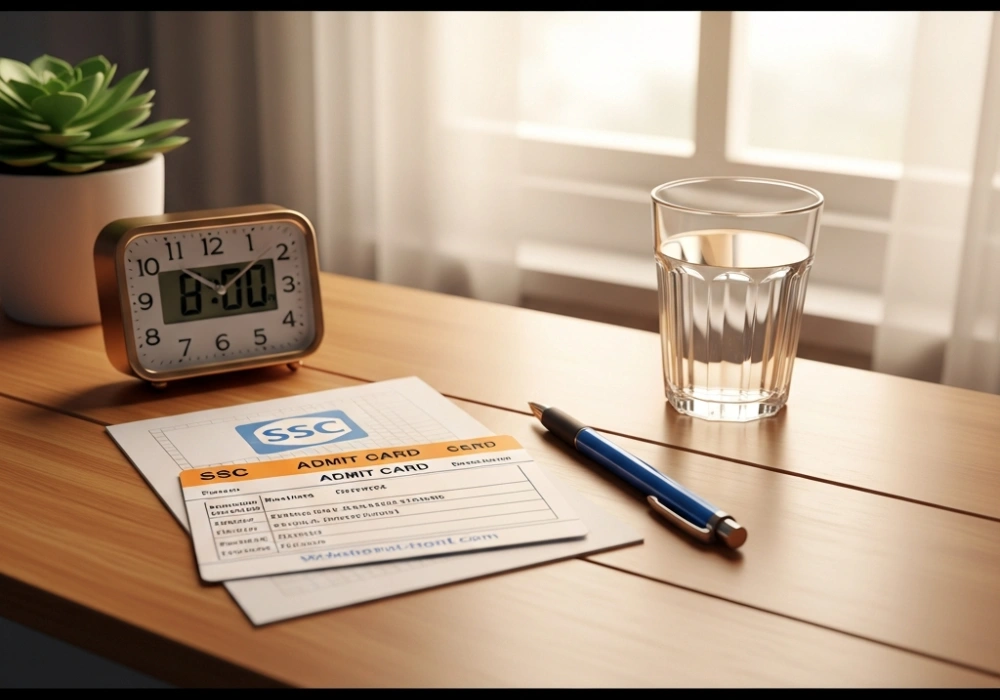
Introduction: The Psychology of the Final Countdown
Welcome, future officer. If you are reading this, your SSC exam is tomorrow. You might feel a fluttering in your stomach, a slight tightness in your chest, or a brain that feels like it has forgotten every formula you ever learned. First, let me tell you something vital: this is normal. Anxiety is not a sign of failure; it is simply your body’s way of preparing for a challenge. As an exam psychologist, I have seen thousands of candidates go through exactly what you are feeling right now. The difference between those who succeed and those who struggle often comes down to how they manage these final 24 hours.
Your brain is like a high-performance engine. If you rev it too hard the night before the race, you risk overheating. Today is not about learning new concepts; it is about preservation, stabilization, and mental conditioning. In this guide, we will walk through a strategic psychological and physical blueprint to ensure you walk into that exam hall tomorrow with clarity, confidence, and a razor-sharp focus. We are moving from a state of ‘survival’ to a state of ‘thriving.’
💡 Why does my brain feel ‘blank’ right now?
This is known as ‘Cognitive Overload.’ Your brain is temporarily shielding itself from high stress. Don’t worry—once you see the actual questions tomorrow, the context-dependent memory will kick in, and the information will return. Trust your preparation!
The ‘Red Zone’: What You Must Avoid
Success is often as much about what you don’t do as what you do. To maintain your psychological equilibrium, you must strictly avoid the following ‘energy vampires’ in the next 24 hours:
- 🚫 Learning New Topics: This is the most dangerous trap. Trying to learn a new math trick or a complex GS concept now will only trigger the ‘Dunning-Kruger’ effect, making you feel like you know nothing at all. Stick to what you know.
- 🚫 Comparing Progress with Peers: Avoid Telegram groups or WhatsApp chats where people are discussing how many mocks they solved or how hard a certain shift was. Your journey is individual.
- 🚫 The ‘Just One More Mock’ Fallacy: Taking a full-length mock test today is a bad idea. A low score could shatter your confidence, and a high score could lead to complacency. Focus on light revision only.
- 🚫 Heavy or Unfamiliar Foods: Your gut and brain are deeply connected via the Vagus nerve. Indigestion tonight leads to poor sleep and brain fog tomorrow.
- 🚫 Excessive Caffeine: You need natural sleep. Too much coffee will keep your cortisol (stress hormone) levels artificially high.
💡 Click to reveal the ‘Social Media Rule’
Uninstall or ‘Offload’ your social media apps until tomorrow evening. The dopamine spikes and potential negative news will only clutter your mental workspace.
Strategic Revision: The ‘Gentle Touch’ Approach
Revision in the final 24 hours should be like a quick walkthrough of a familiar house, not a deep cleaning session. Your goal is to keep the pathways to your existing knowledge ‘warm.’
For Quantitative Aptitude: Spend no more than 60 minutes looking at your formula notebook. Visualize the application of formulas rather than solving 50 problems. Focus on the ‘High-Yield’ areas like Percentage, Ratio, and basic Geometry properties.
For English: Quickly scan through common idioms, phrases, and grammar rules (like Subject-Verb Agreement). Read a few short, positive articles to keep your reading comprehension speed consistent.
For General Awareness: This is usually the highest source of anxiety. Accept that you cannot know everything. Review your short notes on ‘Static GK’ (National Parks, Temples, etc.) or the last 3 months of Current Affairs. If you feel panic rising, close the book and walk away for 10 minutes.
💡 Pro-Tip: The ‘Whiteboard’ Technique
If you are struggling to remember a formula, write it down on a piece of paper, look at it for 10 seconds, close your eyes, and ‘see’ it in your mind. This reinforces visual memory without the stress of solving.
Fueling the Machine: Nutrition & Hydration
Your brain consumes about 20% of your daily calories. Feeding it junk tonight is like putting low-grade fuel in a Ferrari. To maintain steady glucose levels and avoid ‘brain crashes,’ follow these rules:
- The Pre-Exam Dinner: Opt for complex carbohydrates and lean protein. A simple meal of Dal, Rice, and a small portion of vegetables is perfect. Avoid spicy food that could cause acidity.
- Hydration: Drink water consistently, but do not ‘chug’ liters at once. Sip water throughout the day. Dehydration of even 2% can significantly reduce cognitive performance and attention span.
- The Power of Magnesium: Foods like bananas or a small piece of dark chocolate contain magnesium, which helps in muscle relaxation and reduces anxiety levels.
- The Morning Breakfast: Do not go on an empty stomach, but don’t overeat either. Oatmeal or toast with peanut butter provides sustained energy. Avoid high-sugar cereals that lead to a mid-exam energy slump.
Minute-by-Minute Timeline for Today
Follow this schedule to ensure you arrive at the exam center in a state of ‘Flow’:
- 12:00 PM – 02:00 PM: Final light revision. Focus on your ‘Mistake Notebook’ from previous mocks.
- 02:00 PM – 03:00 PM: Nutritious lunch. Sit away from your study desk while eating.
- 03:00 PM – 05:00 PM: The ‘Admin Hour.’ Organize your bag (see checklist below). Check the exam center location on Google Maps and plan your travel.
- 05:00 PM – 06:30 PM: Total Disconnection. Go for a light walk, listen to calming music, or talk to a supportive family member about non-exam topics.
- 06:30 PM – 07:30 PM: Last glance at your ‘most forgotten’ formulas or dates. This is the absolute end of your studies.
- 07:30 PM – 08:30 PM: Light dinner.
- 08:30 PM – 09:30 PM: Wind-down. No screens. Read a physical book or practice deep breathing.
- 10:00 PM: Lights out. Even if you don’t fall asleep immediately, lying down with eyes closed allows your brain to rest.
💡 What if I can’t sleep?
Don’t panic about not sleeping. The ‘Resting State’ is still beneficial. Use the ‘4-7-8’ breathing technique: Inhale for 4 seconds, hold for 7, exhale for 8. It triggers the parasympathetic nervous system.
The Essential Exam Hall Checklist
Do not leave this for tomorrow morning. Pack these items in a clear folder now:
- ✅ Admit Card: Printed clearly (keep two copies just in case).
- ✅ Identity Proof: Original Aadhaar Card/Voter ID/PAN Card (ensure the name matches your admit card).
- ✅ Photographs: At least 2 recent passport-size photos (same as uploaded in the form).
- ✅ Stationery: Transparent ballpoint pens (Check if the exam center allows personal pens).
- ✅ Water Bottle: Transparent, without any labels.
- ✅ Face Mask & Hand Sanitizer: As per the latest guidelines.
- ✅ Travel Plan: Cash/Change for public transport or a full fuel tank in your vehicle.
Final Psychological Strategy: The ‘First 5 Minutes’ Rule
When you sit in front of that computer screen tomorrow, your heart rate will be high. Use the first 30 seconds to just breathe. When the exam starts, do not rush into the first question like a soldier without a shield. Quickly scan the first few questions of your strongest section.
The ‘Skip’ Strategy: If a question looks time-consuming or confusing, skip it immediately. Your goal in the first 20 minutes is to secure ‘Easy Marks’ to build momentum. Momentum is the greatest antidote to anxiety. Once you have 15-20 correct answers in the bag, your brain will switch from ‘Anxiety Mode’ to ‘Success Mode.’
Remember, the SSC exam is not just a test of your knowledge; it is a test of your temperament. You have worked hard, you have sacrificed sleep, and you have prepared well. Now, it is time to let that preparation manifest. You are ready. You are capable. You are calm.
Need Last-Minute Motivation or Support?
We are here for you! If you have any doubts about the exam process or just need a boost of confidence, reach out to our team.
💬 Chat with our Experts on WhatsApp (+91 9526806124)




