
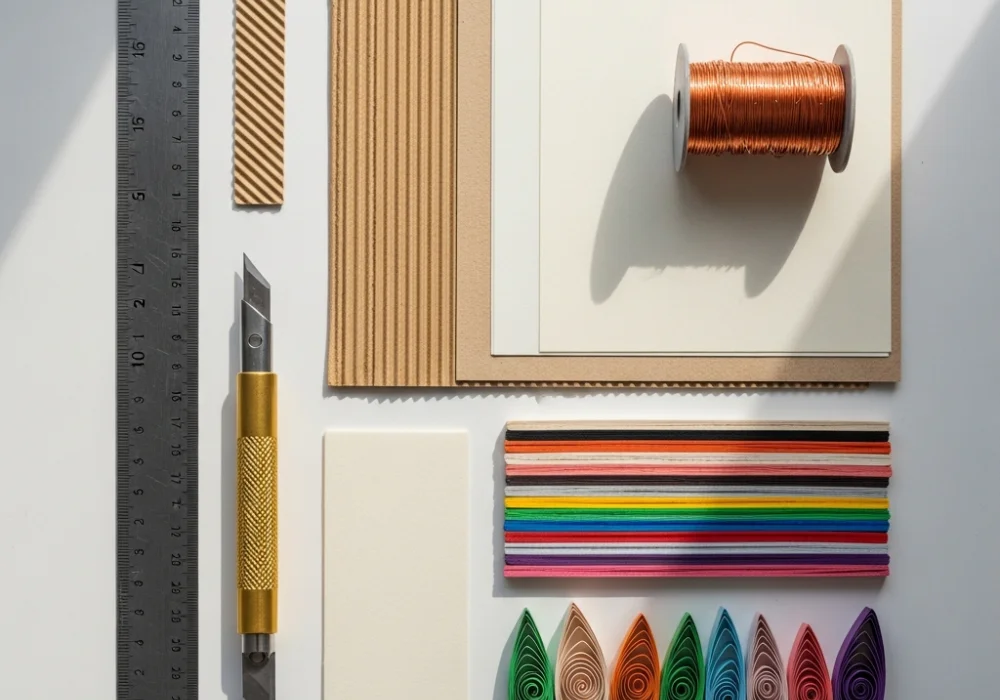
Mastering the NIFT Situation Test: Why Stationary Selection is Your Secret Weapon
The NIFT Situation Test is the final hurdle in your journey toward a premier fashion design career. While the written exams (CAT and GAT) test your observation and logic, the Situation Test evaluates your three-dimensional visualization and material handling skills. The challenge lies in creating a model using a limited set of materials within a strict two-hour timeframe. To excel, you don’t just need creativity; you need a strategic understanding of the tools at your disposal. Choosing the right stationary for your practice sessions can make the difference between a messy structure and a professional-grade prototype. In this guide, we dive deep into the ultimate stationary checklist that every aspirant must master to conquer the latest pattern of the NIFT entrance exam.
At myentrance.in, we understand the nuances of these exams. Our mock tests for NIFT and NID are designed to simulate the actual pressure of the exam hall, helping you refine your speed and accuracy before the big day.
Table of Contents
1. Precision Cutting Tools
Cutting is the most frequent activity in the NIFT Situation Test. If your edges are jagged, your model looks amateurish. To achieve architectural precision, you need to be comfortable with various cutting implements.
The Utility Paper Cutter
A standard retractable paper cutter is essential. Look for one with a metal casing for better grip and stability. Ensure you know how to snap off a dull blade to maintain a sharp edge. A sharp blade requires less pressure, which means you are less likely to crush delicate materials like corrugated sheets.
Precision Detail Knife (X-Acto Style)
For intricate patterns, circular cuts, or cut-outs inside a sheet, a detail knife is indispensable. It allows for pen-like control. During your practice at home, focus on moving the paper rather than the knife for smooth curves.
Multipurpose Scissors
While cutters are great for straight lines on hard surfaces, scissors are better for cutting fabric, threads, and flexible plastic sheets. Opt for a pair with ergonomic handles to avoid hand fatigue during long practice sessions.
💡 Click to Reveal: Cutter Safety Pro-Tip
Always cut away from your body. When using a metal ruler as a guide, apply firm pressure on the ruler with your non-dominant hand and keep your fingers away from the edge to avoid accidental slips.
2. Adhesives and Bonding Agents
In the NIFT Situation Test, you are often provided with limited glue. Learning how to bond different textures—like paper to plastic or cloth to wire—is a critical skill. Knowing which adhesive works where can save you precious minutes.
Fevicol (White Glue)
The gold standard for paper-to-paper bonding. However, it takes time to dry. In the exam, use it sparingly. A thin layer dries faster and prevents the paper from warping.
Double-Sided Tape
This is a lifesaver for instant bonding. It is clean and provides immediate structural integrity. It is particularly useful for creating mock-ups where you cannot wait for liquid glue to set.
Glue Gun (For Practice Only)
While most NIFT centers do not allow electronic glue guns in the actual exam, practicing with one helps you understand structural joints. Note: Always check the latest exam guidelines as the provided material list changes every year.
Glue Stick
Best for large surface areas where you want to avoid moisture. It prevents thin sheets from wrinkling, making it ideal for neat finishes.
3. Data Comparison: Selecting the Right Adhesive
Understanding the properties of your tools is essential for the NIFT Situation Test. Below is a comparative analysis of common adhesives used during preparation.
| Adhesive Type | Drying Time | Best Used For | Neatness Level |
|---|---|---|---|
| Fevicol MR | Moderate (5-10 mins) | Paper, Cardboard, Thermocol | Medium (can be messy) |
| Double Sided Tape | Instant | Quick joints, hidden seams | High (No residue) |
| Glue Stick | Fast | Thin paper, Origami | High |
| Masking Tape | Instant | Temporary holding, Texturing | Low (Visible) |
4. Advanced Material Handling Strategy
Preparation isn’t just about buying the stationary; it’s about knowing the “Material Language.” Every material provided in the NIFT Situation Test has a strength and a weakness.
- Wire Handling: Use a pair of pliers during practice to learn how to create clean loops and sharp angles. Wire provides the skeleton for many models.
- Corrugated Sheet: Learn to score the sheet (cutting only the top layer) to fold it into perfect curves or sharp 90-degree angles.
- Fabric Manipulation: Don’t just stick fabric flat. Learn techniques like pleating, crumpling, and quilting to add texture and depth to your model.
- The “No Glue” Challenge: Practice creating models using interlocking tabs and slots. This shows high-level design thinking and keeps your model extremely clean.
If you are looking for structured guidance, explore the resources at myentrance.in. Our mock tests simulate the upcoming exams’ environment, ensuring you are well-versed in handling diverse materials under pressure.
Frequently Asked Questions (FAQ)
What materials are usually provided in the NIFT Situation Test?
Typical materials include corrugated sheets, mount board, ivory sheets, colored gelatin paper, copper wire, clay, cloth scraps, thread, and buttons. The exact list varies based on the latest pattern.
Can I take my own stationary to the NIFT center?
Yes, you are generally allowed to take basic stationary like pencils, erasers, rulers, cutters, and scissors. However, you cannot take any decorative materials or extra adhesives. Always check your admit card for the specific “allowed items” list for the current year.
How important is the write-up in the Situation Test?
The English write-up (approx 100 words) is crucial. It explains your concept, the materials used, and the inspiration behind your model. It accounts for a significant portion of your total marks.
Quick Knowledge Check
Test your material handling knowledge with these quick questions!
1. Which tool is best for making a clean circular hole in a mount board?
💡 Click to Reveal Answer
A Precision Detail Knife (X-Acto knife) is the best tool for intricate circular cuts.
2. What technique is used to fold a thick corrugated sheet without breaking it?
💡 Click to Reveal Answer
Scoring (lightly cutting only the top layer of the sheet) allows it to fold cleanly along the line.
3. Why should you avoid using too much liquid glue on thin ivory sheets?
💡 Click to Reveal Answer
Excess moisture in liquid glue causes paper fibers to expand, leading to warping and wrinkling of the sheet.
Need Personalized Guidance for Design Entrances?
Don’t leave your design dreams to chance. Get expert mentorship and access to premium mock tests for NIFT, NID, and other competitive exams.
💬 Chat with our Experts on WhatsApp (+91 9526806124)




