
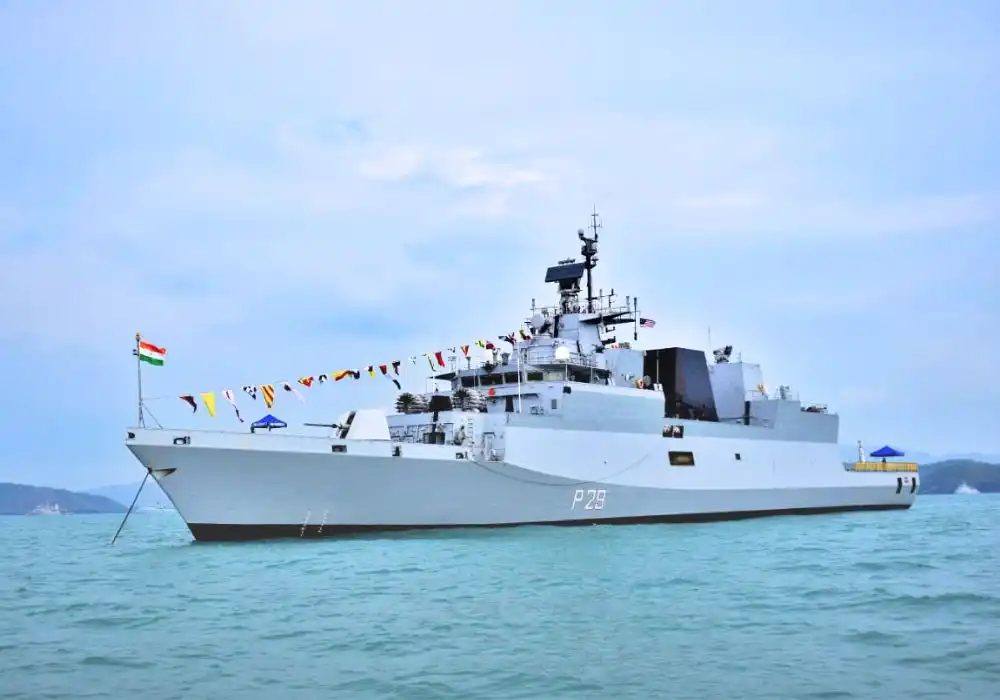
For every aspiring candidate eyeing success in prestigious examinations like UPSC, SSC, PSC, NID, NIFT, and other government recruitment drives, keeping pace with current affairs is non-negotiable. It’s not just about knowing *what* happened, but understanding *why* it matters. A recent development that perfectly illustrates this principle is the overseas deployment of the Indian Naval Ship (INS) Kadmatt to Suva, Fiji. This event, far from being a mere news byte, holds multifaceted significance, touching upon India’s strategic outreach, bilateral relations, and defence capabilities – all crucial topics for your examination preparation.
The Visit: What Happened and Where?
The INS Kadmatt, a formidable anti-submarine warfare corvette, recently made a port call in Suva, the capital city of Fiji. This visit is a carefully planned part of its broader overseas deployment, showcasing India’s maritime presence and engagement in the Indo-Pacific region. From an exam perspective, recognizing the specific ship (INS Kadmatt) and its class (anti-submarine warfare corvette) can be vital for questions related to static general knowledge or defence updates. Similarly, pinpointing Fiji’s geographical location in the Pacific and its capital city are essential current affairs and geography facts to remember.
The “Why”: Deeper Significance for India and Your Exams
This deployment isn’t just a casual visit; it’s steeped in strategic and diplomatic objectives. The Indian Ministry of Defence explicitly highlighted that this visit underscores the deep-rooted cultural and historical bonds shared between India and Fiji. For your exams, this points directly to India’s “Look East” or “Act East” policy and its increasing engagement with Pacific Island nations. Understanding the context of bilateral relations – why certain countries are important to India – is a cornerstone of International Relations sections in exams. Fiji, strategically located in the South Pacific, plays a crucial role in India’s broader Indo-Pacific vision, promoting a free, open, and inclusive region. The presence of an anti-submarine warfare vessel also subtly signals India’s commitment to maritime security and its capacity to project power and offer assistance in the region.
The “How”: Engagement Activities and Their Broader Impact
During its stay in Fiji, the crew of INS Kadmatt participated in a range of activities. These included professional exchanges, where Indian and Fijian naval personnel shared expertise and best practices, enhancing interoperability and mutual understanding. Cultural activities were also a significant component, fostering stronger people-to-people connections and showcasing India’s rich heritage. Furthermore, community outreach programmes underscored India’s commitment to humanitarian assistance and disaster relief (HADR) efforts, acting as a soft power tool. For your competitive exams, such activities demonstrate the multi-dimensional nature of international diplomacy – combining military prowess with cultural exchange and goodwill. These types of engagements strengthen India’s strategic partnerships and contribute to regional stability, topics frequently covered in current affairs and international relations papers.
By dissecting news like the INS Kadmatt’s visit, you move beyond rote memorization to a comprehensive understanding, which is precisely what examiners look for. Connecting the dots between defence, diplomacy, geography, and current events will significantly enhance your scores in challenging government examinations.
Frequently Asked Questions and Answers
1. What type of naval vessel is INS Kadmatt, and what is its primary role?
INS Kadmatt is an anti-submarine warfare (ASW) corvette. Its primary role involves detecting, tracking, and engaging enemy submarines, thereby protecting other naval assets and securing vital maritime routes.
2. Why is Fiji significant for India, especially in the context of naval deployments?
Fiji holds strategic importance for India due to its key location in the South Pacific, making it a crucial partner in India’s Indo-Pacific strategy. Such deployments strengthen bilateral ties, enhance maritime security cooperation, and extend India’s outreach in the region, aligning with its “Act East” policy.
3. What kind of activities did the INS Kadmatt undertake during its visit to Fiji?
During its visit, the ship’s crew engaged in professional exchanges with Fijian counterparts, participated in cultural activities to foster goodwill, and conducted community outreach programmes, all aimed at strengthening bilateral relations and showcasing India’s commitment to the region.
4. How does news about naval ship deployments like this benefit candidates preparing for competitive exams?
This news is crucial for competitive exams as it directly relates to current affairs, international relations, defence updates, and static general knowledge. It helps candidates understand India’s foreign policy, geographical importance of nations, types of naval vessels, and strategic alliances, which are frequently tested topics.
5. What is the broader objective of India’s overseas naval deployments to countries like Fiji?
India’s overseas naval deployments primarily aim to enhance bilateral relations, promote maritime security in the Indo-Pacific, demonstrate India’s defence capabilities, foster goodwill through cultural exchanges and community support, and project India’s role as a responsible global maritime power.
***





