
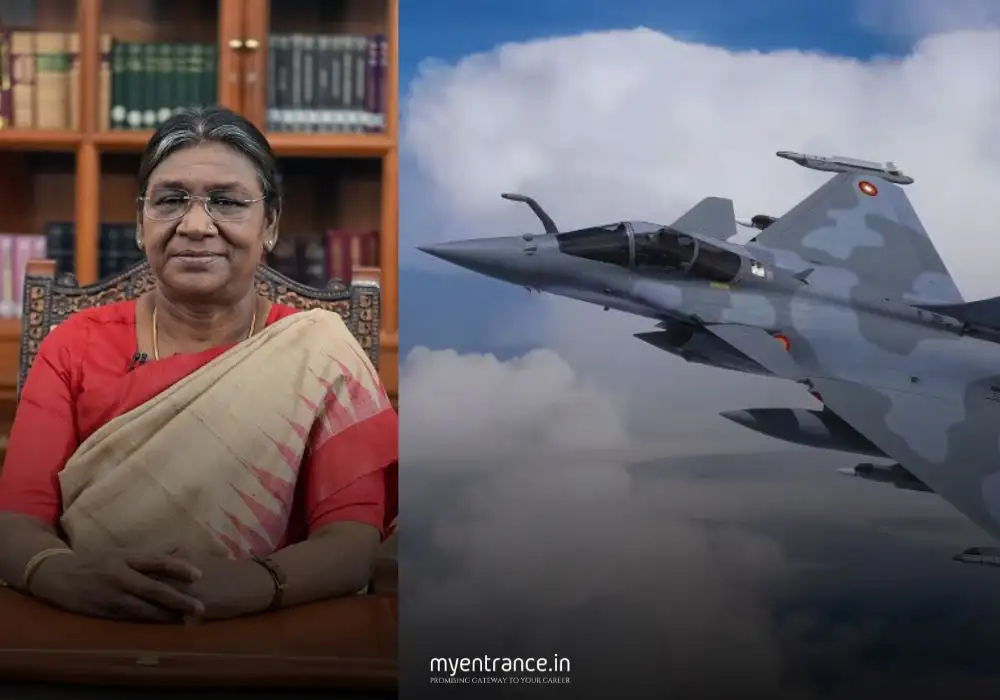
As aspirants for prestigious government examinations like UPSC, SSC, PSC, NID, NIFT, and countless others, staying abreast of current events is not merely a good habit; it’s a strategic necessity. Every significant happening, no matter how brief its headline, holds a wealth of information crucial for your preparation, spanning current affairs, static general knowledge, and even insightful analysis. Let’s delve into a recent noteworthy event – President Droupadi Murmu’s upcoming visit to Ambala and her planned Rafale sortie – and unpack its multi-faceted relevance for your exam journey.
The Significance of a Presidential Sortie: Beyond the Headlines
When the President of India engages in an activity like taking a sortie in a frontline fighter aircraft, it resonates far beyond a simple news update. This isn’t just about a high-profile individual experiencing a thrill; it’s a powerful statement with constitutional, symbolic, and strategic undertones. The President, by virtue of her office, is the Supreme Commander of the Indian Armed Forces. Her direct engagement with our defense capabilities, whether it’s inspecting troops, visiting forward bases, or indeed, flying in a fighter jet, signifies the nation’s unwavering commitment to its defense personnel and military readiness. Such events serve as a morale booster for the forces and project India’s strength and resolve on the global stage. For your examinations, understanding this constitutional role and the symbolism behind such acts is paramount, often appearing in questions related to polity, governance, and national security.
India’s Air Power: Focus on Rafale and Strategic Locations
The choice of aircraft, the Rafale, is itself a focal point for current affairs and static general knowledge. The Rafale is a potent twin-engine, canard-delta wing, multirole fighter aircraft manufactured by Dassault Aviation of France. Its induction into the Indian Air Force has significantly enhanced our air combat capabilities, especially in terms of air superiority and ground attack roles. Aspirants should be familiar with its country of origin, its key features, the squadrons it operates in, and the strategic importance of its deployment. This event also brings the Ambala Air Force Station into prominence, a strategically vital base in Haryana. Similarly, the mention of the President’s previous Sukhoi 30 MKI sortie at Tezpur Air Force Station in Assam highlights other crucial operational bases and another backbone of the Indian Air Force. Knowledge of these bases, their geographical locations, and the types of aircraft stationed there forms an important part of your static general knowledge and geographical awareness, often tested in various competitive exams.
Connecting the Dots: Your Exam Preparation Blueprint
For competitive exam aspirants, this event offers a rich tapestry of interconnected knowledge. Firstly, it’s a prime example of a current affair that can be directly asked in daily news quizzes or dedicated current affairs sections. Secondly, it provides a spring board to delve into static general knowledge topics such as the constitutional powers of the President, the structure and command hierarchy of the Indian Armed Forces, details of India’s major defense procurements, and the geography of key air force bases. Furthermore, understanding the strategic implications of such visits and defense assets helps develop a broader perspective on national security, which is vital for descriptive papers and interview stages in exams like UPSC and PSC. By dissecting news like this – asking the ‘why,’ ‘what,’ ‘where,’ ‘when,’ and ‘how’ – you transform passive information consumption into active, targeted exam preparation, building a robust foundation for success.
Frequently Asked Questions (FAQs)
1. What is the constitutional significance of the President of India taking a sortie in a fighter jet?
The President of India is the Supreme Commander of the Indian Armed Forces. When the President takes a sortie in a fighter jet, it symbolizes her direct leadership and command over the military, boosts the morale of the armed forces, and demonstrates the nation’s confidence in its defense capabilities and personnel. It reaffirms the constitutional position of the President as the head of the armed forces.
2. Which fighter aircraft did President Droupadi Murmu recently take a sortie in, and which air force station was involved?
President Droupadi Murmu recently took a sortie in a Rafale fighter aircraft from the Ambala Air Force Station in Haryana. This event highlighted India’s advanced air combat capabilities and strategic defense infrastructure.
3. What are the key features of the Rafale aircraft that make it significant for India’s defense?
The Rafale is a French-made twin-engine, multirole fighter jet known for its advanced capabilities in air-to-air combat, ground attack, reconnaissance, and nuclear deterrence. Its modern avionics, weapon systems, and electronic warfare suite provide a significant technological edge, enhancing India’s air superiority and strategic strike capabilities.
4. How does keeping track of events like the President’s Rafale sortie benefit government exam aspirants?
Such events are crucial for government exam aspirants as they provide valuable material for current affairs questions. They also serve as a gateway to understanding broader static general knowledge topics, including the President’s constitutional role, defense technology, Indian military bases, and national security policies, all of which are frequently tested in exams like UPSC, SSC, and PSC.
5. Where did President Droupadi Murmu take her previous fighter jet sortie, and what aircraft was it?
Prior to her Rafale sortie in Ambala, President Droupadi Murmu had taken a sortie in a Sukhoi 30 MKI fighter aircraft at the Tezpur Air Force Station in Assam in April 2023. This demonstrates a consistent engagement with India’s air defense assets across various strategic locations.





