
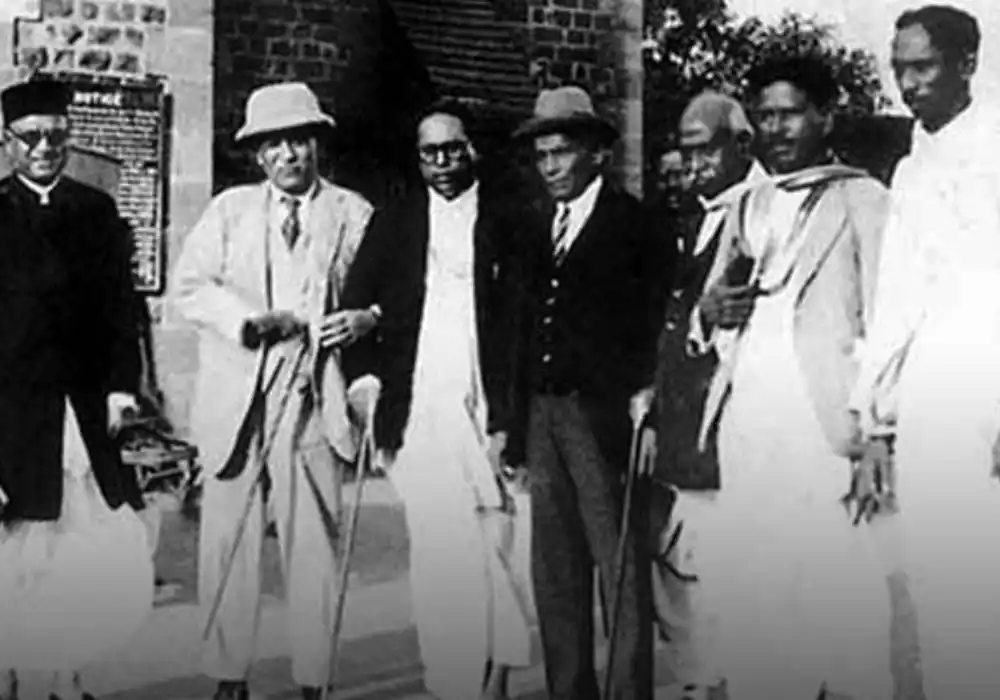
The Poona Pact, signed in 1932, stands as a critical juncture in India’s struggle for independence, fundamentally altering the course of representation for depressed classes. This landmark agreement, emerging from a tense political standoff, addressed the contentious issue of separate electorates and laid the groundwork for reserved constituencies, profoundly impacting India’s constitutional and social development. Understanding its nuances is paramount for aspirants targeting examinations like UPSC, SSC, and various State PSCs. Challenge yourself with our daily news quiz for upsc and ssc to test your awareness.
The Genesis of Conflict: Setting the Stage for the Poona Pact
The British policy of ‘divide and rule’ played a significant role in exacerbating communal tensions during India’s freedom struggle. Following the recommendations of the Simon Commission and subsequent discussions at the Round Table Conferences, the British government sought to address the representation of various minority communities. In August 1932, British Prime Minister Ramsay MacDonald announced the ‘Communal Award,’ a deeply controversial proposal that allocated separate electorates for Muslims, Sikhs, Christians, Anglo-Indians, and crucially, for the ‘Depressed Classes’ (later known as Scheduled Castes).
While Dr. B.R. Ambedkar, a towering figure advocating for the rights of the depressed classes, initially saw separate electorates as a means to ensure genuine political voice for his community, Mahatma Gandhi vehemently opposed this provision for the depressed classes. Gandhi perceived it as a divisive tactic designed to fragment Hindu society further, thereby weakening the nationalist movement and perpetuating social stratification. In protest against the Communal Award’s provision for separate electorates for the depressed classes, Gandhi began an indefinite fast unto death from Yerawada Jail in Poona, declaring that he would not live to see the disintegration of Hindu society. This act of moral persuasion created immense political pressure, forcing a reconsideration of the award’s terms. Learn effective last-day revision strategies to maximize your remaining study hours.
The Agreement Unfolds: Key Provisions and Signatories
Gandhi’s fast propelled intense negotiations between leaders of the depressed classes and the wider Hindu community. Dr. B.R. Ambedkar, representing the depressed classes, engaged in arduous deliberations with prominent Hindu leaders such as Madan Mohan Malaviya, C. Rajagopalachari, and Rajendra Prasad, among others. The result was the historic Poona Pact, an agreement reached on September 24, 1932.
The core compromise of the Poona Pact involved the depressed classes relinquishing their demand for separate electorates. In return, they were guaranteed a significantly higher number of reserved seats within the general constituencies in both provincial and central legislatures. Specifically, the number of seats reserved for the depressed classes in provincial legislatures was increased from 71 (as per the Communal Award) to 147. Furthermore, 18% of the total seats in the Central Legislature were to be reserved for them. Crucially, these reserved seats would be filled through a system of joint electorates, where all registered voters, including members of the depressed classes, would vote for candidates belonging to the depressed classes. This meant that while specific seats were reserved, the broader electorate still participated in choosing their representatives, aiming to foster a sense of shared political identity. Though not a direct signatory, Mahatma Gandhi, who was still fasting, gave his full consent to the pact, which ultimately led him to break his fast.
A Legacy of Representation: Impact and Aftermath
The Poona Pact brought immediate relief from the political crisis precipitated by Gandhi’s fast and the Communal Award. Its long-term significance, however, is far more profound. It effectively established the principle of reservation in political representation for marginalized communities, a cornerstone of affirmative action in independent India. The pact increased the political power and recognition of the depressed classes, providing them with a constitutionally sanctioned pathway to political participation that continues to this day for Scheduled Castes and Scheduled Tribes.
However, the pact was not without its critics. While it averted a major schism within Hindu society, some, including sections of the depressed classes, argued that joint electorates, even with reserved seats, might not fully empower their representatives to act independently, as they would still need support from the general electorate. Ambedkar himself had initially preferred separate electorates, believing they offered a more direct and uncompromised voice for his community. Nevertheless, the Poona Pact remained a pivotal step in India’s constitutional development, shaping the framework for inclusive governance and minority representation that would be enshrined in the independent Indian Constitution.
Why the Poona Pact is Indispensable for Your Exam Success
For aspirants preparing for competitive examinations, a thorough understanding of the Poona Pact is not merely about memorizing dates and figures; it’s about grasping a critical chapter in India’s socio-political evolution.
* UPSC Civil Services: This topic is indispensable for Modern Indian History (both Prelims and Mains), Indian Polity (constitutional development, reservation policies, minority rights), and Social Justice (historical context of affirmative action). Questions often delve into the motivations of key figures, the rationale behind the provisions, and its long-term impact on India’s democratic structure. Analytical questions frequently test your ability to weigh the merits and demerits of the pact and its alternatives.
* SSC & State PSCs: These examinations often feature factual questions related to the Poona Pact, such as the year it was signed, the key signatories, the number of reserved seats, or the British Prime Minister who announced the Communal Award. Additionally, contextual questions might appear in General Awareness sections, requiring a basic understanding of its significance.
* Other Government Exams (e.g., NID, NIFT): While less directly tested, a strong grasp of pivotal historical events like the Poona Pact enhances overall general knowledge and critical thinking, which are indirectly assessed in various aptitude tests and interview stages.
Mastering the Poona Pact goes beyond rote learning; it requires a nuanced understanding of its historical context, the political dynamics at play, the ideological stances of its protagonists, and its enduring legacy on India’s representative democracy.
Sharpen Your Edge: Sample Questions & Answers
To help you solidify your understanding and prepare for your upcoming examinations, here are five sample questions and their answers related to the Poona Pact.
Q1: What was the primary reason for Mahatma Gandhi’s fast unto death that led to the signing of the Poona Pact?
A1: Mahatma Gandhi’s fast was primarily in protest against the Communal Award’s provision for separate electorates for the ‘Depressed Classes’ (Scheduled Castes), as he believed it would divide Hindu society and undermine the nationalist movement.
Q2: Who were the two main figures whose negotiations ultimately led to the Poona Pact?
A2: The two main figures whose negotiations were pivotal to the Poona Pact were Mahatma Gandhi (whose fast initiated the process) and Dr. B.R. Ambedkar (who represented the depressed classes).
Q3: What was the core compromise of the Poona Pact regarding the representation of depressed classes?
A3: The core compromise was the depressed classes foregoing separate electorates in exchange for a significantly increased number of reserved seats in the provincial and central legislatures, which would be filled through a system of joint electorates.
Q4: How did the number of reserved seats for depressed classes in provincial legislatures change after the Poona Pact, compared to the Communal Award?
A4: The Poona Pact increased the number of reserved seats for depressed classes in provincial legislatures from 71 (as per the Communal Award) to 147.
Q5: In what year was the Poona Pact signed and what immediate crisis did it resolve?
A5: The Poona Pact was signed in 1932, specifically on September 24th, and it immediately resolved the crisis caused by Mahatma Gandhi’s fast unto death against the Communal Award’s provision for separate electorates for the depressed classes.





