
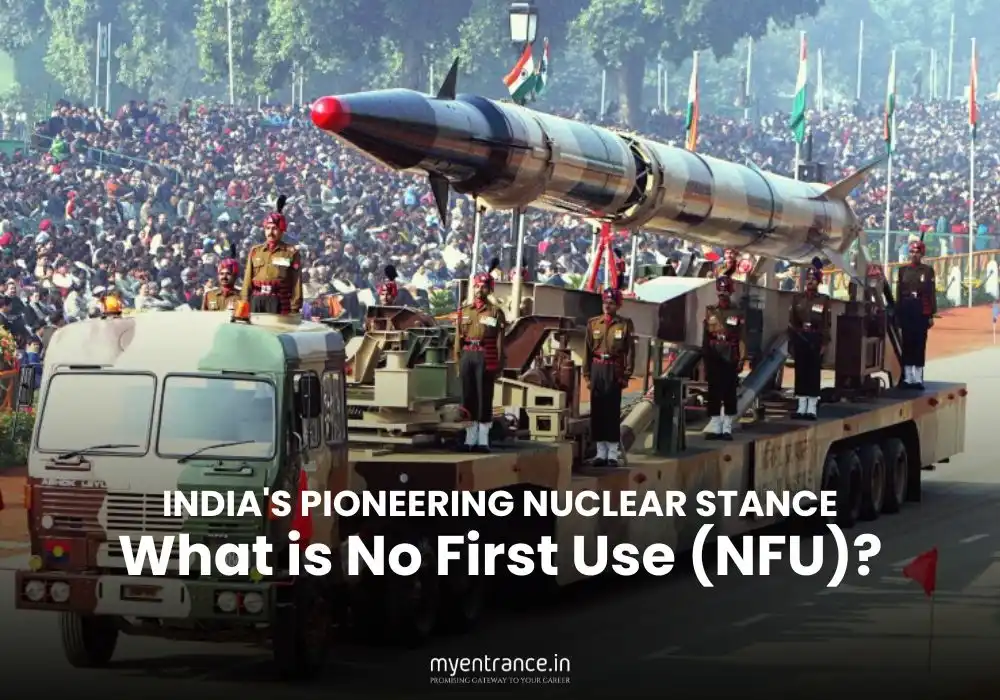
For aspirants preparing for prestigious competitive examinations like UPSC, SSC, PSC, NID, NIFT, and various other government job tests, understanding international relations and strategic doctrines is paramount. One such cornerstone of global security, frequently appearing in current affairs and general knowledge sections, is the No First Use (NFU) doctrine. This critical concept is not merely a theoretical construct but a practical commitment by nuclear-armed states to exercise extreme restraint in their nuclear policy. At its heart, NFU aims to minimize the risk of nuclear conflict and foster a more stable global environment, directly impacting discussions on disarmament and international peace.
Understanding the Core: What is No First Use (NFU)?
The No First Use (NFU) doctrine represents a pledge by a nuclear-armed state that it will not be the first to employ nuclear weapons in a conflict. This means that such a nation commits to using its nuclear arsenal only in retaliation, should it or its allies be subjected to a nuclear attack. The fundamental ‘why’ behind this policy is to de-escalate potential conflicts, reduce the likelihood of accidental or preemptive nuclear strikes, and provide a clear signal of defensive intent rather than aggressive capability. It stands in contrast to doctrines that might allow for the first use of nuclear weapons under certain conditions, thereby making it a significant confidence-building measure on the international stage.
India’s Pioneering Stance: A Pillar of Nuclear Responsibility
India formally adopted its No First Use policy in 1998, immediately after its nuclear tests, articulating a responsible and defensive posture to the world. This landmark decision underscored India’s commitment to nuclear restraint and its long-standing advocacy for global nuclear disarmament. The ‘how’ of India’s NFU doctrine is rooted in the concept of ‘credible minimum deterrence,’ meaning India maintains a nuclear arsenal just sufficient to deter an adversary from launching a first strike, assuring devastating retaliation if deterrence fails. This strategic clarity, declared over two decades ago, positioned India as a mature and responsible nuclear power, distinct from nations that maintain ambiguous or first-use policies. For exam purposes, remember the year 1998 as a key timeline marker in India’s nuclear journey and international relations.
Safeguarding Global Peace in a Volatile World
In an era increasingly marked by geopolitical tensions, nuclear brinkmanship, and the visible erosion of established international arms-control norms, the significance of the NFU doctrine, particularly India’s commitment to it, cannot be overstated. By explicitly ruling out a first strike, NFU policies contribute profoundly to strategic stability. They prevent potential adversaries from feeling compelled to launch preemptive attacks out of fear that they might be struck first. This principle reduces the chances of miscalculation and accidental escalation, fostering an environment where dialogue and diplomacy can prevail over conflict. India’s consistent adherence to its NFU doctrine, even amidst regional security challenges, serves as a powerful example and potential catalyst for other nuclear states to consider similar commitments, leading global efforts toward greater nuclear restraint and eventual disarmament. This ‘where’ of global impact extends far beyond India’s immediate borders.
NFU: Your Gateway to Exam Excellence
For candidates preparing for competitive exams, a thorough understanding of the No First Use doctrine is indispensable. It frequently features in questions related to international relations, security policy, current affairs, and general knowledge. Understanding ‘what’ NFU is, ‘when’ India adopted it, ‘why’ it’s significant, and ‘how’ it impacts global stability provides a robust foundation for answering both objective and subjective questions. Moreover, it offers valuable insights for essay writing on topics concerning global peace, nuclear disarmament, and India’s foreign policy. Keep an eye on global developments related to nuclear policies and disarmament talks, as these often form the basis of current affairs quizzes and analytical questions in your examinations.
Frequently Asked Questions (FAQs)
Q1: What exactly does the No First Use (NFU) doctrine mean?
A1: The No First Use (NFU) doctrine is a pledge by a nuclear-armed state that it will not be the first to initiate the use of nuclear weapons in any conflict. It commits the nation to use its nuclear arsenal only in retaliation to a nuclear attack launched by an adversary.
Q2: When did India officially declare its No First Use policy?
A2: India officially declared its No First Use policy in 1998, following its series of nuclear tests. This declaration solidified India’s responsible and defensive nuclear posture on the global stage.
Q3: Why is India’s NFU stance considered significant for global peace and stability?
A3: India’s NFU stance is significant because it enhances strategic stability by reducing the risk of accidental or preemptive nuclear attacks. By explicitly ruling out a first strike, it signals defensive intent, builds confidence among nations, and encourages greater nuclear restraint, especially in a world grappling with nuclear proliferation concerns.
Q4: Does the NFU doctrine imply a commitment to nuclear disarmament?
A4: While NFU itself is a policy of restraint rather than complete disarmament, it is often seen as a step towards that goal. Countries that adopt NFU often advocate for global nuclear disarmament, viewing NFU as an interim measure that reduces nuclear risks until a world free of nuclear weapons can be achieved. India, for instance, has always advocated for universal, non-discriminatory nuclear disarmament.
Q5: Are there any specific conditions or caveats to India’s No First Use policy?
A5: India’s NFU policy is generally clear and unconditional regarding nuclear attacks. However, it also maintains the concept of ‘credible minimum deterrence,’ meaning it will maintain a nuclear arsenal sufficient to inflict unacceptable damage in retaliation. There has been some academic debate regarding its application against non-nuclear attacks involving Weapons of Mass Destruction, but the official policy remains firm on no first use of nuclear weapons.





