
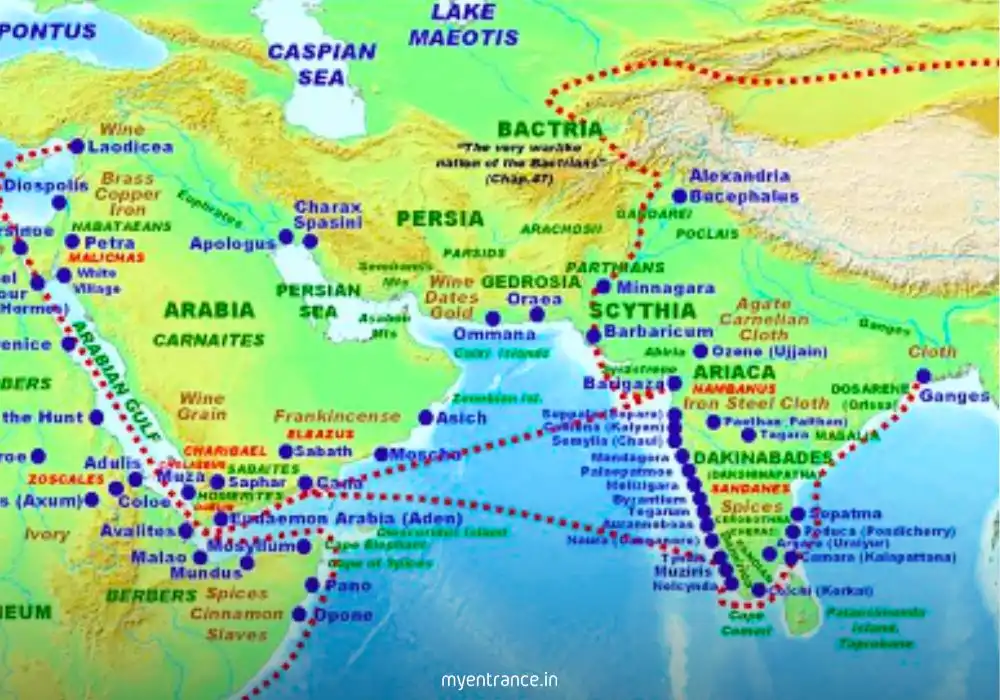
For aspirants targeting the prestigious UPSC, SSC, PSC, NID, NIFT, and other government examinations, a profound understanding of India’s historical landscape is non-negotiable. Among the foundational pillars of ancient Indian civilization, the elaborate network of trade routes stands out as a testament to its economic prowess and cultural dynamism. These pathways were far more than mere commercial arteries; they were conduits of ideas, religions, technologies, and political influence, intricately weaving India into the global tapestry of antiquity. Grasping the nuances of these legendary routes is not just about historical appreciation; it’s about mastering a vital segment of static general knowledge critical for exam success. Engage with our interactive current affairs quiz to make learning fun and effective.
The Grand Artery: Uttarapatha and the Grand Trunk Road
Central to India’s ancient land-based commerce was the Uttarapatha, literally the ‘Northern Route.’ This legendary pathway facilitated extensive trade between various kingdoms and regions, eventually extending its reach into Central Asia. While often primarily associated with Sher Shah Suri’s significant improvements in the 16th century, and subsequently the British who renamed it the Grand Trunk Road, its origins trace back to the Mauryan period, if not even earlier, existing in various forms for millennia. Stretching across vast distances, from what is now Bangladesh, through the fertile Gangetic plains, and extending into Afghanistan, this route connected crucial ancient cities like Pataliputra, Taxila, and Purushapura (Peshawar). It served as a primary conduit for the exchange of textiles, spices, precious stones, and vital military movements, playing an unparalleled role in shaping the political and economic contours of northern India throughout history.
Connecting the South: The Dakshinapatha
Complementing the northern routes was the equally vital Dakshinapatha, or the ‘Southern Route.’ This intricate network linked the agriculturally rich Gangetic plains with the prosperous Deccan plateau and the affluent southern peninsular regions. Its significance lay not only in facilitating robust internal trade but also crucially in connecting India’s heartland with its bustling port cities along both the eastern and western coasts. Through the Dakshinapatha, highly sought-after goods such as spices (pepper, cardamom), pearls, precious stones, timber, and fine cotton textiles from the south found their way north, and vice-versa. This route was particularly instrumental for the flourishing maritime trade with the Roman Empire, Southeast Asia, and Egypt, contributing immensely to the wealth and cultural influence of the southern Indian kingdoms through their control over these lucrative pathways. Discover how to maximize your score with last-minute studying by focusing on high-yield topics.
India’s Maritime Dominance: The Seaborne Empires
Beyond the land routes, ancient India boasted an exceptionally robust maritime trade network, strategically leveraging its extensive coastline and geographical advantage. Indian traders, masterfully navigating the seasonal monsoon winds, established enduring commercial and cultural connections with the Middle East, East Africa, Southeast Asia, and even the Roman Empire via the Red Sea. Historic ports like Lothal (dating back to the Indus Valley Civilization), Bharuch (Broach), Muziris, Arikamedu, and Tamralipti evolved into vibrant hubs of international commerce and cultural exchange. This seaborne trade primarily involved the export of India’s highly coveted spices, exquisite cotton textiles, silk, gemstones, and valuable timber, in exchange for gold, silver, horses, and various luxury items. The mastery of oceanic navigation not only fueled India’s economy but also facilitated significant cultural diffusion, contributing to the widespread propagation of Indian religions, philosophies, and art forms across Asia and beyond.
The Legendary Silk Road: India’s Eastern and Western Links
While the term ‘Silk Road’ predominantly evokes images of Chinese silk traveling westward, India was, in fact, an indispensable player in this vast transcontinental network. Several crucial branches of the Silk Road either originated in India or passed through it, linking the subcontinent directly to Central Asia, China, and the distant West. Indian traders exported a diverse array of goods including highly prized spices, sophisticated textiles, vibrant indigo, dyes, and precious stones like lapis lazuli and carnelian, receiving exquisite silk, fine pottery, and other Chinese goods in return. The Gandhara region, in particular, served as a dynamic cultural melting pot where Indian, Persian, and Hellenistic influences converged, largely owing to its strategic position on these critical trade arteries. The extensive interaction facilitated by the Silk Road profoundly impacted the development of art, the spread of religion (especially Buddhism), and technological exchange across Eurasia, with India serving as a pivotal node.
Beyond Commerce: Cultural Confluence and Exam Relevance
The impact of these ancient trade routes extended far beyond mere economic transactions. They were dynamic channels for profound cultural diffusion, leading to the widespread dissemination of Buddhism into Central Asia and China, the exchange of architectural styles, the sharing of scientific knowledge, and the propagation of philosophical ideas. The cosmopolitan nature of ancient Indian cities and ports was a direct and undeniable consequence of this sustained interaction with diverse cultures from across the globe. For government exam aspirants, understanding these routes is absolutely fundamental to comprehending the rise and fall of empires, the intricate evolution of India’s economy, and its undeniable global historical significance. Knowledge of the specific routes, their key cities, the goods traded, and the empires that either benefited from or strategically controlled them is frequently tested in static General Knowledge sections, making it an indispensable part of your comprehensive preparation strategy. Many toppers recommend this definitive guide to static general knowledge.





