
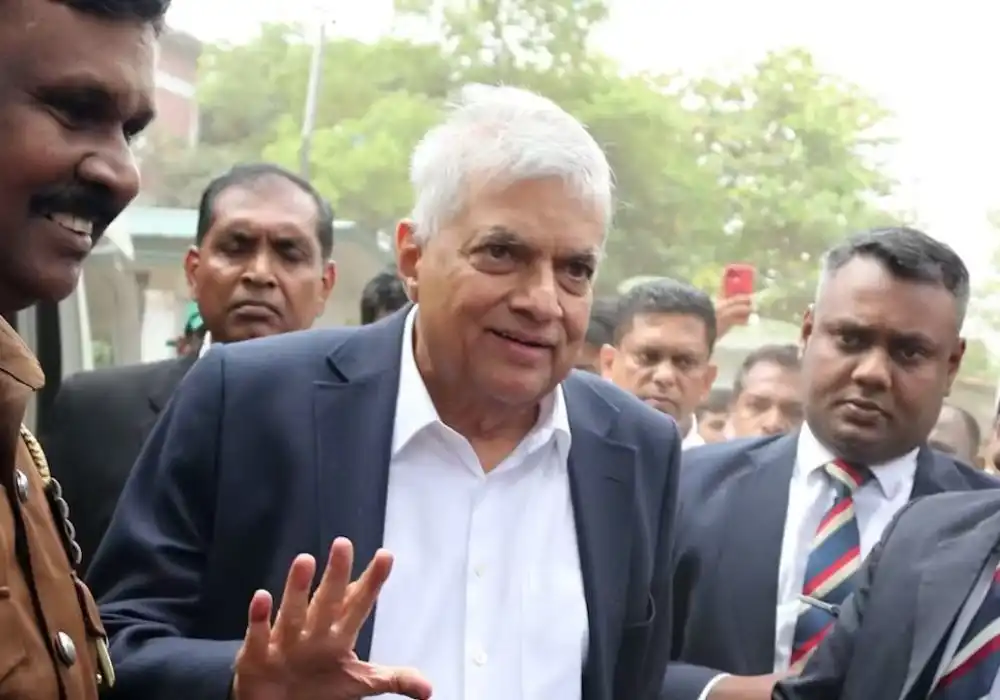
For aspirants targeting prestigious examinations like UPSC, SSC, PSC, NID, NIFT, and other government service roles, understanding global socio-political dynamics and their underlying principles is as crucial as mastering static general knowledge. Current affairs are not merely about memorizing facts; they are about dissecting events to grasp their deeper implications. A recent hypothetical, yet profound, development from our South Asian neighbor, Sri Lanka, offers a compelling case study: the arrest of former President Ranil Wickremesinghe in August 2025 for alleged misuse of public funds. This event transcends a mere headline, serving as a powerful lesson in governance, accountability, and the relentless pursuit of justice.
Unpacking the Event: What, Where, and When
The core incident revolves around the alleged misappropriation of LKR 16.2 million, roughly equivalent to $50,000, in public funds. This significant sum, though seemingly modest in grander schemes of international corruption, represents a critical breach of public trust. The subject, former Sri Lankan President Ranil Wickremesinghe, is a prominent figure in the nation’s political landscape. The reported timing of this arrest, August 2025, positions it as a future-projected scenario, providing a valuable analytical framework to consider the potential trajectory of political accountability. The geographical context, Sri Lanka, places this event within a region grappling with its own unique challenges of governance and democratic evolution. This scenario directly speaks to the “what,” “where,” and “when” of a significant current affair, urging us to look further into its “why” and “how.”
The Deep Dive: Why “Elite Impunity” is a Critical Concept
At the heart of this projected event lies the concept of “elite impunity.” What exactly does this mean? Elite impunity refers to a situation where powerful individuals, often those in high political or economic positions, operate above the law, escaping punishment for their wrongdoings despite clear evidence. This phenomenon erodes public faith in institutions, undermines the rule of law, and perpetuates a cycle of corruption that ultimately hinders national development and democratic progress.
The arrest of a former head of state, even in a hypothetical future context, sends an unmistakable message that no individual, regardless of their past power or influence, is beyond the reach of the law. This action signifies a potential shift towards strengthening judicial independence and reinforcing the principle of equality before the law. For your exams, understanding elite impunity means recognizing its detrimental effects on a nation’s social fabric, economic stability, and international standing.
Broader Implications: How Accountability Shapes Governance and Democracy
The “how” and “why” extend beyond the immediate charges. An event like this has far-reaching implications for a nation’s governance structure and democratic health. Firstly, it strengthens accountability mechanisms. When leaders are held responsible, it sets a precedent for transparency and ethical conduct, potentially deterring future acts of corruption. Secondly, it fosters public trust. Citizens are more likely to engage with and support a government perceived as fair and just. Thirdly, such actions can catalyze institutional reforms, pushing for stronger anti-corruption bodies and more robust oversight mechanisms.
From an examination perspective, this ties directly into topics like “Good Governance,” “Rule of Law,” “Checks and Balances,” and “Institutional Integrity” – all crucial areas for UPSC and PSC aspirants. It serves as a practical example of how theoretical concepts play out in real-world political scenarios, offering valuable insights for essay writing, case study analysis, and even subjective questions in mains examinations. The message conveyed is that a functional democracy thrives on the consistent application of justice, irrespective of an individual’s status.
Your Exam Advantage: Connecting Current Events to Core Subjects
For competitive exam preparation, this Sri Lankan case study offers multi-faceted learning opportunities. In Current Affairs, it highlights the importance of international political developments and their impact. For General Knowledge, it broadens your understanding of contemporary global issues. UPSC and PSC aspirants will find it particularly relevant for General Studies Paper II (Governance, Constitution, Polity, Social Justice, International Relations) and Paper IV (Ethics, Integrity, Aptitude).
Consider how this event can be used:
* As an example of challenging corruption in Governance questions.
* To illustrate the importance of Rule of Law and Judicial Independence.
* In Ethics papers, as a case study for integrity in public life or the ethical dilemmas faced by public officials.
* For Essay Writing, allowing you to discuss themes of accountability, democracy, or the fight against corruption.
MyEntrance.in aims to equip you not just with answers, but with a profound understanding of these interconnected subjects, enabling you to articulate informed opinions and analytical insights, which are critical for success in these demanding examinations. This incident, while specific to Sri Lanka, carries universal lessons about the persistent struggle for good governance and the relentless pursuit of justice, offering a potent reminder that the path to a robust democracy is paved with accountability.
Frequently Asked Questions (FAQs)
Q1: What is “elite impunity” and why is it a significant concern for governance?
A1: Elite impunity refers to the state where powerful individuals, typically those in positions of political or economic authority, are able to evade legal consequences for their actions, even when they commit serious offenses. It’s a significant concern because it erodes public trust, undermines the rule of law, perpetuates corruption, and ultimately weakens democratic institutions, making it harder for a nation to achieve equitable development and justice.
Q2: How can the arrest of a former head of state impact a country’s democratic process?
A2: The arrest of a former head of state, especially for corruption, can profoundly strengthen a country’s democratic process. It signals that no one is above the law, reinforcing the principle of equality and accountability. This action can bolster public confidence in the judiciary, deter future corruption among leaders, and encourage institutional reforms that make governance more transparent and responsive to citizens’ needs.
Q3: Why is understanding events like the Sri Lankan ex-president’s arrest important for competitive exams?
A3: Such events are vital for competitive exams because they provide real-world examples for current affairs, general knowledge, and specific subjects like governance, ethics, and international relations. They allow aspirants to demonstrate their ability to analyze complex situations, connect theoretical concepts to practical scenarios, and understand the global political landscape, which is crucial for answering analytical and descriptive questions.
Q4: What specific subjects in competitive exams would this event be most relevant to?
A4: This event is highly relevant for Current Affairs, General Knowledge, and specifically for UPSC/PSC exams, it’s pertinent to General Studies Paper II (Governance, Constitution, Polity) and Paper IV (Ethics, Integrity, Aptitude). It can serve as a strong case study for topics like anti-corruption measures, judicial independence, public accountability, and the challenges to democratic governance.
Q5: What broader message does a move to end elite impunity send to other nations?
A5: A determined effort to end elite impunity sends a powerful message globally: that accountability and justice are universal principles that democracies must strive to uphold. It can inspire similar movements in other nations facing corruption challenges, demonstrating that even long-entrenched systems of privilege can be challenged through legal and institutional means, thereby promoting good governance practices across borders.





