Translate Language
Significance of Onam: Is the Festival Just About Sadya and Boat Race?
Onam is the most iconic and eagerly awaited festival in Kerala, celebrated with immense joy and fervor. While known for its grand feasts and thrilling boat races, the festival holds profound mythological and cultural importance. Understanding its core significance is essential, not just culturally, but also for acing various competitive examinations.
The Multifaceted Significance of Onam
Onam is far more than a harvest festival; it is the very soul of Kerala’s culture, weaving together history, mythology, and social values into a vibrant celebration. For students preparing for government exams, grasping its multifaceted significance is key.
First and foremost, Onam is rooted in a beautiful mythological tale. It commemorates the homecoming of the legendary King Mahabali, a benevolent and much-loved Asura ruler. The festival celebrates his annual return from the netherworld to visit his beloved subjects. The mythology involves Lord Vishnu’s Vamana avatar, who tested the king’s devotion and granted him a boon to return once a year. This story symbolizes the victory of devotion and righteousness over ego, and the cherished memory of a golden era of equality and prosperity under Mahabali’s rule.
Culturally, Onam acts as the cultural New Year for the Malayali community worldwide. It is a time for renewal, family reunions, and celebrating the state’s rich heritage. The celebrations are a spectacular display of Kerala’s folk arts and traditions, including:
Vallam Kali: The thrilling and world-famous Nehru Trophy Snake Boat Races.
Pulikali: Colorful performers who dance as tigers and hunters.
Pookalam: The intricate and beautiful floral carpets made at the entrance of homes.
Onam Sadya: The legendary grand feast served on a banana leaf.
Kaikottikali & Thumbi Thullal: The graceful clap dance performed by women in circles.
Socially, Onam is a powerful symbol of inclusivity and harmony. The festival transcends religious and caste barriers, being celebrated by Keralites of all communities. It reinforces values of unity, sharing, and gratitude for a bountiful harvest.
Learn More: Onam Festival: What is the Profound Mythological Significance Behind Kerala’s Grand Celebration?
The Quintessential Onam Sadya
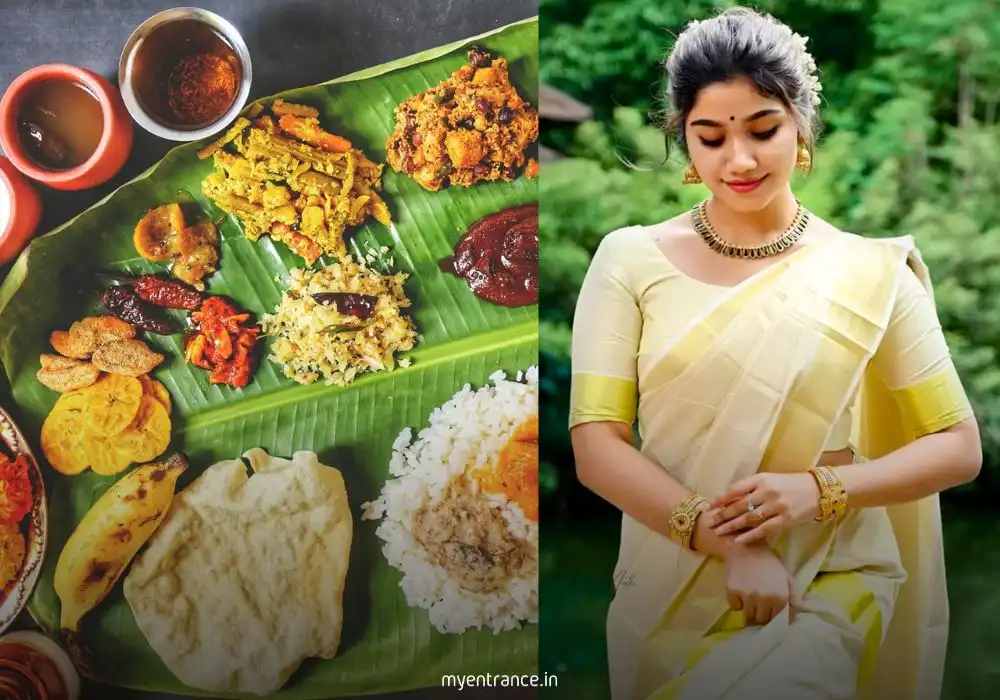
No discussion of Onam is complete without mentioning the Onam Sadya, a culinary experience that is a festival in itself. This traditional vegetarian feast is served on a fresh banana leaf and can consist of up to 26 dishes or more.
The meal centers around steamed rice (choru) accompanied by a variety of side dishes known as ‘Kootan’. This includes Parippu (a lentil curry with ghee), Sambar, Rasam, and an array of vegetable preparations like Avial, Thoran, and Olan. The meal is famous for its contrasting flavors, balanced by tangy picks like Puli Inji (ginger-tamarind chutney) and a sweet payasam for dessert. The crisp pappadum and ripe banana complete this unforgettable gastronomic journey. The Sadya is not just food; it represents Kerala’s agrarian abundance and its ethos of hospitality.
Questions & Answers on Onam
1. Onam is celebrated to commemorate the homecoming of which legendary king?
Answer: King Mahabali (Maveli).
2. Which avatar of Lord Vishnu is associated with the mythology of Onam?
Answer: Vamana, the dwarf Brahmin avatar.
3. What is the name of the intricate flower carpet made during Onam?
Answer: Pookalam or Athapoo.
4. The famous boat race associated with Onam is known as?
Answer: Vallam Kali, with the most famous event being the Nehru Trophy Boat Race.
5. In which month of the Malayalam calendar is Onam celebrated?
Answer: Chingam (which typically overlaps with August-September in the Gregorian calendar).
Explore all exam updates, quizzes, and study materials on Myentrance – Your Complete Exam Preparation Portal.
Why is this Important for Exams?
For aspirants of exams like Kerala PSC, UPSC, SSC, NID, NIFT, and others, understanding Onam is crucial for several reasons:
General Knowledge (GK): Onam is a perennial topic in the GK and current affairs sections of most competitive exams, especially those with a focus on Indian culture.
Kerala-Specific Exams: For Kerala PSC and other state-level tests, questions about the state’s festivals, heritage, and art forms are extremely common. Onam is the most significant among them.
Essay and Descriptive Answers: The themes of Onam—like social harmony, agricultural importance, and rich traditions—provide excellent material for crafting high-scoring essays and descriptive answers.
Cultural Context: For design exams like NID/NIFT, understanding the motifs, colors, and elements of festivals like Onam (e.g., Pookalam designs, traditional attire) can be invaluable for the design aptitude test.
Mastering the significance of Onam equips you with not just facts, but a deeper understanding that can be applied across various sections of your exam paper.
Read More Topics