
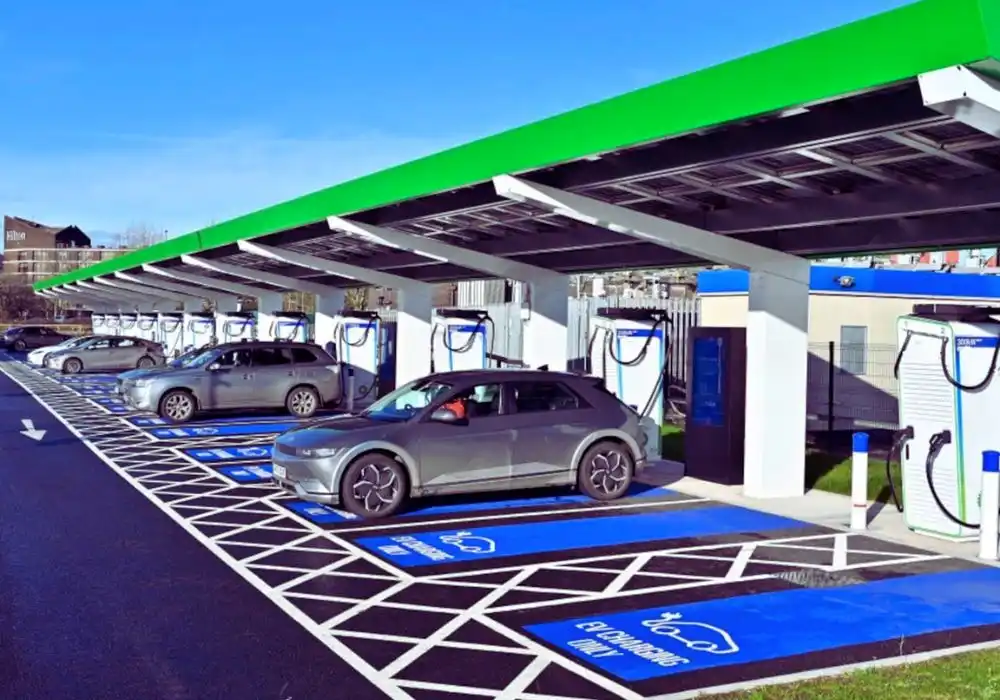
Powering India’s Green Future: A National Leap in EV Charging Infrastructure
India is on the cusp of a transformative shift in its transportation sector, driven by an ambitious vision for sustainable mobility. The Central government has recently unveiled comprehensive guidelines for the widespread rollout of a staggering 72,300 electric vehicle (EV) charging stations across the nation under the “PM E-DRIVE” initiative. This monumental step is designed not only to bolster the adoption of electric vehicles but also to establish a robust, accessible, and future-ready charging ecosystem, a crucial pillar for India’s environmental commitments and economic growth. For aspirants preparing for competitive examinations like UPSC, SSC, PSC, NID, NIFT, and other government roles, understanding this initiative is paramount, as it frequently appears in current affairs, economy, and environmental policy sections. Make a habit of practicing with our daily GK quiz for competitive exams.
What is the PM E-DRIVE Initiative?
At its core, the PM E-DRIVE initiative represents the government’s strategic push to create a conducive environment for electric vehicles. This program aims to mitigate range anxiety – a significant barrier to EV adoption – by ensuring that charging infrastructure is readily available, much like traditional fuel stations. The rollout of 72,300 new charging stations is a direct response to the growing demand for EVs and a proactive measure to encourage more citizens and businesses to switch to cleaner transportation. It signals a strong commitment from the government to lead India towards a cleaner, greener future, reducing reliance on fossil fuels and curbing urban pollution.
Why This Massive Expansion Matters for India
The significance of this large-scale infrastructure development cannot be overstated. Firstly, it directly addresses India’s climate action goals. By facilitating a smoother transition to electric mobility, the country takes a significant step towards achieving its emission reduction targets and improving air quality in densely populated urban centers. Secondly, it fosters economic growth by creating new jobs in manufacturing, installation, and maintenance of EV infrastructure. This also stimulates innovation in battery technology and charging solutions. Thirdly, for the average consumer, a vast network of charging stations means greater convenience, lower running costs compared to petrol/diesel vehicles, and ultimately, a more accessible electric vehicle market. This move is crucial for enhancing energy security by reducing crude oil imports, thus strengthening the national economy.
Where Will These Charging Stations Emerge?
The guidelines stipulate a strategic distribution of these charging stations to ensure maximum coverage and utility. The focus will primarily be on establishing charging points along national and state highways, in major cities, and at prominent public places. This ensures that inter-city travel for EVs becomes viable and that urban commuters have ample charging options close to their homes and workplaces. The government envisions a network that supports both slow and fast charging, catering to different vehicle types and user needs, making electric travel seamless across varied terrains and distances.
How This Rollout Will Be Implemented
The implementation strategy involves a multi-pronged approach, bringing together central agencies, state governments, and private sector players. The Central government, through these guidelines, sets the framework, standards, and incentives. State governments will play a pivotal role in identifying suitable locations, facilitating land acquisition, and providing necessary clearances. Private entities, including energy companies, real estate developers, and specialized EV charging providers, are expected to lead the deployment and operation of these stations, often leveraging government subsidies and incentives. The guidelines also focus on interoperability, ensuring that different EV models can utilize the network, and on promoting smart charging solutions for efficient energy management. This collaborative model is designed to accelerate deployment and ensure operational efficiency.
Relevance for Competitive Exams
For aspirants eyeing top government positions, this topic is a goldmine. It touches upon:
* Current Affairs: This is a live government initiative, crucial for daily news quizzes and monthly current affairs compilations.
* Indian Economy: Discusses infrastructure development, foreign investment potential, job creation, and energy security.
* Environment & Ecology: Directly related to climate change, pollution control, and sustainable development goals.
* Government Schemes & Policies: PM E-DRIVE is a key policy initiative showcasing the government’s vision.
* Science & Technology: Involves advancements in EV technology, battery storage, and charging infrastructure.
Being well-versed in the specifics – the number of stations, the scheme’s name, the objectives, and the implementing bodies – will give candidates a significant edge in both preliminary and main examinations. We provide concise and accurate daily GK updates for UPSC and PSC.
Frequently Asked Questions (FAQs)
Q1: What is the main objective of the PM E-DRIVE initiative?
A1: The primary objective of the PM E-DRIVE initiative is to accelerate the adoption of electric vehicles in India by rapidly expanding the charging infrastructure, thereby addressing range anxiety and promoting sustainable, green mobility across the nation.
Q2: How many EV charging stations are targeted for rollout under these new guidelines?
A2: The government aims to roll out a substantial network of 72,300 electric vehicle charging stations across India under the guidelines recently issued for the PM E-DRIVE program.
Q3: Which sectors or regions will be prioritized for the establishment of these new charging stations?
A3: The new charging stations will primarily be established along national and state highways, within major metropolitan cities, and at other key public locations to ensure wide accessibility and facilitate both urban and inter-city electric vehicle travel.
Q4: What are the expected benefits of this extensive EV charging infrastructure expansion for India?
A4: This expansion is expected to bring multiple benefits, including significant reductions in carbon emissions, improved urban air quality, decreased reliance on fossil fuel imports, stimulation of economic growth through job creation, and enhanced convenience for EV users, ultimately driving India’s energy transition.
Q5: How can knowledge about the PM E-DRIVE initiative be useful for competitive exams like UPSC or SSC?
A5: For competitive exams, understanding PM E-DRIVE is vital for Current Affairs, as it’s a live government scheme. It’s also relevant for topics like Indian Economy (infrastructure, energy security), Environment & Ecology (climate change, pollution), and Government Policies, making it a recurring theme in various exam sections.





