
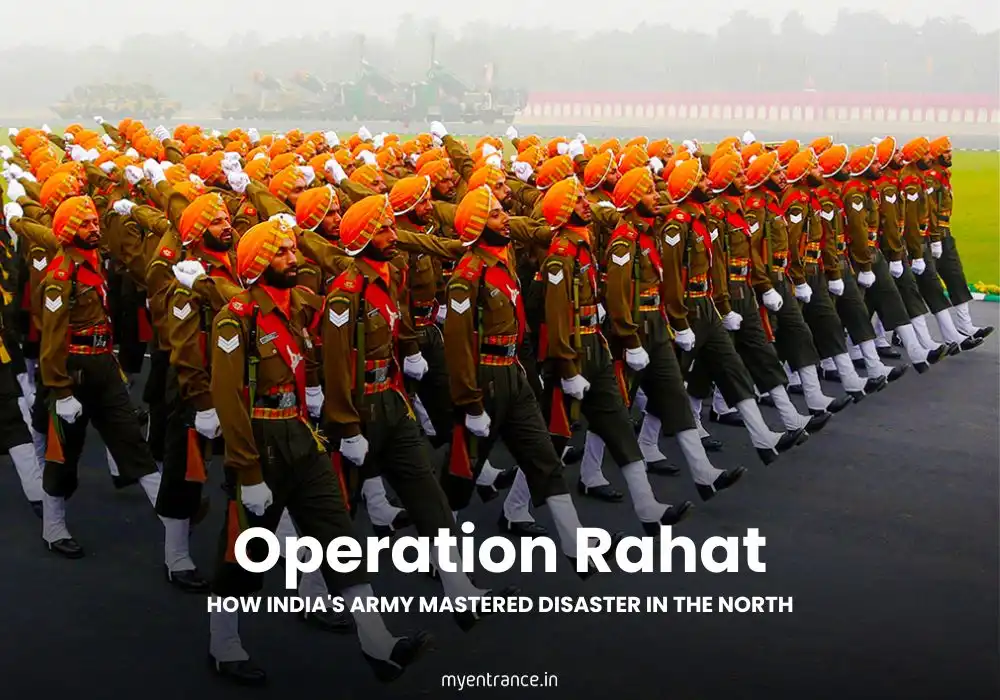
Understanding Operation Rahat: A Lifeline in Crisis
When natural calamities strike with overwhelming force, the mettle of a nation’s response mechanism is truly tested. In a recent display of unparalleled dedication and strategic prowess, the Indian Army initiated ‘Operation Rahat’ following devastating floods that swept across the northern states. This extensive humanitarian assistance and disaster relief (HADR) operation became a beacon of hope for thousands grappling with the onslaught of nature’s fury in Punjab, Himachal Pradesh, and Jammu & Kashmir. Aspirants aiming for competitive examinations like UPSC, SSC, and PSC must recognize such operations as vital case studies in disaster management, current affairs, and the indispensable role of the armed forces. Make it a habit to stay updated with our gk practice tests for consistent learning.
The Scope of Relief Efforts: A Deeper Look
Under the vigilant leadership of the Indian Army’s Western Command, Operation Rahat unfolded with remarkable speed and precision over merely two weeks. The mission encompassed a multi-pronged approach, focusing on saving lives, providing immediate medical attention, and ensuring the delivery of essential supplies to cut-off communities. More than six thousand individuals, stranded by the rising waters and damaged infrastructure, were successfully evacuated to safe havens. Simultaneously, medical teams worked tirelessly, extending crucial aid and care to approximately thirteen thousand citizens who required immediate health intervention. Furthermore, the logistical challenge of delivering vital provisions was met head-on, with nearly fifty tons of essential supplies reaching those in desperate need, underscoring the Army’s profound logistical capabilities and commitment to relief.
Why Such Operations Matter for Your Exams
For anyone preparing for government examinations, understanding operations like Rahat goes beyond mere current affairs; it delves into fundamental aspects of governance, national security, and public service. This operation serves as an excellent example for subjects such as Disaster Management (a key component of UPSC GS Paper III), where the principles of preparedness, response, and rehabilitation are critically examined. It showcases the practical application of HADR doctrines, the coordination challenges in multi-state crises, and the seamless integration of various military units in civilian aid. Moreover, it highlights the unwavering commitment and professionalism of the Indian Armed Forces, often tested in the most challenging environments, a point of general knowledge and national pride that resonates in various examination modules. Grasping the ‘why’ behind such missions – the protection of citizens, upholding national resilience – and the ‘how’ – the strategic planning, resource deployment, and execution – will provide a holistic understanding vital for answering analytical questions in your examinations. Follow this last-minute study plan for aspirants to structure your final hours of study.





