Translate Language
Nuakhai Festival 2025: What is its Historical Significance
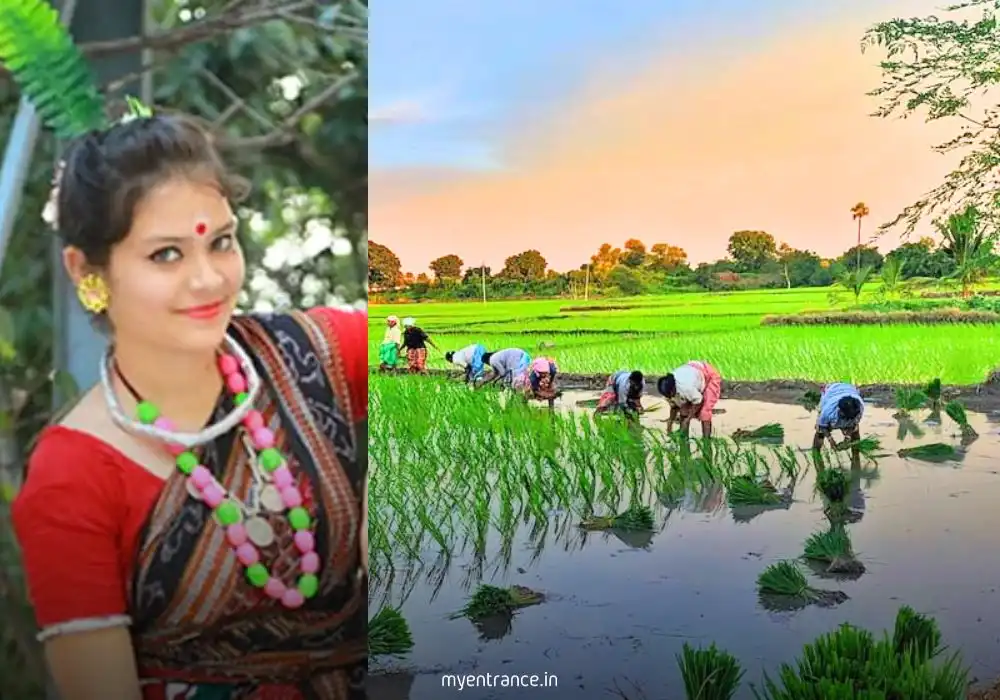
Nuakhai is a vibrant agricultural festival that embodies the cultural spirit of Western Odisha. Celebrated primarily to express gratitude for the new rice harvest, it falls on August 28th, 2025 (Thursday). This festival is a crucial part of the socio-cultural fabric of the region and a key topic for competitive examinations.
The Rich History and Essence of Nuakhai
While Nuakhai is deeply rooted in the agrarian lifestyle of Western Odisha, its history is both ancient and fascinating. The festival’s origins are believed to trace back over two millennia, with connections to the Vedic period when communities offered the first harvest to deities as a sacred ritual.
The word “Nuakhai” itself is derived from two Odia words: ‘Nua’ meaning ‘new’ and ‘Khai’ meaning ‘to eat’. This simple yet powerful term captures the very essence of the festival—the ceremonial consumption of the newly harvested rice.
The celebration as we know it today was systematically revitalized and popularized in the Sambalpur region by the royal patronage of the Chauhan dynasty around the 12th century. However, its current fixed date is a much more recent development. Historically, the timing of Nuakhai was flexible, depending on the local harvest. To bring uniformity to the celebrations across the state, the Government of Odisha officially fixed the festival on the Panchami Tithi (fifth day) of the lunar month of Bhadraba (which usually falls in August or September), a day after Ganesh Chaturthi. This standardization, largely accepted since 1991, ensures that everyone, from farmers in villages to the diaspora in metropolitan cities, can celebrate in unison, irrespective of the harvest’s actual readiness in every field.
The Significance and Celebrations
Nuakhai is far more than a harvest festival; it is a powerful symbol of hope, prosperity, and community bonding. The festival is marked by nine sets of rituals, poetically known as the ‘nine colours’ of Nuakhai, which guide the entire celebration:
Beheren: The initial announcement of the meeting to set the festival date.
Lagna Dekha: The crucial step of finalizing the auspicious time for the offerings.
Daka Haka: The warm invitation extended to relatives and community members.
Sapha Sutura & Lipa Puchha: The thorough cleaning and decoration of homes.
Ghina Bika: Purchasing new essentials and groceries for the feast.
Nua Dhan Khujha: The symbolic act of gathering the new rice crop from the fields.
Bali Paka: Preparing the offering and presenting it to the presiding deity.
Nuakhai: The core ritual of partaking in the new rice after prayers, followed by joyous folk music and dance.
Juhar Bhet: Paying respectful visits to elders to seek their blessings and exchanging gifts.
On the day, people offer the new rice to deities like Maa Samaleshwari in Sambalpur, Maa Patneshwari in Balangir, and Sureshwari in Sonepur. Families gather, dressed in beautiful traditional Sambalpuri attire, to share the Prasad. The air fills with the energy of folk dances like Dalkhai and Rasakeli, celebrating a shared cultural identity that extends to Odia communities across India.
Questions and Answers on The Nuakhai Festival
1. Q: The Nuakhai festival is primarily associated with which Indian state?
A: Nuakhai is primarily associated with the Western regions of Odisha.
2. Q: What is the etymological meaning of the word “Nuakhai”?
A: The word “Nuakhai” is derived from the Odia words ‘Nua’ (new) and ‘Khai’ (to eat), meaning “to eat the new rice.”
3. Q: On which tithi is the Nuakhai festival currently fixed?
A: Nuakhai is fixed on the Panchami Tithi (fifth day) of the Shukla Paksha in the month of Bhadraba.
4. Q: Which of the following is NOT one of the ‘nine colours’ or rituals of Nuakhai?
a) Beheren
b) Lagna Dekha
c) Chatti Puja
d) Juhar Bhet
A: c) Chatti Puja. (This is a ritual associated with other festivals, not Nuakhai).
5. Q: The ritual of ‘Juhar Bhet’ in Nuakhai signifies:
A: ‘Juhar Bhet’ signifies the act of seeking blessings from elders and community members, strengthening social and familial bonds.
Why is this Important for Exams?
Understanding the Nuakhai Festival is crucial for competitive exams like UPSC, SSC, Kerala PSC, and others for several reasons:
Static GK & Culture: Questions on prominent Indian festivals, especially their cultural and agricultural significance, are a staple in the General Knowledge and Static Awareness sections.
Regional Focus: Exams often ask about state-specific cultures. Knowing Nuakhai demonstrates knowledge of Odisha’s heritage, which can be asked in questions related to art, culture, and geography.
Sociological Context: The festival is a perfect example of how agrarian economies, community living, and religious beliefs intertwine in Indian society—a common theme for essay-type and descriptive answers.
Current Affairs: While the festival is ancient, its celebration is a annual event. Being aware of its date and context can be relevant for current affairs compilations, especially those focusing on cultural events in India.
By mastering these details, you equip yourself to tackle both direct and analytical questions with confidence.
Read More Topics