
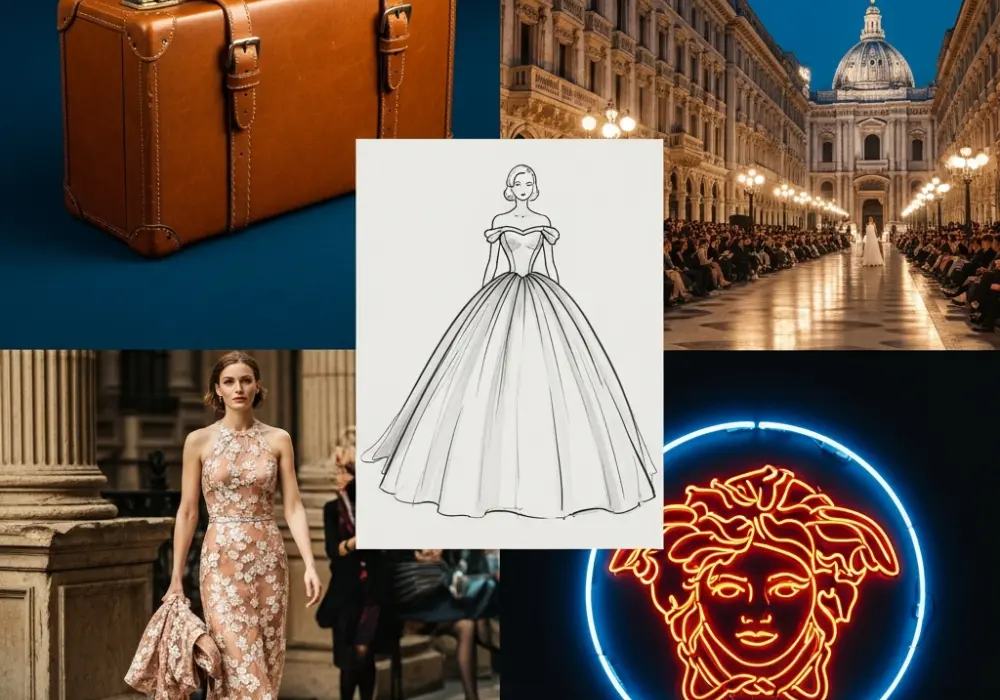
Mastering Italian Fashion History for NIFT GAT
For students preparing for the National Institute of Fashion Technology (NIFT) entrance exam, understanding the General Ability Test (GAT) section is crucial. A significant portion of this test assesses your General Knowledge and Awareness of the fashion industry. Among the global hubs of style, Italy stands as a titan. The ‘Made in Italy’ label is more than a geographic marker; it is a seal of quality, craftsmanship, and luxury that has evolved over a century.
This study guide focuses on the chronological evolution of Italian fashion. In the GAT exam, you might encounter questions about founding years, legendary creative directors, or the specific heritage of brands like Gucci, Prada, and Armani. By visualizing these events through a timeline, you can better retain the historical context that separates a simple brand name from a cultural phenomenon. Let us dive into the milestones that shaped the Italian fashion landscape from artisanal workshops in Florence and Milan to the global dominance of luxury conglomerates.
1913
The Founding of Prada
Mario Prada opened Fratelli Prada in Milan, initially selling leather trunks and handbags. For NIFT aspirants, remember that Prada’s transformation into a fashion powerhouse occurred much later under Miuccia Prada, but its roots lie in early 20th-century luxury luggage.
1921
Guccio Gucci Opens in Florence
Inspired by the luxury luggage he saw while working at the Savoy Hotel in London, Guccio Gucci returned to Florence to establish his leather goods shop. The equestrian-inspired hardware, like the horsebit, became a brand hallmark often asked about in design exams.
1925
Fendi: Fur and Leather Excellence
Adele and Edoardo Fendi founded the house in Rome. Known for its craftsmanship in fur and leather, Fendi later became famous for the ‘Baguette’ bag. Knowing the city of origin (Rome) is vital for brand geography questions.
1951
Birth of ‘Made in Italy’
Giovanni Battista Giorgini organized the first Italian high-fashion show in Florence. This event is critical for GAT history questions as it shifted the fashion focus from Paris to Italy, establishing the credibility of Italian prêt-à-porter.
1960
Valentino and the ‘Red’ Legacy
Valentino Garavani founded his house in Rome. He became famous for ‘Valentino Red.’ Understanding iconic brand colors is a frequent GAT visual recognition topic.
1975
Giorgio Armani’s Power Suit
Armani launched his brand, deconstructing the rigid suit jacket. This revolutionized professional wear for men and women. In exams, Armani is often associated with the term ‘minimalism’ and ‘androgynous tailoring.’
1978
Gianni Versace’s Medusa
Gianni Versace opened his first boutique in Milan. Known for bold prints and the Medusa head logo, Versace represents the maximalist side of Italian fashion. Identifying the Medusa logo is a classic NIFT visual test question.
1985
Dolce & Gabbana’s Sicilian Style
Domenico Dolce and Stefano Gabbana presented their first collection. Their aesthetic focuses on Sicilian heritage, lace, and romanticism. Note their influence on Italian cultural identity in modern fashion marketing.
1990s
The Rise of Creative Directors
Tom Ford revitalized Gucci in the 90s, introducing ‘sensuality’ as a brand pillar. For NIFT GAT, tracking which designer led which house (e.g., Karl Lagerfeld at Fendi) is highly recommended for matching-type questions.
Study Guide & Exam Strategy for NIFT Students
Understanding the timeline above is just the beginning. To excel in the NIFT GAT, you must connect these dates with the broader socioeconomic context. For instance, why did Milan become the fashion capital over Florence? It was due to the industrial infrastructure that allowed for mass production of ready-to-wear clothing in the 1970s.
Key Vocabulary to Memorize:
1. Sprezzatura: An Italian term often used in fashion to describe studied carelessness or effortless elegance.
2. Prêt-à-porter: Ready-to-wear fashion, where Italy excels.
3. Artisanal: Hand-crafted quality, the foundation of Italian luxury goods.
Revision Tip: Create flashcards for each brand mentioned. On one side, write the brand name; on the other, write the year founded, city of origin, and one iconic product or logo. This will help you quickly solve the ‘General Awareness’ questions that frequently appear in NIFT papers. Stay updated on current creative directors, as these roles change frequently (e.g., Sabato De Sarno at Gucci or Maria Grazia Chiuri’s Italian influence at Dior).
Ready to Ace your NIFT Entrance?
Get access to exclusive GAT study materials, previous year papers, and personalized mentoring from design experts.
💬 Chat with our Experts on WhatsApp (+91 9526806124)




