
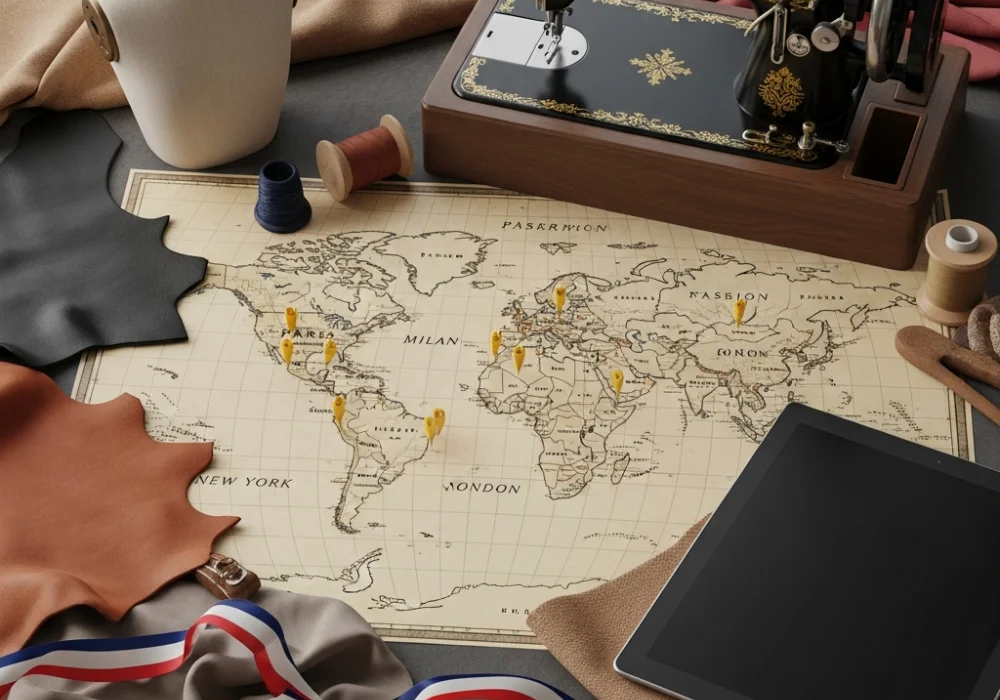
The Evolution of Fashion Capitals: A NIFT GAT Guide
For any student aspiring to crack the National Institute of Fashion Technology (NIFT) entrance exam, understanding the ‘General Ability Test’ (GAT) section is crucial. One of the recurring themes in the General Knowledge and Current Affairs segment of the GAT is the history and significance of world fashion capitals. These cities are not just geographical locations; they are the epicenters of global trends, economic powerhouses for the textile industry, and the birthplaces of cultural movements. In this comprehensive guide, we dive deep into the ‘Big Four’—Paris, New York, London, and Milan—while also exploring the rise of emerging hubs like Tokyo and Shanghai. This interactive timeline is designed to help you memorize key years, figures, and shifts in the fashion landscape, ensuring you can answer questions about designer origins, fashion week histories, and the industrial revolutions that shaped the modern wardrobe.
Why does NIFT ask about fashion capitals? Because as a future designer or manager, you must understand the ecosystem. Fashion is a global language, and its ‘grammar’ was written in the ateliers of Paris and the garment districts of New York. By studying this timeline, you aren’t just learning facts; you are building a mental map of how luxury, ready-to-wear, and streetwear evolved to reach the heights they occupy today. Let us explore the chronological journey of these majestic cities and their contribution to the global fashion industry.
1858: The Birth of Haute Couture
Paris: Charles Frederick Worth Establishes the First House
This marks the moment Paris solidified its position as the premier fashion capital. Charles Frederick Worth, often called the ‘Father of Haute Couture,’ was the first to sew labels into garments. For NIFT GAT, remember that Haute Couture (High Sewing) is a protected term in France. This era established the ‘Chambre Syndicale de la Haute Couture,’ the governing body that still regulates fashion in Paris today. Paris became the benchmark for luxury, craftsmanship, and artistic expression, influencing every other city on this list.
1943: The Rise of the American Look
New York City: The First ‘Press Week’
During World War II, when Paris was under German occupation, American journalists couldn’t travel to France for inspiration. Publicist Eleanor Lambert seized this opportunity to organize ‘Press Week’ in New York. This was the precursor to the modern Fashion Week. It shifted the spotlight to American designers like Claire McCardell, who pioneered ‘Ready-to-Wear’ (Prêt-à-porter). For NIFT aspirants, NYC represents the commercial side of fashion—sportswear, functionality, and the business of branding.
1960s: The Youthquake Revolution
London: Carnaby Street and the Miniskirt
London emerged as a capital not through high-society galas, but through the streets. Mary Quant and the Mod movement redefined fashion for the younger generation. The ‘British Invasion’ in music (The Beatles) went hand-in-hand with London’s fashion dominance. For the GAT exam, associate London with subcultures (Punk, Goth), creativity, and experimental design schools like Central Saint Martins. London proved that fashion could be rebellious, democratic, and deeply tied to music and art.
1970s: The Italian Renaissance
Milan: Industrial Excellence Meets Luxury
While Florence was the traditional home of Italian fashion, the 1970s saw a shift to Milan due to its proximity to the country’s manufacturing belt. Designers like Giorgio Armani and Gianni Versace popularized a new kind of luxury: refined, wearable, and glamorous. Milan became the capital of leather goods, knitwear, and high-quality textiles. In NIFT entrance questions, Milan is synonymous with ‘Made in Italy’ craftsmanship and the bridge between high-end manufacturing and designer prestige.
1980s: The Avant-Garde Explosion
Tokyo: Challenging the Western Aesthetic
In the 80s, Japanese designers like Rei Kawakubo (Comme des Garçons) and Yohji Yamamoto shocked the Paris runways with deconstructed, oversized, and monochromatic designs. This era put Tokyo on the map as a global fashion capital. Tokyo is known for its high-tech fabrics and Harajuku street style. For NIFT students, Tokyo is a lesson in ‘conceptual fashion’—where the garment is treated as a piece of art rather than just clothing.
1990s: The Antwerp Six
Antwerp: The Rise of the Belgian Intellectuals
A group of six designers from the Royal Academy of Fine Arts in Antwerp (including Dries Van Noten and Ann Demeulemeester) drove a van to London to show their collections. This ‘guerrilla’ marketing success made Antwerp a destination for intellectual, moody, and intricate design. This event is a great case study for NIFT aspirants on the importance of marketing and ‘brand identity’ in the fashion world.
2010s: The Asian Shift
Shanghai & Mumbai: The New Economic Powerhouses
As the global economy shifted east, cities like Shanghai and Mumbai gained prominence. Shanghai Fashion Week is now one of the most influential for emerging technology and digital fashion integration. In India, Lakme Fashion Week (Mumbai) showcased how traditional craftsmanship could be modernized. For the GAT, keep an eye on how these cities leverage their massive manufacturing bases to become centers of luxury consumption.
2020 & Beyond: The Digital & Sustainable Capital
Global: Decentralization and Sustainability
The COVID-19 pandemic accelerated the ‘Digital Fashion’ movement, making location less relevant. However, Copenhagen has emerged as the ‘Sustainability Capital,’ setting strict green requirements for designers to showcase. This is a high-yield topic for NIFT GAT, as sustainability and ethical fashion are key focus areas in the current syllabus. Understanding that a fashion capital today is defined by its values, not just its runways, is vital for your exam success.
Critical Study Guide for NIFT GAT Aspirants
Now that you’ve navigated the timeline, let’s consolidate this into actionable study points for your exam preparation. In the NIFT GAT, questions regarding fashion capitals usually fall into three categories: Historical Origins, Designer-City Association, and Recent Developments.
- Paris (The Capital of Haute Couture): Know names like Coco Chanel, Christian Dior, and Yves Saint Laurent. Remember that Paris is the home of LVMH and Kering, the two largest luxury conglomerates.
- New York (The Capital of Commercialism): Focus on brands like Ralph Lauren, Calvin Klein, and Donna Karan. Understand the concept of ‘ready-to-wear’ and how it differs from couture.
- Milan (The Capital of Craftsmanship): Study the ‘Made in Italy’ label. Key names include Prada, Versace, Armani, and Dolce & Gabbana. Note Milan’s emphasis on high-quality leather and textiles.
- London (The Capital of Creativity): Remember the influence of Alexander McQueen, Vivienne Westwood, and Stella McCartney. London is often praised for its education and ‘raw’ talent.
Beyond the ‘Big Four,’ you should also be aware of the ‘Emerging Capitals.’ Copenhagen is the leader in sustainability; Seoul is a powerhouse for streetwear and beauty trends; and Lagos is becoming a major player in African luxury. In the context of India, New Delhi and Mumbai are the central nodes. Delhi is often seen as the hub for ethnic couture and bridal wear (Sabyasachi, Manish Malhotra), while Mumbai is the commercial and entertainment-driven fashion center.
Conclusion
Mastering the geography and history of fashion is a non-negotiable part of your NIFT journey. The GAT section rewards students who can connect historical shifts (like the impact of WWII on NYC) to modern-day industry standards. By revisiting this timeline, you ensure that names, dates, and concepts like ‘Prêt-à-porter’ and ‘Haute Couture’ become second nature to you. Remember, the NIFT exam isn’t just about drawing well; it’s about being an informed, globally aware individual who understands the pulse of the industry.
Ready to Crack the NIFT 2024 Exam?
Don’t navigate your preparation alone! Our experts are here to provide you with free guidance, mock tests, and personalized study plans to help you land a seat in your dream NIFT campus.
💬 Chat with our Experts on WhatsApp (+91 9526806124)




