
The Strategic Power of Moodboards in NIFT GAT and CAT Success
For any aspirant aiming for the National Institute of Fashion Technology (NIFT), the term ‘Moodboard’ is not just a buzzword; it is the foundation of design thinking. Often, students focus heavily on sketching or quantitative ability, but they overlook the theoretical and practical nuances of visual communication. Whether you are answering a conceptual question in the General Ability Test (GAT) regarding color theory and branding or executing a complex theme in the Creative Ability Test (CAT), understanding how to curate, synthesize, and present a moodboard is critical. In this comprehensive guide, we will explore the evolution of moodboarding and its direct application to the NIFT entrance examination.
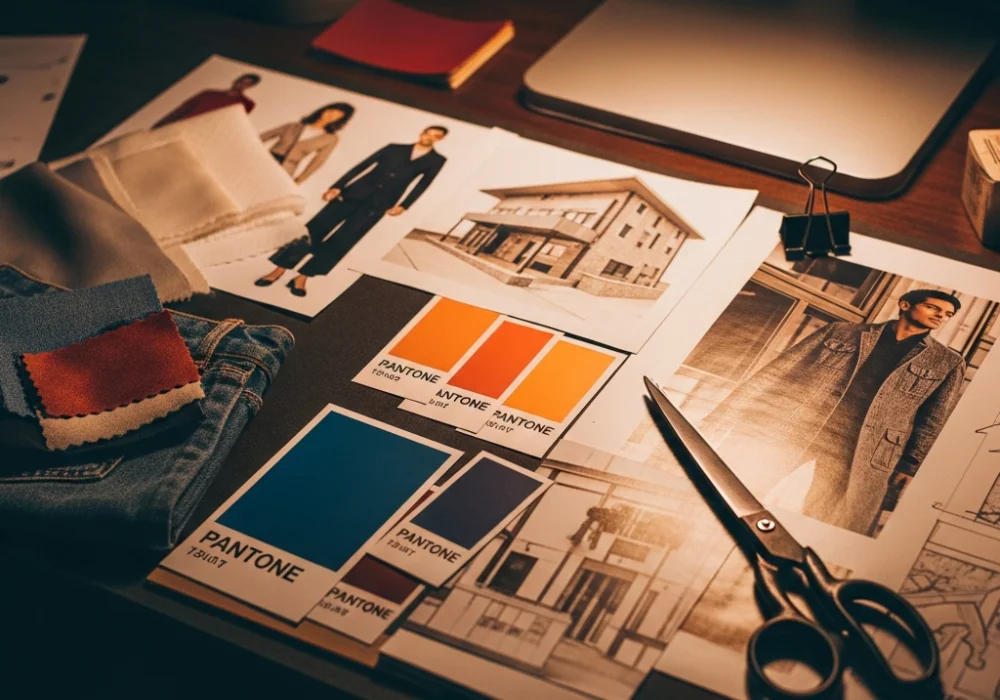
A moodboard, or an inspiration board, is a collage consisting of images, text, and samples of objects in a composition. Its primary purpose is to evoke a specific style or concept. For NIFT examiners, a moodboard is a window into a student’s mind—it reveals their ability to research, their sensitivity to color harmony, and their capacity to translate an abstract emotion into a tangible aesthetic. Before we dive into the ‘how-to’ of modern design, let us look at how the concept of visual curation has evolved over time to become a mandatory skill for design professionals.
1800s – 1900s
The Era of Commonplace Books
Before digital tools existed, artists and thinkers kept ‘Commonplace Books.’ These were physical scrapbooks where they pasted newspaper clippings, botanical sketches, and fabric scraps. For NIFT GAT aspirants, understanding this era highlights the importance of manual curation. It teaches that inspiration is a collection of observed details, a skill tested in NIFT through observation-based questions.
1920s – 1930s
Surrealist Montage Techniques
The Surrealist movement introduced the idea of ‘juxtaposition’—placing unrelated objects together to create new meaning. This is a core concept in NIFT CAT tasks. Students are often asked to create a design by combining two contrasting themes (e.g., ‘Nature’ and ‘Technology’). Surrealist collages were the first formal versions of moodboards used to challenge traditional visual logic.
1950s
Mid-Century Material Boards
Interior designers in the 1950s began using large boards to display swatches of paint, wallpaper, and carpet to clients. This ‘Material Board’ concept is vital for NIFT students specializing in Interior or Product Design. In the exam, you might be asked to describe the ‘tactile’ qualities of a design; this period defined how we represent touch through visual samples.
1970s
The Fashion Storyboard Revolution
Fashion designers like Yves Saint Laurent started using ‘Storyboards’ to plan entire collections. This is where the NIFT connection is strongest. The ability to maintain a ‘color story’ across 10 different sketches is a high-scoring skill. The 70s formalized the use of moodboards to ensure that a brand’s message was consistent from the first sketch to the final runway show.
1986
Establishment of NIFT
With the founding of NIFT in India, the European design process was formalized in the Indian context. Moodboarding became a standard curriculum item. For aspirants, this means that the exam isn’t just about ‘good drawing’ but about following a scientific design process—Inspiration > Moodboard > Conceptualization > Final Product.
1990s
The Digital Shift (Adobe Suite)
The arrival of Photoshop allowed designers to create digital moodboards. While NIFT entrance exams are mostly paper-based, the GAT often tests knowledge of digital terminology and image formats (JPEG, PNG, TIFF) which are essential for modern moodboarding. Understanding how digital layers work can help students plan their physical sketches more effectively.
2010
The Pinterest Phenomenon
Pinterest democratized the moodboard. Today, NIFT examiners expect students to have a broad visual vocabulary because of this accessibility. In the Situation Test (Stage 2 of NIFT), students must essentially build 3D moodboards. The trend of ‘curation’ over ‘creation’ started here, emphasizing that choosing the right inspiration is as important as the final output.
2020s
The AI and Generative Design Era
Now, tools like Midjourney can generate moodboards from text prompts. However, NIFT continues to prioritize the human element. The GAT now includes more psychographic questions—testing if you understand ‘why’ a certain color palette works for a specific demographic, rather than just knowing that it looks ‘nice’.
Why is a Moodboard Important for NIFT GAT and CAT?
In the NIFT exam, you are not just being tested on your ability to draw a pretty picture. You are being tested on your **design aptitude**. This is where the moodboard logic becomes your greatest asset. Let’s break down its importance for both sections of the exam.
1. Theoretical Application in GAT
The General Ability Test (GAT) often includes questions related to Communication Ability and General Knowledge of the fashion industry. Understanding moodboarding helps you solve:
- Color Theory Questions: Moodboards are built on color harmonies (monochromatic, analogous, complementary). Knowing how to build a moodboard helps you identify these harmonies instantly in GAT questions.
- Branding and Advertising: Many GAT questions ask about the ‘mood’ of a brand. A moodboard is the visual DNA of a brand. If you understand the moodboard of a brand like ‘Organic India’ (earthy tones, rustic textures, sustainable imagery), you can easily answer questions about their target market and core values.
- Vocabulary and Terminology: Terms like ‘Avant-Garde,’ ‘Minimalism,’ and ‘Kitsch’ are often used in GAT. Creating moodboards for these themes is the best way to internalize their meanings.
2. Practical Application in CAT
The Creative Ability Test (CAT) is where the moodboard takes center stage, even if you don’t explicitly draw one. Every sketch you produce must feel like it belongs to a cohesive moodboard. If your theme is ‘Cyberpunk 2077,’ but your color palette is pastel pink and mint green, you will lose marks for lack of visual coherence. A mental or rough moodboard helps you:
- Maintain Consistency: It ensures that your motifs, colors, and fonts all tell the same story.
- Save Time: By deciding on a ‘mood’ in the first 5 minutes, you avoid the indecision that plagues many students during the 3-hour exam.
- Improve Presentation: Examiners look for ‘Design Process.’ Showing a small thumbnail moodboard next to your final design can significantly boost your score by demonstrating professional workflow.
How to Create an Award-Winning NIFT Moodboard
Whether you are practicing at home or preparing for the Situation Test, follow these four pillars of moodboarding:
- The Central Theme: Start with a strong keyword (e.g., ‘Fragility’). Your moodboard should explore this keyword from multiple angles—physical fragility (glass), emotional fragility (a teardrop), and environmental fragility (a melting glacier).
- The Color Story: Select 4-5 key colors. Use the 60-30-10 rule: 60% dominant color, 30% secondary, and 10% accent color. In GAT, you might be asked to identify these ratios in famous logos.
- Texture and Depth: Don’t just include flat images. Think about how things feel. Is the theme ‘Rough’ or ‘Sleek’? Use visual textures like crumpled paper or polished metal to convey this.
- Typography: The fonts you choose must match the mood. A ‘Victorian’ theme needs Serif fonts with flourishes, while a ‘Modern Tech’ theme needs clean, Sans-Serif fonts.
Final Thoughts for NIFT Aspirants
The journey to NIFT is about shifting your perspective from an artist to a designer. An artist expresses themselves; a designer solves problems for an audience. The moodboard is the tool that bridges this gap. By mastering the art of the moodboard, you are telling the NIFT evaluators that you have the discipline, the research skills, and the visual literacy required to thrive in the competitive world of design.
As you prepare for the GAT and CAT, start creating a weekly moodboard based on random objects you find at home. Analyze the colors, the textures, and the story they tell. This habit will sharpen your observation skills and make you a formidable candidate on exam day.
Ready to Ace your NIFT Entrance? 🎨
Don’t let your doubts hold you back. Get expert guidance, free study materials, and access to the latest NIFT mock tests specifically designed for GAT and CAT success.
💬 Chat with our Experts on WhatsApp (+91 9526806124)




