
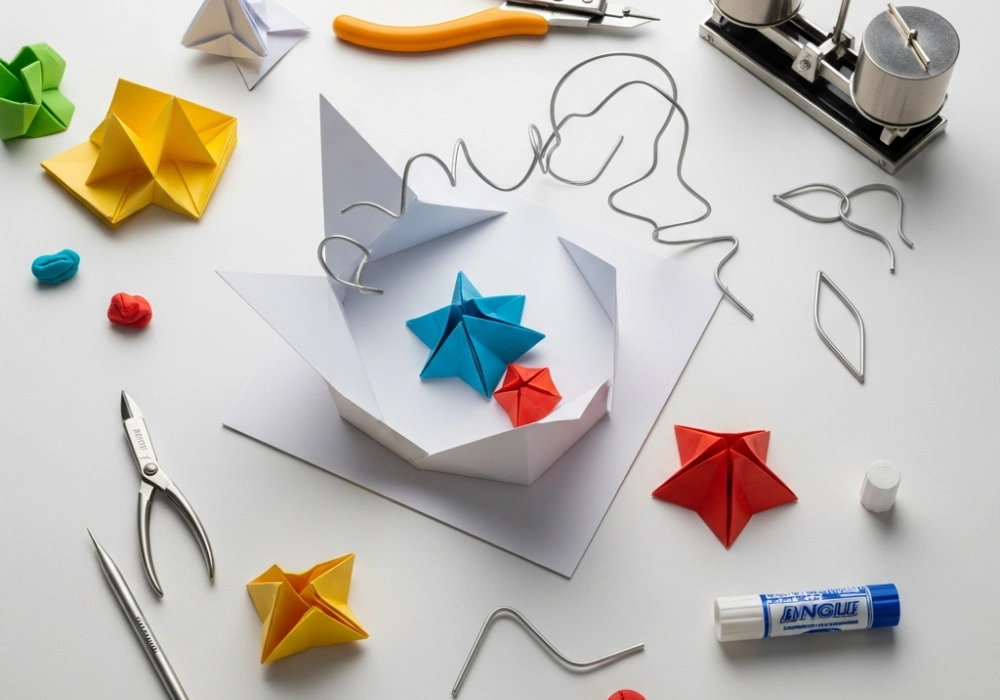
Understanding the NIFT Situation Test
The NIFT Situation Test is the final hurdle for B.Des aspirants who have successfully cleared the General Ability Test (GAT) and Creative Ability Test (CAT). This phase is designed to evaluate a candidate’s ability to handle physical materials, their innovative thinking, and their spatial visualization skills. Unlike the previous rounds which were paper-based, this test requires you to bring concepts to life in a three-dimensional form using a provided kit of materials.
Success in this test isn’t just about making something that looks good; it is about how effectively you use the materials provided to solve a specific problem or depict a theme. At myentrance.in, we provide comprehensive mock tests and resources that simulate this high-pressure environment, helping students refine their material handling skills and time management. In this guide, we dive deep into the expert techniques required to create high-scoring model answers.
Core Principles of Creative Material Handling
Material handling is the art of transforming raw, often mundane materials into structural and aesthetic components. To score high, your model must demonstrate a mastery of several core principles:
- Structural Integrity: Your model must be stable. If it collapses during the evaluation, your score will plummet regardless of how creative the concept was.
- Neatness: Clean joins, minimal visible glue, and precise cuts are non-negotiable. The evaluators look for professional craftsmanship.
- Innovation: Using a material for something other than its intended purpose (e.g., using a straw as a structural pillar or a texture element) shows creative maturity.
- Economy of Material: Don’t use everything just because it’s there. Use what is necessary to convey your concept effectively.
💡 Pro Tip: The 360-Degree Rule
Always build your model so it looks complete from every angle. Evaluators will walk around the table; if the back of your model is messy or unfinished, it leaves a poor impression.
Comprehensive Material Comparison Table
Knowing which material to use for which purpose is half the battle. Below is a comparison of common materials provided in the NIFT kit and their best applications.
| Material | Best Use Case | Handling Difficulty |
|---|---|---|
| Cardboard/Mount Board | Base, structural walls, heavy furniture | Medium |
| Pastel Sheets | Curved surfaces, origami, aesthetics | Low |
| Aluminum Wire | Outlines, skeletons, dynamic lines | High |
| Clay/Plasticine | Organic shapes, connectors, detailing | Low |
| Straws/Sticks | Pillars, trusses, repetitive patterns | Medium |
Advanced Paper Manipulation Techniques
Paper is the most versatile material in your kit. To move beyond simple folding, you should master these expert techniques:
1. Scoring and Bending
To get a sharp, professional fold on thick paper or board, use your cutter to lightly scratch the surface (without cutting through). This allows the paper to fold cleanly along a straight line. This is essential for creating geometric shapes or furniture models.
2. Quilling and Spiraling
Roll thin strips of paper to create coils. These can be used for decorative elements, representing wheels, or creating textured surfaces. It adds a level of intricacy that catches the evaluator’s eye.
3. Pleating and Accordion Folds
Pleating adds strength and volume to a flat sheet of paper. It can be used to create roofs, fans, or even structural supports that can bear weight.
4. Weaving
By cutting slots into one sheet and threading strips through another, you can create a sturdy, textured surface. This technique is excellent for depicting baskets, fabric textures, or architectural facades.
💡 Click to Reveal: The Secret to Paper Strength
To make a thin sheet of paper hold weight, roll it into a tight cylinder or fold it into a ‘V’ or ‘U’ shape. Triangulation is the strongest geometric form for load-bearing in your models!
Mastering Wire, Clay, and Fabric
While paper forms the bulk, the other materials add depth and realism to your model.
Working with Wire
Wire is often used to show movement. Avoid using it only for flat shapes. Twist multiple wires together to create a sturdy trunk for a tree model, or use a single wire to create the silhouette of a human figure. Always hide the sharp ends of the wire inside clay or between paper layers to ensure safety and neatness.
Using Clay as a Connector
Many students use too much clay, making the model look bulky. The expert technique is to use clay as a hidden joint or a subtle accent. If you are making a model of a playground, use tiny bits of clay to connect the swing ropes to the frame.
Fabric Draping
If fabric or mesh is provided, use it to create organic flow. You can stiffen fabric using a light coating of glue if you need it to hold a specific shape, or use it loosely to represent curtains, water, or clothing.
Decoding Model Answer Strategies
When you are given a prompt like “Design a workspace for a footwear designer,” your model answer should follow a logical flow:
- Phase 1: Conceptualization (10 mins): Don’t start cutting immediately. Sketch a rough layout. What does a footwear designer need? A drawing desk, a storage rack for leather, a display for shoes, and a comfortable chair.
- Phase 2: Execution (90 mins): Build the base first. Then move to the largest elements (the desk and rack). Finish with the fine details (miniature shoes, sketches).
- Phase 3: The Write-Up (20 mins): This is where you explain the ‘Why’ behind your ‘What’.
At myentrance.in, we provide specific model answer templates for previous years’ prompts to help you understand the standard expected by NIFT faculty.
The Perfect Write-Up: Your Narrative Strategy
The write-up is approximately 10-15% of your total score. It should be concise and professional. Use the following structure:
- Theme/Concept: State your idea clearly. (e.g., “My model represents a sustainable workspace inspired by the geometry of a honeycomb.”)
- Material Usage: Mention why you chose specific materials. (e.g., “Used aluminum wire to represent the flexibility of the designer’s mind.”)
- Design Principles: Mention terms like balance, rhythm, contrast, or emphasis.
Interactive FAQs
What happens if I don’t use all the materials?
You are not required to use every material. Quality and relevance are more important than quantity. However, avoid wasting material, and ensure that what you use is utilized effectively.
Can I use my own stationery?
Yes, you must bring your own toolkit (scissors, cutter, scale, pencils, glue, etc.). Only the craft materials like paper, wire, and clay are provided by NIFT.
Is color important in the model?
Color choice is vital. Use colors that reflect the mood of your theme. Warm colors for energy, cool colors for calm. Avoid using too many clashing colors unless the theme specifically asks for it.
Quick Knowledge Check
Test your understanding of the NIFT Situation Test requirements!
- What is the primary purpose of ‘scoring’ a material?
View Answer
To create a clean, sharp, and professional fold without tearing the material.
- Which geometric shape is considered the strongest for structural support?
View Answer
The Triangle (Triangulation).
- True or False: The write-up should be at least 500 words long.
View Answer
False. The write-up should be concise, usually around 100-150 words, focusing on concept and material usage.
Need Personalized Guidance for NIFT?
Join our expert-led mock sessions and get detailed feedback on your models!
💬 Chat with our Experts on WhatsApp (+91 9526806124)




