
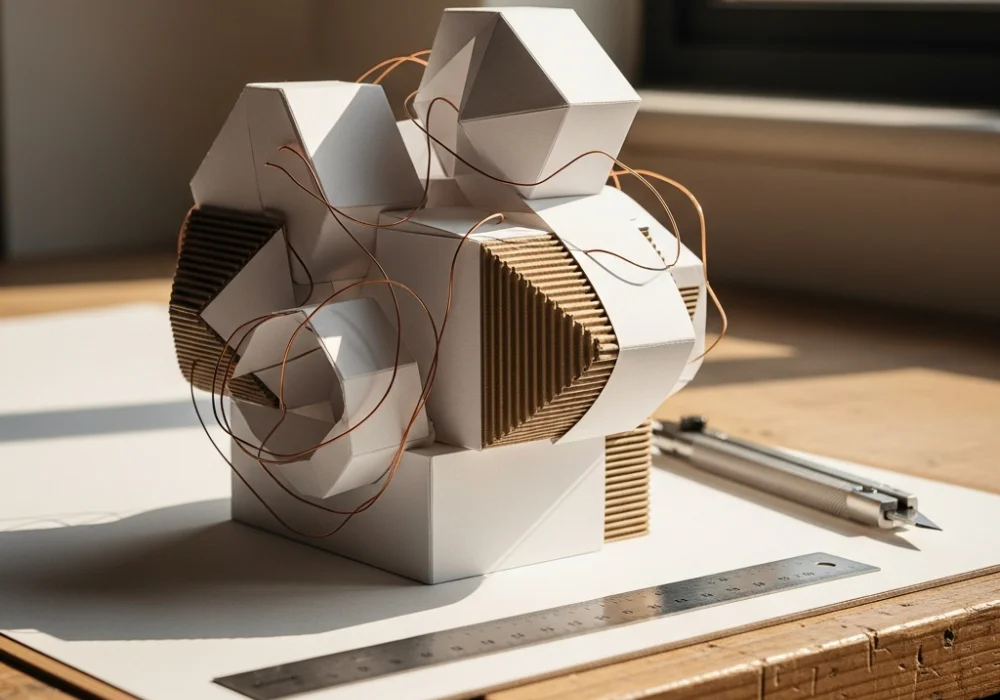
Introduction to the NIFT Situation Test
The NIFT Situation Test is the final and most crucial hurdle for Bachelor of Design (B.Des) aspirants after clearing the GAT and CAT. This practical examination evaluates a candidate’s innovative thinking, material handling skills, and aesthetic sense. Success in the NIFT Situation Test depends heavily on how effectively you can translate a 2D concept into a 3D reality using a limited set of materials. At myentrance.in, we provide comprehensive guidance and mock tests to ensure you are fully prepared for the latest pattern of the NIFT exams.
The Core Objective: What the Examiners Look For
Before diving into techniques, it is essential to understand that the examiners are not looking for a professional sculptor. They are looking for a creative problem solver. Your model is evaluated on:
- Innovation and Creativity: How unique is your approach to the given theme?
- Material Manipulation: How well have you explored the properties of the provided materials?
- Structural Stability: Can the model stand on its own without collapsing?
- Aesthetic Appeal: Is the finished product neat and visually balanced?
- Write-up: The clarity with which you explain your concept and material choice.
Mastering Essential Materials
In the examination hall, you will receive a kit containing basic materials like cardboard, ivory sheets, wire, cloth, and clay. The key to success is knowing how to manipulate each one effectively.
1. Paper and Ivory Sheets
Paper is the most versatile material. Instead of just sticking flat sheets together, try techniques like:
- Scoring: Use a cutter or a blunt edge to create a half-cut, allowing for clean, sharp folds.
- Quilling: Roll thin strips of paper to create decorative elements or structural reinforcement.
- Pleating and Crimping: Create textures that mimic fabric or corrugated surfaces.
- Layering: Stack layers to create 3D depth and shadows.
2. Wire Manipulation
Wire provides the skeletal structure for many models. Techniques include:
- Coiling: Wrap wire around a pencil to create springs or decorative spirals.
- Mesh Creation: Interweave wires to create a net or a cage-like structure.
- Outlining: Use wire to define the borders of your model, giving it a professional finish.
3. Cardboard and Thermocol
These materials provide the base and bulk of your model. Always ensure the edges are clean. Use cardboard for sturdy platforms and thermocol for organic shapes, though remember that thermocol should be used sparingly as it can be messy.
Material Comparison and Utility Table
To help you choose the right material for the right task during the exam, refer to the table below:
| Material | Strength/Property | Best Used For | Recommended Technique |
|---|---|---|---|
| Ivory Sheet | Flexible but firm | Structural walls, curved surfaces | Scoring and Folding |
| Copper/GI Wire | Pliable, holds shape | Frames, connectors, decorations | Twisting and Coiling |
| Clay (Plasticine) | Malleable, heavy | Organic forms, small details | Molding and Texturing |
| Corrugated Sheet | Rigid, thick | Bases, heavy structures | Layering for height |
| Fabric/Ribbon | Soft, flowing | Representing water, clothes, or curtains | Gathering and Draping |
Advanced Techniques for a Winning Model
To stand out from thousands of other candidates, you need to employ advanced material handling techniques that showcase your dexterity.
The Concept of ‘Unit-Based’ Construction
Rather than building one large block, try creating multiple small units (like paper cubes or wire loops) and assembling them. This demonstrates patience and high-level craftsmanship. It also adds a professional architectural feel to your model.
Texture Creation
Don’t leave surfaces plain. Use the materials to create texture. For example, use pins to prick patterns into paper, or use sandpaper to roughen the surface of clay. This attention to detail is what catches an examiner’s eye.
Stability and Balance
Ensure your model has a low center of gravity. If your model is top-heavy, it will likely tilt or fall. Use heavier materials like clay or thick cardboard at the base and lighter materials like paper or wire for the upper sections.
The Importance of the Write-Up
Many students focus solely on the model and ignore the write-up. The write-up is your chance to communicate your thought process. Use design terminology like “symmetry,” “rhythm,” “contrast,” and “negative space.” Explain *why* you chose specific materials for certain parts of the model. Keep it concise, legible, and professional.
Why Practice with Mock Tests is Crucial
The biggest challenge in the NIFT Situation Test is the 2-hour time limit. Practicing at home without a timer is very different from the actual exam environment. At myentrance.in, we offer specialized mock tests designed according to the current syllabus and latest patterns. Our mock tests provide you with:
- Real-time practice scenarios.
- A variety of creative prompts to expand your thinking.
- Expert feedback on material handling and conceptualization.
- Techniques to manage time effectively during the exam.
Common Mistakes to Avoid
- Over-gluing: Visible glue marks or





