
NIFT Interactive Design Series: South Indian Heritage
A comprehensive visual guide for GAT and CAT preparation.
The Designer’s Compendium: South Indian Arts and Crafts
For any aspiring designer eyeing a seat at the National Institute of Fashion Technology (NIFT), understanding the vernacular arts of South India is non-negotiable. South India offers a palette of vibrant colors, complex textures, and sustainable manufacturing processes that have influenced modern fashion runways globally. This guide breaks down the essential crafts you need to know for your exam.
1. Textiles and Weaves: The Fabric of Heritage
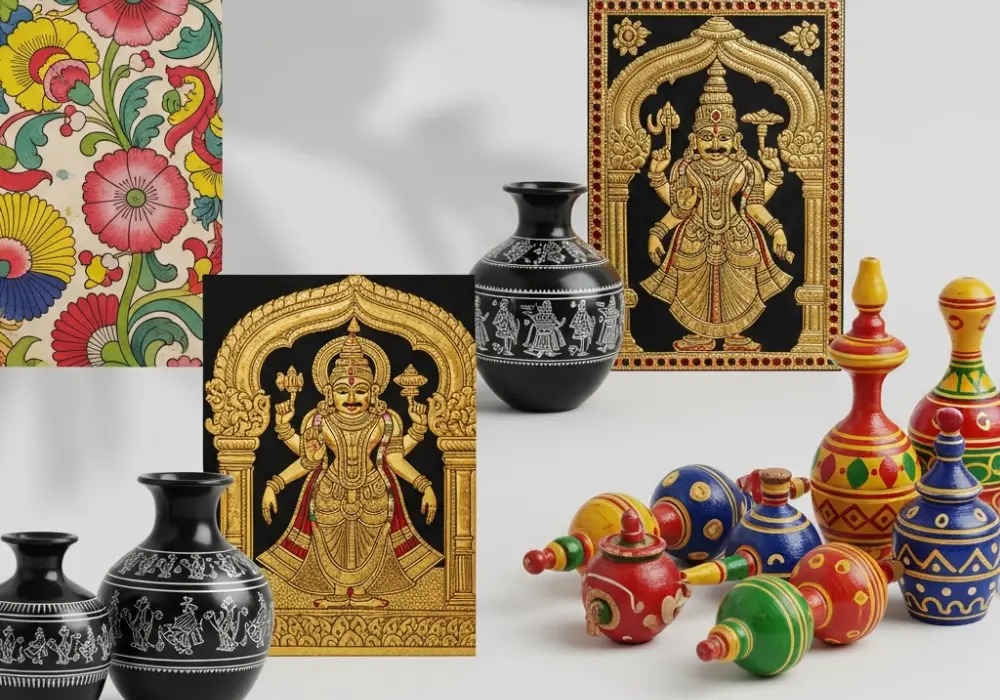
Kalamkari: This ancient style of hand-painting or block-printing is primarily seen in Andhra Pradesh. There are two distinct styles: the Srikalahasti style, where the ‘kalam’ or pen is used for freehand drawing of celestial characters, and the Machilipatnam style, which uses vegetable-dyed blocks. NIFT students should note the use of natural mordants like alum and the distinct earthy color palette (maroon, mustard, black, and indigo).
Mysore Silk & Kasavu: While Mysore Silk is famous for its high-quality gold zari borders and lustrous finish, the Kasavu (Mundu) from Kerala is a masterpiece of minimalism. The off-white fabric with a golden border (kara) represents the cultural aesthetics of the Malayali people and is frequently used as a base for modern fusion wear in design competitions.
2. Metal and Woodwork: Precision and Lustre
Bidriware: Originating from Bidar, this metal handicraft involves an intricate process of casting, engraving, and inlaying silver onto a blackened alloy. The contrast of the gleaming silver against the matte black surface is a popular inspiration for luxury product design and accessory components in NIFT portfolios.
Aranmula Kannadi: A unique metal-alloy mirror from Kerala. Unlike glass mirrors, this is a front-surface reflection mirror made from a secret mix of copper and tin. It remains one of the most sought-after GI-tagged items and serves as a classic example of metallurgy in traditional craft.
3. Paintings: The Divine Visual Language
Tanjore Painting: Hailing from Thanjavur, Tamil Nadu, these paintings are characterized by their rich, flat, and vivid colors, simple iconic composition, and the use of glittering gold foils overlaid on delicate but extensive gesso work. The incorporation of semi-precious stones makes it a high-relief art form, bridging the gap between painting and sculpture.
Exam Strategies for NIFT Aspirants
- Identify the GI Tag: Geographical Indication tags are frequently asked in GAT. For example, memorize that Chennapatna toys belong to Karnataka and Kondapalli toys to Andhra Pradesh.
- Material Properties: In CAT (Creative Ability Test), you might be asked to design a product inspired by these crafts. Understand the texture of Kalamkari cotton versus the weight of Bidri metal.
- Sustainability Focus: Many South Indian crafts use natural dyes and local wood (like Aale Mara for toys), which fits perfectly into the current ‘Sustainable Fashion’ themes favored by NIFT.
Need more Guidance?
Our experts are here to help you crack the NIFT entrance exam with personalized mock tests and material kits.
💬 Chat with our Experts on WhatsApp (+91 9526806124)




