
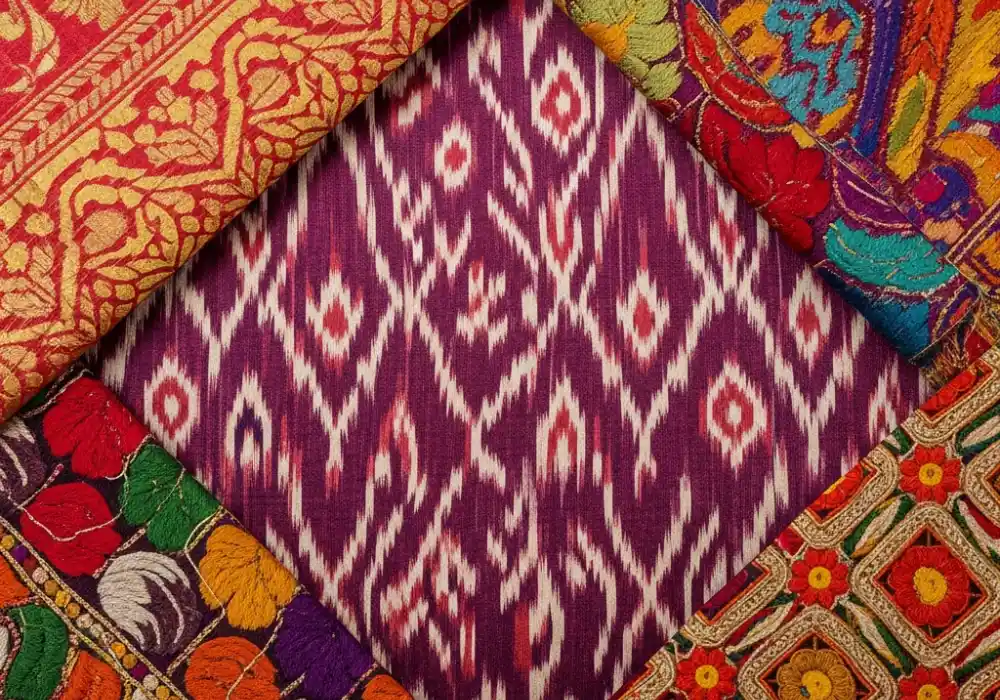
The Ultimate Guide to Handlooms of India
A Must-Know Topic for NIFT GAT and CAT Aspirants
Introduction: Why Handlooms Matter for NIFT
For any NIFT (National Institute of Fashion Technology) aspirant, the ‘Handlooms of India’ is not just a topic; it is the backbone of the General Ability Test (GAT) and a significant inspiration source for the Creative Ability Test (CAT). The textile heritage of India is vast, dating back to the Indus Valley Civilization. Understanding the intricate weaves, unique dyeing techniques, and regional specializations is crucial for scoring high in the General Knowledge and Design Sensitivity sections. This guide provides a comprehensive overview of Indian textiles, organized by region, to help you navigate this complex subject with ease.
1. North India: The Land of Royal Silks and Intricate Embroidery
Banarasi Silk (Uttar Pradesh): One of the most famous textiles in India, Banarasi silk is known for its gold and silver brocade or zari, fine silk, and opulent embroidery. The motifs are often inspired by Mughal designs, such as intricate floral and foliate motifs, kalga and bel. In the NIFT exam, you might be asked about the ‘Jangla’ or ‘Tanchoi’ varieties of Banarasi weaves.
Pashmina Shawls (Jammu & Kashmir): Derived from the Persian word ‘Pashm’ (meaning wool), these shawls are made from the fine undercoat of Himalayan goats. They are renowned for their softness and warmth. The ‘Kani’ shawl is a specific type of Pashmina woven with small wooden sticks called kanis.
Phulkari (Punjab): Literally meaning ‘flower work,’ Phulkari is a vibrant embroidery technique. It involves darning stitches on the wrong side of coarse cotton cloth (khaddar) with colored silken threads. It is a staple of Punjabi culture and a frequent question in design entrance exams.
2. West India: The Mastery of Resist Dyeing
Patola (Gujarat): Known as the ‘Queen of Silks,’ Patola is a double-ikat weave from Patan. This means both the warp and weft threads are tie-dyed before weaving. It is an extremely labor-intensive process, and a single saree can take months or even years to complete. Look out for terms like ‘Chhabdi Bhat’ (basket design) in your exam prep.
Bandhani (Gujarat and Rajasthan): This is the ancient art of tie-dye. Small portions of the fabric are plucked with fingernails and tied tightly with thread before dyeing, creating beautiful patterns like dots, squares, or waves. In Rajasthan, Leheriya (wave patterns) is a popular variation often associated with the monsoon season.
Paithani (Maharashtra): Originating from Paithan, these sarees are characterized by borders of oblique square designs and a pallu with a peacock motif. They are woven from very fine silk and gold thread, symbolizing the rich Maharashtrian heritage.
3. South India: The Grandeur of Temple Weaves
Kanjeevaram (Tamil Nadu): Also known as Kanchipuram silk, these sarees are distinguished by their wide contrast borders. The border and pallu are often woven separately and then joined to the main body in a technique called Pitni. The motifs often include temple architectures, checks, and stripes.
Pochampally Ikat (Telangana): Unlike Patola, Pochampally is often single-ikat (though double-ikat also exists). It is famous for its geometric patterns. It was the first traditional craft to receive Geographical Indication (GI) status in India in 2005.
Kasavu (Kerala): The signature white or cream-colored saree with a gold border (Kasavu) worn during Onam. It represents the simplicity and elegance of Kerala’s handloom tradition.
4. East and Central India: Nature-Inspired Textures
Muga Silk (Assam): This naturally golden-tinted silk is exclusive to Assam. It is known for its extreme durability and the fact that its luster increases with every wash. It is produced by the silkworm Antheraea assamensis.
Sambalpuri Ikat (Odisha): Known for its ‘Baandha’ style of tie-dye, Sambalpuri textiles incorporate traditional motifs like the shell (shankha), wheel (chakra), and flower (phula). The weave is distinct for its soft texture and earthy tones.
Chanderi (Madhya Pradesh): Known for its lightweight, sheer texture and fine luxurious feel. Chanderi is a blend of silk and cotton, often embellished with small zari motifs called buttis.
Test Your Knowledge: Handloom Challenge
Drag or click the words from the bank to fill in the blanks!
2. ____ is a double-ikat weave from Gujarat.
3. The traditional flower-work embroidery of Punjab is ____.
4. ____ sarees are known for their heavy silk and temple-inspired borders.
5. The sheer, lightweight fabric from Madhya Pradesh is known as ____.
Technical Aspects: Weaving and Dyeing Methods
Beyond regional names, NIFT asks about the ‘process’. Here are some technical terms you must memorize:
- Ikat: A dyeing technique used to pattern textiles that employs resist dyeing on the yarns prior to dyeing and weaving the fabric.
- Brocade: A class of richly decorative shuttle-woven fabrics, often made in colored silks and with or without gold and silver threads.
- Zari: An even thread traditionally made of fine gold or silver used in traditional Indian garments.
- Hand-block Printing: Using carved wooden blocks dipped in dye to create repetitive patterns (e.g., Ajrakh, Sanganeri).
Preparation Strategy for NIFT Aspirants
1. Create a Textile Map: On a map of India, mark each state with its famous handloom. This visual aid will help in quick recall during the GAT exam.
2. Fabric Identification: Try to visit a local handloom emporium. Feel the difference between Tussar silk and Mulberry silk. Tactile learning is powerful.
3. Stay Updated: The Ministry of Textiles often launches new initiatives like the ‘Handloom Mark’ or ‘India Handloom Brand’. Note these down for your General Knowledge preparation.





