
NIFT GAT Previous Year Questions: Decoding Sustainable Luxury & Supply Chain Transparency
As a future fashion leader, the NIFT General Ability Test (GAT) requires you to think beyond just aesthetics. One of the most recurring themes in the management and communication sections involves the intersection of Luxury Brand Equity and Sustainability. In recent years, the exam has pivoted towards testing a candidate’s understanding of how transparency in the supply chain directly influences a consumer’s willingness to pay a premium. This comprehensive guide breaks down the core concepts and provides five highly realistic simulated questions based on trends seen in Previous Year Questions.
💡 Click to Reveal: Why is this topic critical for your exam?
NIFT evaluators are looking for candidates who understand ‘Conscious Luxury.’ Modern brands like Stella McCartney and Patagonia have changed the game. If you can analyze how a transparent supply chain builds ‘Brand Resonance,’ you are halfway to a top rank!
Understanding the Core Concepts
Before we jump into the questions, let us define our keywords. Brand Equity is the value premium that a company generates from a product with a recognizable name as compared to its generic equivalent. When we talk about Sustainable Supply Chain Transparency, we are referring to the disclosure of information regarding sourcing, labor conditions, and environmental impact. For a luxury brand, transparency acts as a ‘credence attribute’—it is a feature that a customer cannot easily evaluate even after purchase, making trust the primary currency of the transaction.
Question 1: The Impact of Radical Transparency on Brand Trust
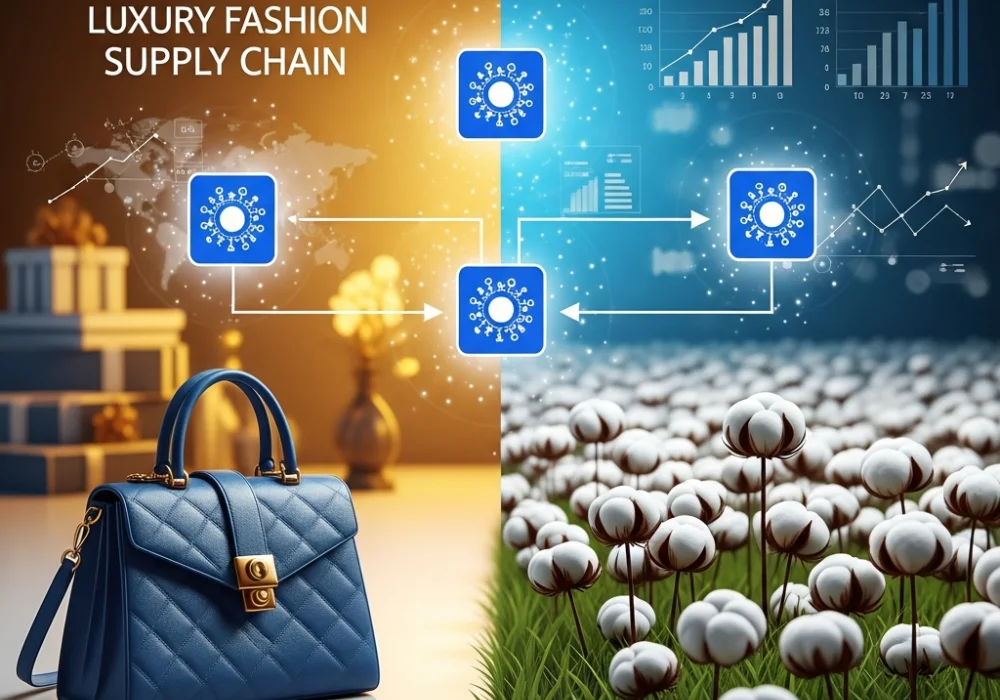
Scenario: A luxury heritage brand decides to use Blockchain technology to allow customers to trace the origin of the leather used in their handbags, from the farm to the boutique. How does this strategy primarily impact Brand Equity?
- By reducing the cost of production.
- By increasing the perceived ‘Sincerity’ dimension of brand personality.
- By eliminating the need for marketing.
- By reducing the target market size.
💡 30-Second Ninja Shortcut
The Trust-Transparency Loop: Transparency = Reduced Information Asymmetry = Increased Perceived Sincerity. In NIFT questions, if ‘Blockchain’ or ‘Traceability’ is mentioned, look for ‘Trust,’ ‘Authenticity,’ or ‘Sincerity’ in the options. Correct Answer: B.
Question 2: Customer Loyalty and the Ethical Premium
Scenario: Research shows that Gen Z luxury consumers are more likely to exhibit ‘Attitudinal Loyalty’ toward brands that publish their annual carbon footprint. What is the main differentiator between ‘Attitudinal Loyalty’ and ‘Behavioral Loyalty’ in this context?
- Behavioral loyalty is based on price discounts.
- Attitudinal loyalty involves an emotional commitment that resists competitive offers.
- Behavioral loyalty is always stronger than attitudinal loyalty.
- There is no difference in a luxury context.
💡 30-Second Ninja Shortcut
The Values-Match Rule: Loyalty in luxury GAT questions is rarely about price. It is about ‘Identity.’ If the question mentions ‘Sustainability’ and ‘Loyalty,’ choose the option that emphasizes ‘Emotional Connection’ or ‘Shared Values.’ Correct Answer: B.
Question 3: The ‘Greenwashing’ Risk in Supply Chain Disclosure
Scenario: A brand claims to be 100% sustainable but fails to provide data on its Tier-2 and Tier-3 suppliers (raw material sources). If discovered, what is the most likely effect on the brand’s equity?
- Temporary increase in sales due to publicity.
- Long-term dilution of Brand Authenticity and loss of the ‘Luxury Premium’.
- No effect, as luxury consumers only care about the final product.
- An increase in brand awareness that compensates for the negative news.
💡 30-Second Ninja Shortcut
The Fragility Factor: Luxury = Perfection. Deception = -Perfection. Therefore, any form of Greenwashing in a question will result in ‘Dilution’ or ‘Equity Loss.’ Correct Answer: B.
Question 4: Supply Chain Visibility vs. Exclusivity
Scenario: Some critics argue that too much transparency (revealing every factory and source) may reduce the ‘Mystique’ of a luxury brand. To maintain equity, a brand should:
- Stop being transparent.
- Focus transparency on the ‘Craftsmanship’ and ‘Ethical Sourcing’ rather than just dry logistics.
- Keep all information secret and only reveal it to shareholders.
- Only be transparent about their most expensive products.
💡 30-Second Ninja Shortcut
The Narrative Filter: If the question asks how to balance ethics and luxury, look for ‘Storytelling,’ ‘Artisan,’ ‘Heritage,’ or ‘Craftsmanship.’ Correct Answer: B.
Question 5: Quantitative Impact on Brand Valuation
Scenario: A brand with a Brand Equity value of $1 Billion implements a ‘Full-Loop’ recycling supply chain. If the market perceives this as a 20% increase in ‘Brand Strength’ and ‘Brand Strength’ accounts for 50% of the valuation, what is the new estimated equity?
- $1.2 Billion
- $1.1 Billion
- $1.05 Billion
- $1.5 Billion
💡 30-Second Ninja Shortcut
The Half-Effect Rule: If the change only affects a portion of the valuation, multiply the percentages first. 20% (increase) x 0.50 (weight) = 0.10. An increase of 0.10 is 10%. 1.1x the original. Correct Answer: B.
Cheat Sheet / Quick Revision Formulas
| Term | Key Formula/Relation |
|---|---|
| Brand Equity | Value(Branded) – Value(Unbranded) |
| Transparency | Information Disclosure + Accessibility |
| Loyalty Index | Repeat Purchase Rate + Emotional Bond |
| Luxury Premium | Psychological Value / Functional Value |
- Traceability: Ability to follow the movement of a product through stages of production.
- B-Corp Certification: A high standard for social and environmental performance.
- GOTS: Global Organic Textile Standard (Crucial for fabric questions).
- Tier-1 vs Tier-3: Tier-1 is the final assembly; Tier-3 is the raw material source.
Ready to Ace the NIFT GAT?
Understanding these complex relationships is the key to outperforming thousands of other aspirants. If you found this breakdown of Previous Year Questions helpful, don’t stop here!
💬 Chat with our Experts on WhatsApp (+91 9526806124)




