
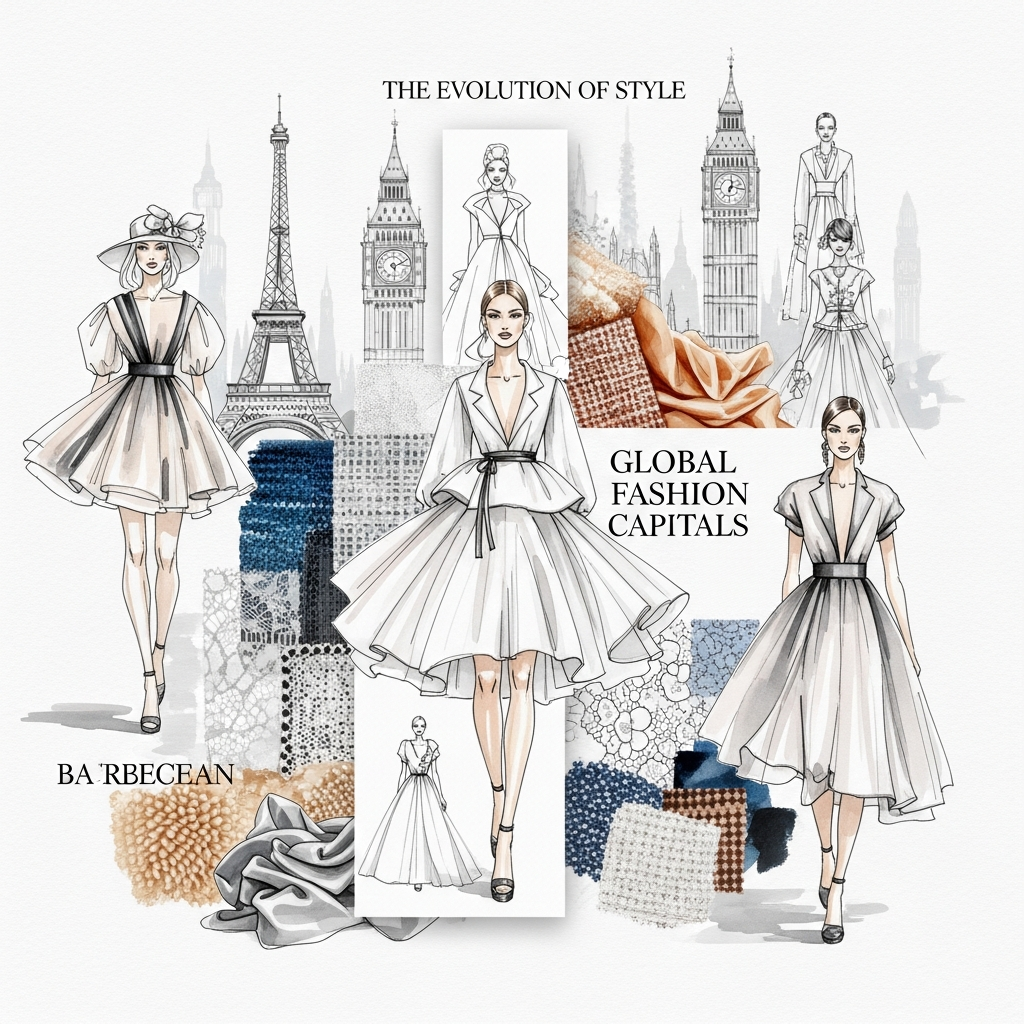
NIFT Free Mock Test: World Fashion Excellence
Welcome, aspiring designers! Mastering the NIFT entrance exam requires a deep dive into global fashion history and contemporary trends. This test is designed to challenge your knowledge of the brands, designers, and movements that shaped the world. Use this to refine your preparation for the General Ability Test (GAT) and beyond. Good luck!
Question 1: Which city is historically recognized as the birthplace of ‘Haute Couture’ and remains a global fashion epicenter?
- Milan
- New York
- Paris
- London
Question 2: The ‘New Look’—characterized by a cinched waist and full skirt—was a 1947 collection that revived the fashion industry. Who was the designer?
- Coco Chanel
- Christian Dior
- Elsa Schiaparelli
- Cristóbal Balenciaga
Question 3: Which iconic fashion designer is famously associated with the introduction of the ‘Little Black Dress’ (LBD) in the 1920s?
- Vivienne Westwood
- Vera Wang
- Coco Chanel
- Miuccia Prada
Question 4: The ‘Ikat’ technique, a complex resist-dyeing process used to create patterns on textiles, has its linguistic roots in which language?
- Japanese
- Indonesian
- Sanskrit
- Arabic
Question 5: Which Italian luxury house is world-renowned for its ‘Intrecciato’ leather weaving technique, which avoids visible logos?
- Gucci
- Bottega Veneta
- Prada
- Hermès
Answer Key & Explanations
- 1. C) Paris: Charles Frederick Worth, an Englishman in Paris, is considered the father of Haute Couture, establishing the first couture house in the city in the mid-19th century.
- 2. B) Christian Dior: Dior’s ‘Corolle’ line, dubbed the ‘New Look’ by Harper’s Bazaar editor Carmel Snow, transformed post-WWII fashion with its focus on luxury and ultra-feminine silhouettes.
- 3. C) Coco Chanel: Chanel revolutionized women’s wear by making black, previously a color reserved for mourning, a symbol of modern chic and accessibility.
- 4. B) Indonesian: The word ‘Ikat’ comes from the Indonesian word ‘mengikat,’ meaning ‘to tie’ or ‘to bind,’ referring to the process of tying the yarns before dyeing.
- 5. B) Bottega Veneta: Developed in the late 1960s, the ‘Intrecciato’ weave allowed the brand to create a recognizable identity without the need for prominent logos, embodying the motto ‘When your own initials are enough.’





