
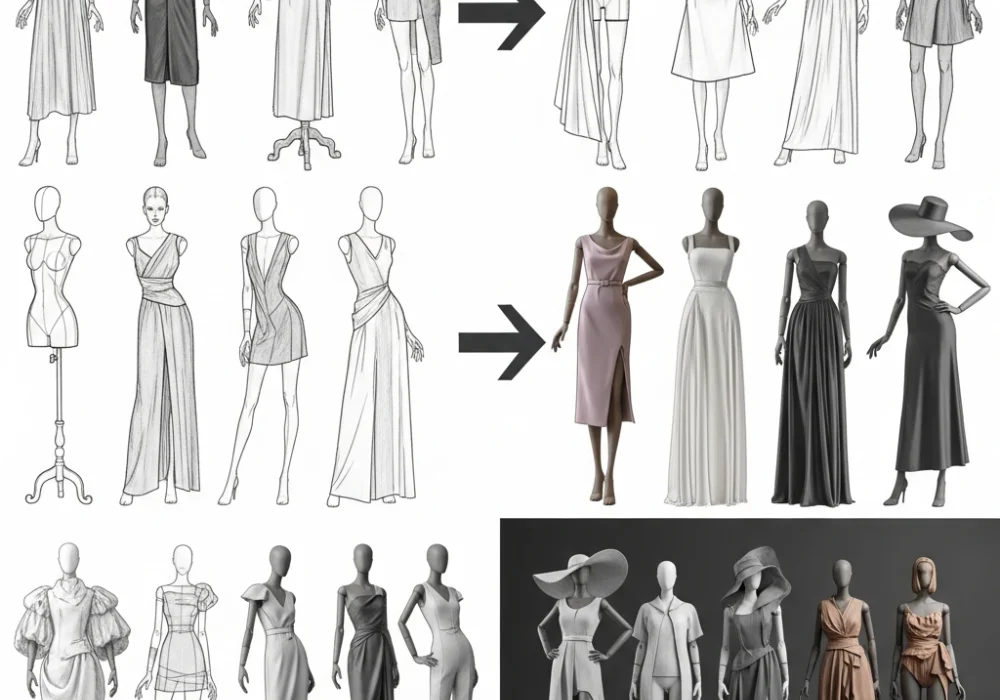
The Designer’s Legacy: Why Fashion History Matters for NID
For aspirants of the National Institute of Design (NID), understanding the evolution of fashion is not just about memorizing names; it is about grasping the socio-cultural shifts that influence visual communication and product design. The NID Design Aptitude Test (DAT) frequently evaluates a candidate’s awareness of design history, iconic silhouettes, and the revolutionary thinkers who redefined how humans interact with clothing. From the birth of Haute Couture in Paris to the deconstructivist movements of Japan, every era offers a lesson in problem-solving and aesthetic innovation.
As you prepare for your entrance exams, pay close attention to the ‘Why’ behind each designer. Why did Chanel choose jersey fabric? Why did Dior’s ‘New Look’ emerge after World War II? These questions mirror the analytical thinking required in the NID studio tests. This interactive timeline provides a chronological deep-dive into the masters who shaped the global fashion landscape, offering you a robust foundation for your General Knowledge and Design Sensitivity sections.
1858
Charles Frederick Worth: The Father of Haute Couture
Worth was the first to sew labels into garments, transforming the dressmaker into an ‘artist.’ He established the House of Worth in Paris, shifting fashion from client-led dressmaking to designer-led creation. For NID, remember him as the pioneer of the luxury fashion business model.
1920s
Coco Chanel: The Modernist Revolution
Chanel liberated women from the corset, introducing jersey fabric, the Little Black Dress (LBD), and the Chanel Suit. Her philosophy focused on functionalism and comfort—key design principles often tested in NID’s creative sections.
1947
Christian Dior: The New Look
Following the austerity of WWII, Dior’s ‘Corolle’ line re-introduced luxury with cinched waists and voluminous skirts. This event marks a major shift in post-war design psychology and the return of femininity in visual culture.
1950s
Cristóbal Balenciaga: The Master of Tailoring
Known as ‘the architect of fashion,’ Balenciaga created structural masterpieces like the sack dress and the cocoon coat. For NID students, his work is a masterclass in form, volume, and how garments interact with the human anatomy.
1966
Yves Saint Laurent: Le Smoking
YSL introduced the first tuxedo for women, ‘Le Smoking,’ and pioneered the ‘Prêt-à-porter’ (ready-to-wear) movement. He is essential for understanding the democratization of design and gender-fluid silhouettes in fashion history.
1970s
Vivienne Westwood: The Punk Aesthetic
Westwood brought the punk subculture into high fashion, using safety pins, slogans, and unconventional materials. Her work illustrates how design can be used as a medium for social protest—a recurring theme in NID’s social design questions.
1980s
Giorgio Armani: The Power Suit
Armani deconstructed the stiff men’s suit to create soft, elegant silhouettes that defined professional power in the 80s. Understanding Armani is key to learning about material property and the ergonomics of clothing.
1990s
Alexander McQueen: Savage Beauty
McQueen’s runway shows were performance art, blending technology, nature, and storytelling. His ability to evoke emotion through design is a vital skill for aspirants aiming to excel in the NID DAT and portfolio rounds.
How to Use This Knowledge for NID Preparation
Memorizing these milestones is just the beginning. To truly succeed in the NID entrance exam, you must apply this historical context to your creative exercises. For instance, if a question asks you to design a futuristic garment, consider how Coco Chanel’s focus on functionality might meet Alexander McQueen’s use of technology. NID often tests your ability to synthesize information from various eras to create something entirely new.
Furthermore, sketching these iconic silhouettes—such as the Dior ‘A-Line’ or the Balenciaga ‘Cocoon’—will improve your drawing speed and understanding of proportions. We recommend keeping a visual journal of these designers, noting down their signature styles and the fabrics they were famous for. This holistic approach will not only help in the written exams but also provide talking points during the personal interview phase.
Stay consistent in your practice, analyze fashion as a response to the environment, and you will find yourself well-prepared for the challenges of the NID entrance exam. Remember, every design tells a story—your job is to learn how to read them.
Ready to Ace the NID Exam?
Don’t let design history or creative sketching overwhelm you. Get expert guidance and customized mock tests today!
💬 Chat with our Experts on WhatsApp (+91 9526806124)




