
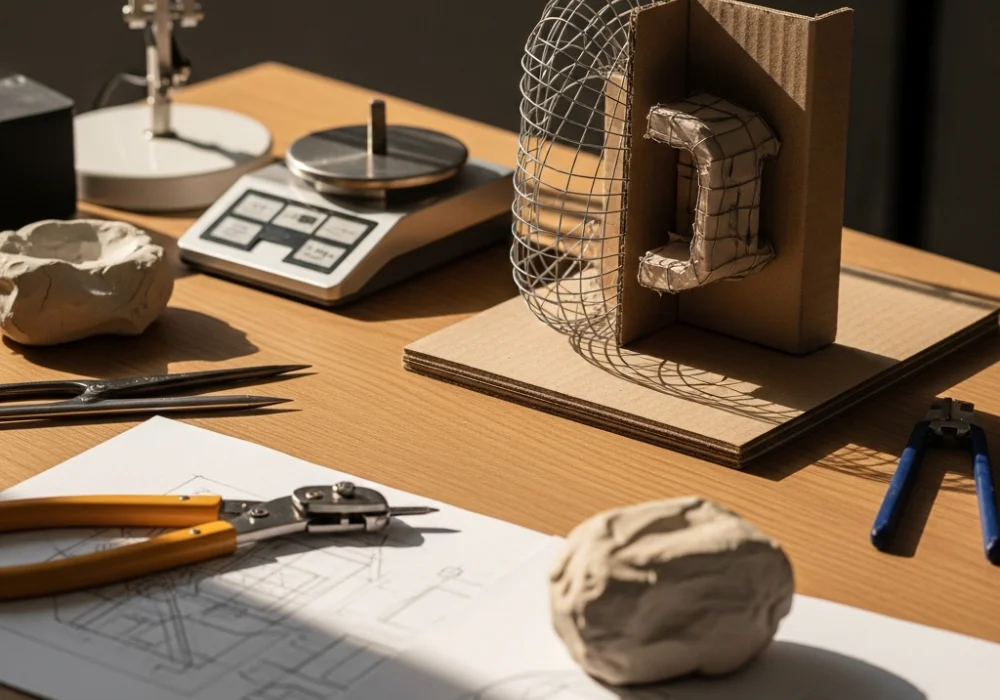
Mastering the NID DAT Studio Test: A Comprehensive Guide
Passing the NID DAT Prelims is a significant achievement, but the real challenge for design aspirants lies in the Studio Test. This stage evaluates your hands-on skills, material comprehension, and your ability to solve problems creatively under time constraints. To succeed, you need a blend of technical proficiency and innovative thinking. In this guide, we delve into the core strategies for material handling and creative problem-solving tailored for the upcoming exams.
Understanding the Studio Test Environment
The NID Studio Test is not just about making something beautiful; it is about how you think through your hands. The examiners look for your ability to manipulate materials while maintaining structural integrity and aesthetic balance. Typically, candidates are given a set of materials and a specific problem statement to address within a limited timeframe.
Key Evaluation Criteria
- Creative Innovation: How unique is your approach to the problem?
- Material Proficiency: How well did you use the provided resources?
- Structural Stability: Does your model stand on its own or serve its intended purpose?
- Observation Skills: Your ability to notice details and translate them into design.
Material Handling Insights: Working with the Unfamiliar
One of the biggest hurdles in the Studio Test is the variety of materials provided. You might get anything from wire and clay to straws, bubble wrap, or even dry pasta. Understanding the physical properties of these materials is crucial for success.
1. Paper and Cardboard
Paper is versatile. You can fold it (origami), curl it, or cut it to create textures. Cardboard offers more structural strength. Use the ‘scoring’ technique—lightly cutting the top layer of cardboard—to create clean folds without breaking the material.
2. Wire and String
Wire is excellent for creating ‘line’ in space or internal armatures for clay models. Learning how to create loops and stable joints without excessive glue is a vital skill. String can be used for tension-based structures or to add organic textures to a rigid frame.
3. Clay and Pliable Materials
Clay requires an understanding of volume and weight. When working with clay, ensure your base is wide enough to support the height of your model. Avoid over-handling, as the heat from your hands can dry out certain types of modeling clay, leading to cracks.
Creative Problem Solving: The Design Thinking Approach
Creative problem solving in the Studio Test follows a condensed version of the design thinking process. You must move from ideation to execution in minutes.
- Identify: Read the problem statement twice. What is the core need? Is it a functional tool, a conceptual sculpture, or a solution to a daily life problem?
- Ideate: Quickly sketch 2-3 thumbnail ideas. Don’t spend more than 5 minutes on this. Choose the most feasible one that uses the materials effectively.
- Execute: Start building. If a material fails, pivot quickly. Flexibility is a hallmark of a great designer.
Comparing Material Properties for Design
To help you decide which material to use for specific tasks, refer to the following comparison table based on the latest patterns of the Studio Test:
| Material | Primary Strength | Common Use Case | Handling Difficulty |
|---|---|---|---|
| Corrugated Board | Structural Rigidity | Furniture models, enclosures | Medium |
| Aluminum Wire | Flexibility & Line | Human figures, frames | Low |
| Modeling Clay | Volume & Form | Organic shapes, ergonomics | High |
| Mount Board | Clean Finish | Architectural models | Medium |
| Rubber Bands | Tension & Joining | Mechanisms, kinetic models | Low |
Strategies for Success on D-Day
Preparation for the Studio Test should involve consistent practice with a variety of tools. Here are some pro-tips to keep in mind:
- Keep it Clean: Avoid messy glue marks. Use the minimum amount of adhesive necessary. Neatness reflects your precision as a designer.
- Time Management: Allocate the last 10 minutes for finishing touches and cleaning your workspace.
- Narrative Matters: Most tests require you to write a brief write-up (50-100 words) about your model. Explain your ‘Why’ clearly.
- Practice with Constraints: Use the mock tests available on myentrance.in to practice under timed conditions. Our mock tests simulate the current syllabus requirements to give you a realistic experience.
How myentrance.in Can Help You Prepare
Success in design entrance exams requires more than just theoretical knowledge. At myentrance.in, we provide specialized study material and mock tests designed for NID DAT and NIFT GAT aspirants. Our resources focus on the latest patterns, ensuring you are well-versed in both the Prelims and the Studio Test requirements. Practicing our simulated studio problems will help you develop the speed and confidence needed to ace the exam.
Frequently Asked Questions (FAQ)
What is the most important skill for the NID Studio Test?
While material handling is vital, the ability to think creatively and solve the given problem within the constraints is the most important skill evaluated by the jury.
Can I bring my own materials to the NID Studio Test?
Generally, NID provides all the necessary materials. You are usually only allowed to bring basic stationery like pencils, erasers, cutters, and scales. Always check the latest admit card instructions for specific allowances.
How long is the NID Studio Test?
The duration can vary, but it typically lasts between 2 to 3 hours, covering various segments like 3D modeling, observation tests, and sometimes a short interview or portfolio review.
Are there mock tests specifically for the Studio Test?
Yes, myentrance.in offers curated mock scenarios and problem statements that mirror the current syllabus and testing style of the NID Studio Test to help students practice effectively.
Do I need to be an expert in clay modeling?
No, you don’t need to be an expert, but you should understand the basics of creating stable forms. The focus is on your design intent rather than professional-grade sculpting skills.





