
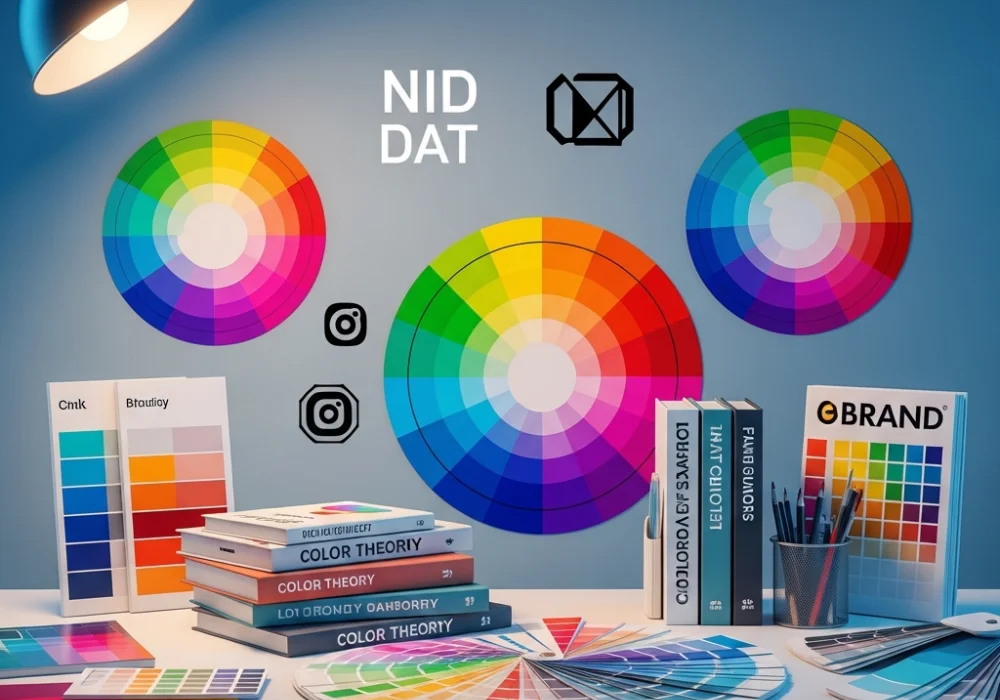
The Power of Color in NID DAT
Color is never just a visual choice; it is a psychological tool. In the National Institute of Design (NID) Design Aptitude Test, color psychology is a recurring theme that tests your ability to communicate without words. Whether it is designing a logo, a poster, or a product interface, your choice of palette tells a story. This guide decodes the logic behind previous year questions and provides you with the ‘Ninja Shortcuts’ to solve them in seconds.
Understanding color psychology involves more than just knowing that ‘Red means danger.’ You must understand the nuances of brand positioning, cultural contexts, and user behavior triggers. This article will walk you through five high-probability simulated questions based on previous year questions trends, ensuring you are prepared for anything the exam throws at you.
Decoding Question 1: The Banking & Trust Dilemma
Simulated Question: You are tasked with designing the visual identity for a new international digital bank targeting young professionals. Which primary color should dominate the brand palette to ensure feelings of security and reliability? Justify your choice.
The Traditional Method
A student would usually spend 5-10 minutes writing about the color wheel, mentioning various cool colors like blue and green, and perhaps discussing the serenity of the sky. They might list several banks like HDFC, ICICI, or SBI that use blue. While correct, this method consumes too much time and lacks the design logic depth required for a top rank.
The 30-Second Ninja Shortcut
The ‘Blue-Trust Bridge’ Logic: Instantly associate stability with Short Wavelengths. Blue has a shorter wavelength, which the human eye perceives as ‘distant’ and ‘calm’ compared to the ‘aggressive’ long-wavelength red.
Keywords to use: Institutional stability, non-threatening, intellectual depth, and fiscal responsibility.
💡 Click to Reveal Pro-Tip
When NID asks about ‘Security’ or ‘Technology,’ Blue is your safest bet. However, to stand out, suggest a ‘Navy Blue’ for tradition or a ‘Cyan/Electric Blue’ for modern tech-forward banking.
Decoding Question 2: The Fast-Food & Impulse Trigger
Simulated Question: A global fast-food chain wants to redesign its packaging to increase the average ‘turnover rate’ (the speed at which customers eat and leave). Which color combination is most effective?
The Traditional Method
Students often write about ‘making the food look tasty.’ They might mention yellow because it looks like cheese or red because it looks like tomato ketchup. This is a surface-level observation and does not address the ‘User Behavior’ aspect of the question regarding turnover rates.
The 30-Second Ninja Shortcut
The ‘Ketchup and Mustard’ Theory: Red stimulates the appetite and increases heart rate (physical arousal), while Yellow triggers speed and friendliness. Together, they create an ‘agitated hunger’ that makes people eat faster.
Ninja Logic: Red = Hunger/Urgency + Yellow = Happiness/Speed = High Turnover.
💡 Click to Reveal Pro-Tip
In previous year questions, NID frequently explores the ‘physical’ effects of color. Remember: Warm colors (Red/Orange) physically stimulate the nervous system, while Cool colors (Blue/Green) suppress it.
Decoding Question 3: The Luxury & Exclusivity Metric
Simulated Question: A premium perfume brand is launching a ‘Limited Edition’ scent for high-net-worth individuals. Suggest a color scheme that communicates ‘Sophistication’ and ‘High Price Point’ without using the word ‘Luxury’.
The Traditional Method
Many students suggest ‘Shiny Gold’ or ‘Bright Silver.’ While gold is associated with wealth, overusing it can look ‘cheap’ or ‘gaudy’ in a modern design context. Explaining the historical value of gold pigments is a slow way to answer.
The 30-Second Ninja Shortcut
The ‘Black-Gold Minimalist’ Pivot: Black represents the ‘Absence of Color’ and ‘Mystery.’ When paired with a secondary metallic accent (Gold/Copper) and high white space, it signals ‘Premium.’
Ninja Logic: High Contrast + Minimalism = High Ticket Value. Black absorbs all light, suggesting a ‘weight’ and ‘permanence’ that cheap plastic colors lack.
💡 Click to Reveal Pro-Tip
For luxury, ‘Less is More.’ Don’t just pick a color; pick a ‘Finish.’ Mentioning ‘Matte Black’ vs ‘Glossy Black’ shows the NID examiner that you understand texture as much as color.
Decoding Question 4: Health, Wellness & The ‘Bio-Fill’
Simulated Question: Design the user interface (UI) for an app that tracks organic farming and mental wellness. Which palette would best represent ‘Vitality’ and ‘Peace’ simultaneously?
The Traditional Method
Students usually just say ‘Green’ because plants are green. They might write about forests or gardens. This is basic and doesn’t explain the user behavior of ‘Mental Wellness.’
The 30-Second Ninja Shortcut
The ‘Biophilic Palette’: Use a ‘Sage Green’ (Vitality) paired with ‘Soft Terracotta’ (Earthing). Green is the only color that the human eye does not need to adjust to focus on, reducing visual fatigue.
Ninja Logic: Green is at the center of the visible spectrum. It represents ‘Equilibrium.’ Use this keyword to score high marks in NID logic sections.
💡 Click to Reveal Pro-Tip
In previous year questions regarding sustainability, examiners look for ‘Earth Tones.’ Avoid ‘Neon Green’ as it feels synthetic and toxic—the opposite of organic.
Decoding Question 5: Youthful Creativity & Play
Simulated Question: A creative workshop for children aged 5-10 needs a new brand identity. The goal is to encourage ‘unstructured play’ and ‘imagination.’ Suggest a palette.
The Traditional Method
The standard answer is ‘Rainbow colors’ or ‘Primary colors (Red, Blue, Yellow).’ While this is common in preschools, NID looks for a deeper understanding of ‘unstructured play.’
The 30-Second Ninja Shortcut
The ‘Secondary Pop’ Logic: Avoid the rigid primary colors. Instead, use ‘Orange and Purple.’ Orange combines the energy of red with the joy of yellow. Purple represents the ‘Fantasy’ world. Together, they signify ‘Non-Conformist Creativity.’
Ninja Logic: Complementary colors (Opposites on the wheel) create ‘Visual Vibration,’ which keeps a child’s brain engaged and curious.
💡 Click to Reveal Pro-Tip
Whenever ‘Creativity’ is mentioned in NID DAT, think of Purple. Historically, it was the rarest pigment, making it the color of ‘Magic’ and ‘Unique Ideas.’
The Ultimate Color Psychology Cheat Sheet
Use this table for quick revision before your exam. These associations are the foundation of many previous year questions.
| Color | Psychological Trigger | Ideal Industry |
|---|---|---|
| Red | Urgency, Passion, Hunger | Food, Clearance Sales, Sports |
| Blue | Trust, Security, Calm | Tech, Banking, Health |
| Yellow | Optimism, Clarity, Warmth | Logistics, Youth Apps |
| Green | Growth, Nature, Ethics | Organic Food, Real Estate |
| Black | Power, Luxury, Mystery | Premium Fashion, High-end Tech |
| Purple | Wisdom, Fantasy, Luxury | Creative Agencies, Cosmetics |
Summary and Exam Strategy
To excel in NID DAT, you must transition from being a ‘drawer’ to being a ‘thinker.’ Every previous year question on color is testing whether you can justify your visual choices with logic. When you sit for the exam, follow these three steps:
- Step 1: Identify the Target Audience. Is it for children, corporate professionals, or eco-conscious consumers?
- Step 2: Define the Emotional Goal. Do you want them to feel excited (Red), safe (Blue), or inspired (Purple)?
- Step 3: Apply the Technical Justification. Mention wavelengths, color harmony (complementary/analogous), or cultural semiotics to prove your point.
By mastering these patterns, you won’t just pass the exam—you will dominate the ranking table.
Confused about Color Logic? Let’s Crack NID Together!
Join our exclusive community of design aspirants. Get free guidance, personalized mock tests, and more Previous Year Questions decoded by NID alumni.
💬 Chat with our Experts on WhatsApp (+91 9526806124)




