
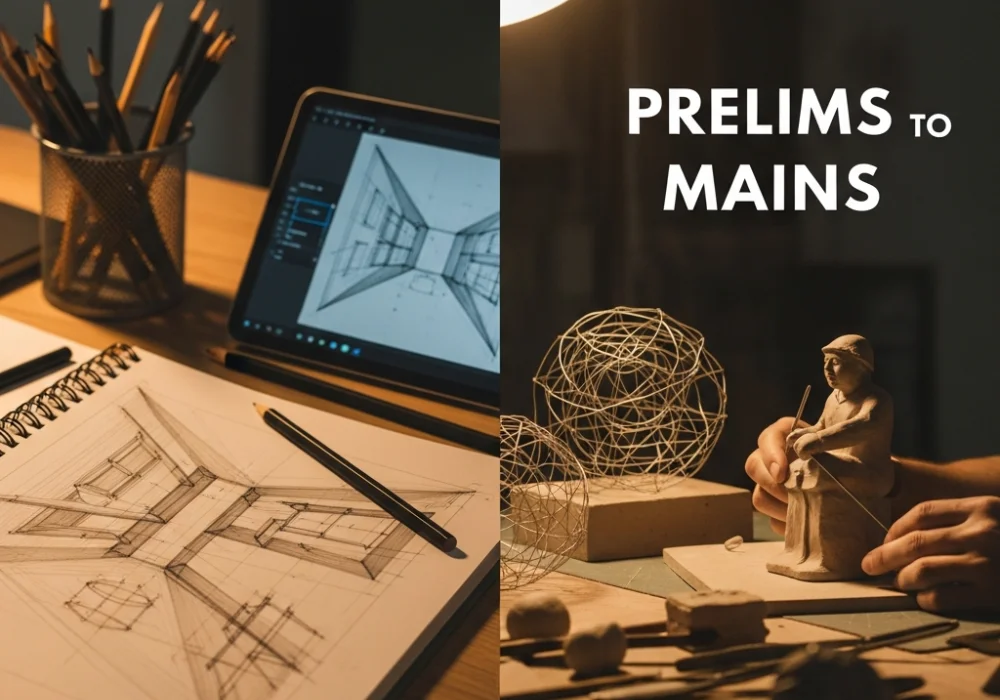
The Journey to NID: Understanding the Two-Stage Challenge
Securing a seat at the National Institute of Design (NID) is a dream for thousands of aspiring designers. However, the path to admission is paved with a rigorous evaluation process known as the Design Aptitude Test (DAT). To succeed, candidates must navigate two distinct levels: the Prelims and the Mains. Each stage demands a unique set of skills, and understanding the nuances between them is the first step in your strategic roadmap. At myentrance.in, we specialize in providing the latest mock tests and study materials to help you bridge the gap between aspiration and achievement.
What is NID DAT Prelims? The Foundation of Design Thinking
The NID DAT Prelims is the first hurdle in the selection process. It is a pen-and-paper-based test designed to evaluate a candidate’s knowledge, skills, and behavioral abilities. The current pattern typically divides the paper into two sections: Part A and Part B.
Part A: General Ability Test (GAT)
This section usually consists of objective-type questions, including Multiple Choice Questions (MCQs), Multiple Select Questions (MSQs), and Numerical Answer Type (NAT) questions. It assesses your general knowledge, logical reasoning, English proficiency, and basic design awareness. Success in GAT requires a sharp mind and a quick response time, which can be honed through consistent practice with mock tests available on myentrance.in.
Part B: Creative Ability Test (CAT)
The CAT is where your artistic and creative prowess is truly tested. This subjective section focuses on sketching, visualization, and creative problem-solving. You might be asked to design a product, illustrate a scene, or solve a social problem through a visual medium. Reviewers look for original ideas, perspective, proportion, and the ability to convey a message through drawing.
What is NID DAT Mains? The Practical Application of Design
Once you clear the Prelims cutoff, you move to the NID DAT Mains. This stage is significantly different from the first. It is less about theory and more about hands-on execution. The Mains exam primarily involves the Studio Test and, for M.Des candidates, a Personal Interview.
The Studio Test
In the Studio Test, you are placed in a creative environment and given various materials like clay, wire, cloth, and paper. You are required to create 3D models based on specific prompts. This stage tests your material handling skills, spatial awareness, and ability to think in three dimensions under time pressure. Additionally, you may face audio-visual tests or observation-based tasks that challenge your sensory perception.
Comparing NID DAT Prelims vs Mains
To help you visualize the differences, here is a comprehensive comparison table:
| Feature | NID DAT Prelims | NID DAT Mains |
|---|---|---|
| Primary Goal | Screening and checking aptitude | Testing practical and creative execution |
| Mode | Pen-and-paper (Part A & Part B) | Studio-based (Hands-on) |
| Components | MCQs, MSQs, Sketching, Visualization | 3D Modeling, Material Handling, Observation |
| Weightage | Crucial for shortlisting to Mains | Determines the final merit list ranking |
| Location | Multiple cities across India | Usually held at NID campuses |
Strategic Roadmap: Preparing for Success
Crushing the NID DAT requires a dual-track preparation strategy. You cannot wait until the Prelims results are out to start preparing for the Mains; the gap is often too short to master material handling.
1. Master the Fundamentals Early
Focus on your drawing skills. Practice perspective (1-point, 2-point, and 3-point), human anatomy, and light/shadow. For the GAT section, stay updated with the latest design news, famous designers, and award-winning products. Utilizing the mock tests on myentrance.in will give you a realistic sense of the time constraints you will face during the actual Prelims exam.
2. Build a Diverse Sketching Portfolio
Even though the portfolio is formally required later, the habit of sketching every day prepares you for the CAT. Practice sketching from memory and from direct observation. Try to bring storytelling into your sketches. Don’t just draw a chair; draw a chair that tells a story about the person who sits in it.
3. Transition to 3D Thinking
Dedicate at least two days a week to hands-on work. Buy a block of modeling clay, some floral wire, and different types of paper. Practice creating stable structures. Learn how to join different materials effectively. The Studio Test is not just about making something beautiful; it is about making something functional and structurally sound.
4. Time Management and Mock Tests
The biggest enemy in both stages is the clock. In the Prelims, students often run out of time for the sketching section. In the Mains, they might spend too much time planning and not enough time building. Taking timed mock tests on platforms like myentrance.in is essential to build the muscle memory needed to execute high-quality work within the allotted hours.
Final Tips for the Upcoming Exams
- Stay Curious: Observe the world around you. How do things work? Why is a certain product shaped that way?
- Practice Speed Sketching: Aim to complete a complex sketch in under 15 minutes.
- Review Past Patterns: While the specific questions change, the core competencies tested remain consistent.
- Health and Mindset: Design exams are mentally taxing. Keep a positive attitude and stay hydrated.
Frequently Asked Questions (FAQ)
Is there negative marking in NID DAT Prelims?
Usually, the latest pattern for NID DAT Prelims does not include negative marking for objective questions, but candidates should always read the instructions on the question booklet carefully as patterns can vary.
Do I need a portfolio for the B.Des Mains?
While a formal portfolio presentation is a hallmark of the M.Des interview process, B.Des candidates should still maintain a portfolio of their work to build confidence and develop their personal design style, even if it is not a mandatory submission for the Studio Test.
What materials are provided in the Studio Test?
In the Studio Test, NID provides all necessary materials such as clay, wire, string, paper, scissors, and glue. Candidates are generally not allowed to bring their own modeling materials, though basic stationery like pens and pencils are required.
How can myentrance.in help in my NID preparation?
myentrance.in offers a curated collection of mock tests, previous question papers, and study modules designed specifically for the current NID syllabus. These resources help you familiarize yourself with the difficulty level and question types of the Prelims.
Can I clear NID DAT without coaching?
Yes, many students clear NID DAT through self-study. The key is consistent practice, a deep understanding of design principles, and using high-quality online resources and mock tests to track progress.





