
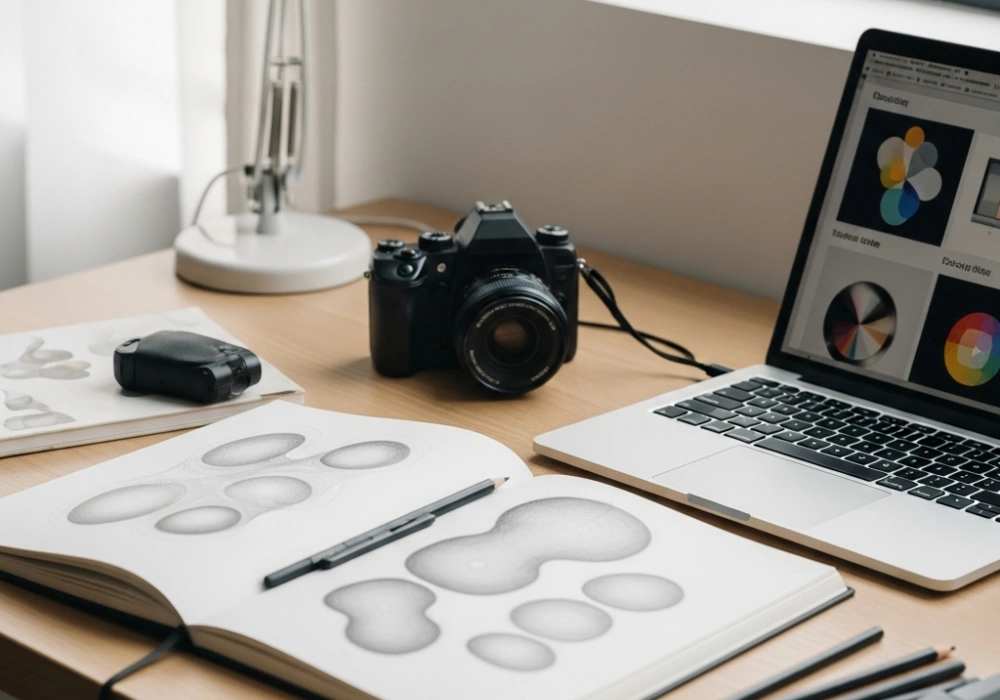
Mastering the NID DAT Portfolio: An Essential Guide
Securing a seat at the National Institute of Design (NID) is a dream for countless aspiring designers. While the NID Design Aptitude Test (DAT) Prelims evaluate your observation skills and logic, the NID DAT Mains stage—often involving a portfolio review—is where you truly show who you are as a creator. A portfolio is not just a collection of drawings; it is a visual narrative of your thought process, problem-solving abilities, and unique artistic voice. In this comprehensive guide, we will explore how to build a portfolio that stands out, ensuring you are well-prepared for the latest pattern of the upcoming exams. To complement your preparation, exploring specialized mock tests on myentrance.in can provide the competitive edge you need.
Table of Contents
What Defines a Winning NID Portfolio?
A portfolio for the NID admission process serves as a window into your mind. The jury is not looking for perfection; they are looking for potential. A successful portfolio demonstrates variety, curiosity, and a deep understanding of design fundamentals. It should reflect your ability to observe the world around you and translate those observations into meaningful concepts.
Key Attributes the Jury Looks For:
- Originality: Avoid copying existing designs. The jury values raw, authentic ideas over polished but derivative work.
- Critical Thinking: Show how you identify problems and attempt to solve them through design.
- Technical Skill: While process is key, a basic command over drawing, color theory, and composition is essential.
- Range: Include different mediums such as pencil sketches, watercolors, digital art, photography, or 3D models.
💡 Click to Reveal: The #1 Secret to a Great Portfolio
The best portfolios focus on ‘why’ you made something, not just ‘what’ you made. Always include your initial rough sketches and failed attempts to show your growth!
Selecting the Right Projects
Curating your portfolio is perhaps the most difficult part. You might have hundreds of sketches, but you must select only the best 10 to 15 projects. Quality always triumphs over quantity. Each project should serve a specific purpose in telling your story.
What to Include:
- Observation Sketches: Drawings of everyday objects, people in motion, or natural landscapes.
- Design Case Studies: A project where you took a problem (e.g., an uncomfortable chair) and designed a solution.
- Creative Exploration: Abstract art, typography experiments, or textile designs that show your aesthetic sense.
- Photography: High-quality photos that demonstrate your eye for framing, lighting, and storytelling.
Digital vs. Physical Portfolios
Depending on the latest pattern of the NID DAT Mains, you might be required to present your work digitally or carry a physical folder. Understanding the nuances of each is vital.
| Feature | Physical Portfolio | Digital Portfolio (PDF/Website) |
|---|---|---|
| Tactility | High – Jury can touch materials | Low – Visual only |
| Organization | Harder to rearrange quickly | Very easy to edit and sequence |
| Portability | Bulky and heavy to carry | Easy to share via link or tablet |
| Interactivity | Includes physical models/swatches | Can include videos and animations |
Showcasing the Creative Process
The NID jury is often more interested in your process journals than your final finished pieces. Your process journal or sketchbook is where the magic happens. It shows how you brainstorm, how you iterate, and how you learn from mistakes. If you have a project where you tried 20 different ways to fold paper before finding the right shape, show all 20 attempts! This demonstrates persistence and an analytical mindset—traits that are essential for the upcoming exams in design.
When documenting a project, follow this flow: Inspiration > Research > Ideation > Prototyping > Final Outcome.
How Mock Tests Help in Preparation
While the portfolio is about your past work, the NID DAT Prelims and Mains Studio Tests require real-time creative performance. This is where myentrance.in comes into play. By practicing with our expert-curated mock tests, you can improve your speed and accuracy in drawing, creative writing, and spatial ability. Knowing the type of questions asked in previous years’ patterns allows you to focus your portfolio on the skills that NID values most. Our platform offers comprehensive material for NID DAT, NIFT, and other design entrance exams, ensuring you are never caught off guard.
Quick Knowledge Check
Test your understanding of portfolio building with this mini-quiz!
1. What is the most important element of an NID portfolio?
💡 Reveal Answer
The Design Process. Showing how you arrived at a solution is more valuable than the final result alone.
2. True or False: You should only include your best 5 finished drawings.
💡 Reveal Answer
False. While you should be selective, a variety of work (sketches, models, research) across 10-15 projects is usually better to show range.
3. Why is photography important in a design portfolio?
💡 Reveal Answer
It shows your ability to frame subjects, understand lighting, and document your 3D work professionally.
Frequently Asked Questions
How many projects should I include in my NID portfolio?
Aim for 10 to 15 high-quality projects that showcase a diverse range of skills including sketching, 3D modeling, and conceptual thinking.
Do I need to be a pro at digital tools like Photoshop?
No, NID focuses more on your hand-skills and creative thinking. While digital skills are a plus, they are not mandatory for the initial admission stages.
Can I include school art projects in my portfolio?
Yes, provided they demonstrate original thought and aren’t just repetitive classroom exercises. Choose projects where you went beyond the basic requirements.
Ready to Ace the NID DAT?
Get access to the most comprehensive mock tests and study materials tailored for the latest exam patterns. Join thousands of successful students at myentrance.in!
💬 Chat with our Experts on WhatsApp (+91 9526806124)




